
How Does an Incorrect Elevator Door Hanger Roller Diameter Affect Door System Performance?
In an elevator door system, the elevator door hanger roller supports the door panel while ensuring smooth guidance and movement. Many maintenance technicians assume that as long as a replacement roller fits, it will work properly. In reality, even a slight difference in the door hanger roller diameter can significantly affect the entire door system.
During elevator modernization or spare parts replacement, a diameter deviation of just a few millimeters may lead to multiple elevator door operator failures and reduce overall system reliability.
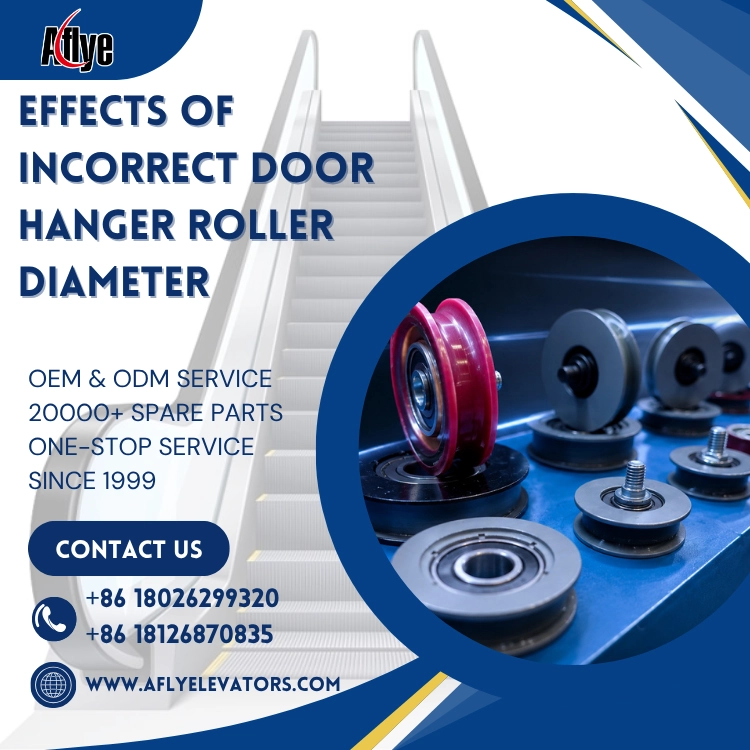
1. Changes in Door Panel Height
The door hanger roller determines the relative height of the door panel on the guide rail.If the roller diameter is too large, it may cause:
The door panel to sit higher
The door vane position to shift upward
Changes in the door lock engagement gap
If the roller diameter is too small, it may cause:
The door panel to drop
Increased load on the door guide shoe
Greater friction with the door sill
These height changes directly affect the alignment of all door system components.
2. Door Fails to Close Properly or Reopens Repeatedly
This is one of the most common field issues. An incorrect roller diameter changes the door travel path, preventing the door lock from engaging correctly.
The control system may interpret this as:
Landing door not locked
Door lock circuit fault
Door operator obstruction
As a result, the elevator may experience:
Repeated door opening and closing
Door closing timeout
Door operator alarms
Failure to start
Many technicians mistakenly replace the door lock when the real cause is an incorrect door hanger roller size.
3. Increased Door Operating Noise
When the roller diameter does not match the guide rail design, the rolling contact changes, leading to:
Door opening noise
Friction during door closing
Periodic knocking sounds
Rolling noise along the guide rail
Over time, this can also cause abnormal guide rail wear.
Maintenance Tip: Inspect the roller wear pattern and check the guide rail for unusual wear marks.
4. Increased Door Operator Load
Higher door resistance forces the door operator to work harder, which may result in:
Door motor overheating
Faster belt wear
Door operator controller alarms
Longer opening and closing times
Long-term operation under these conditions can shorten the service life of the entire door operator system.
5. Uneven Roller Wear and Bearing Failure
If the roller diameter is incorrect, the door weight cannot be evenly distributed among the rollers. This may lead to:
Excessive load on one side
Uneven roller wear
Premature bearing failure
Roller cracking
Even new rollers will fail prematurely if the wrong specifications are used.
How to Check for an Incorrect Door Hanger Roller Diameter
Maintenance technicians should:
Measure the actual roller diameter
Compare it with the original manufacturer's specifications
Check whether the door panel height has changed
Inspect door lock engagement
Measure door operator motor current
Examine the roller wear pattern
If new door operator problems appear after replacing the rollers, verify the roller dimensions first.
Elevator Door Roller Purchasing Tips
Before purchasing an elevator door hanger roller, confirm the following:
Roller outer diameter
Roller width
Bearing specification
Groove profile
Mounting hole size
Material hardness
Compatible door operator model
Choosing parts based only on appearance can easily lead to dimensional mismatches. Providing the original part dimensions, product code, or a sample will help ensure accurate matching.
A-FLY Elevator & Escalator Spare Parts Supply
As a professional elevator and escalator spare parts supplier, A-FLY provides elevator door hanger rollers, door guide shoes, door vanes, door locks, door operator components, and a full range of elevator and escalator spare parts for maintenance companies, engineering contractors, and distributors worldwide.
With an extensive door system parts database, A-FLY can quickly identify compatible products based on samples, dimensions, photos, or brand and model information. We also offer OEM/ODM customization, helping customers reduce purchasing errors and improve maintenance efficiency.
Conclusion
A difference of only a few millimeters in the elevator door hanger roller diameter can lead to improper door closing, door operator alarms, excessive noise, and door lock malfunctions. During elevator door system maintenance and modernization, selecting the correct roller specification is far more important than simply replacing the part. Choosing a reliable elevator and escalator spare parts supplier helps reduce failures and ensures long-term, stable elevator operation.