
Why Does Escalator Step Chain Elongation Cause Operating Impact?
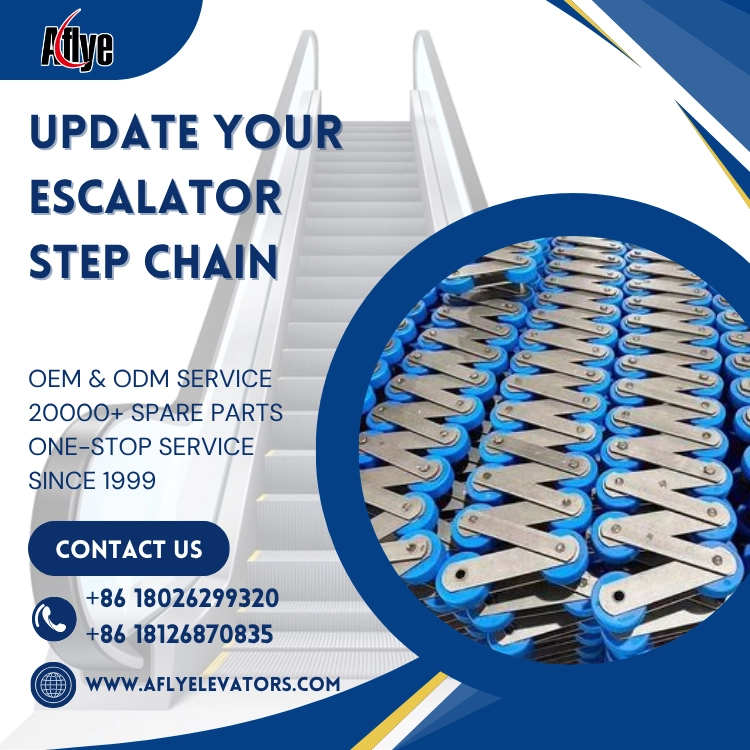
During escalator operation, the escalator step chain plays a critical role in circulating the steps and transmitting power, making it one of the core components of the escalator drive system. After long-term operation, wear between chain components gradually increases the clearance between links, resulting in escalator chain elongation. When the step chain elongation exceeds the allowable range, it may cause unsynchronized step movement, startup impact, and unstable operation.
Therefore, during routine escalator maintenance, timely inspection of the escalator main chain is essential for safe operation and longer equipment service life.
1. Main Causes of Escalator Step Chain Elongation
1. Long-Term Chain Link Wear Increases Clearance
An escalator step chain consists of multiple chain links, pins, bushings, and rollers. During long-term load-bearing operation, continuous friction occurs between the pins and bushings.
Over time, this may cause:
Increased clearance between chain links;
Changes in chain pitch;
Gradual increase in overall chain length;
Reduced synchronization of step movement.
This is one of the most common causes of escalator chain elongation.
2. Long-Term High-Load Operation
Escalators in shopping malls, metro stations, airports, and other high-traffic locations operate frequently, requiring the escalator main chain to withstand high dynamic loads for extended periods.
Continuous heavy-duty operation can accelerate:
Chain plate fatigue;
Pin wear;
Chain deformation;
Wear of transmission components.
3. Insufficient Lubrication or Poor Maintenance
The escalator step chain requires proper lubrication to operate smoothly. Insufficient lubricant, blocked lubrication lines, or inadequate inspection can increase friction between metal components and accelerate chain wear.
2. Why Does Escalator Step Chain Elongation Cause Operating Impact?
1. Changes in Step Movement and Timing
Under normal conditions, the escalator step chain maintains a consistent pitch so that each step follows the designed running path.
When the escalator chain becomes elongated, the engagement position between the chain and sprocket changes, which may cause:
Abnormal spacing between steps;
Increased impact when steps enter or leave the turnaround area;
Noticeable jerking during operation.
2. Increased Load on the Escalator Drive System
When the step chain elongates, the engagement accuracy between the chain and drive sprocket decreases, reducing transmission efficiency.
Long-term operation under these conditions may result in:
Abnormal drive sprocket wear;
Increased escalator motor load;
Higher operating noise;
Unstable starting and stopping.
3. Abnormal Step Operation
Severe escalator step chain elongation can affect the synchronization of the entire step system, causing:
Step shaking;
Abnormal vibration;
Operating impact or jerking;
Frequent activation of safety protection devices.
3. How to Solve Escalator Step Chain Elongation
When an abnormality is found in the escalator main chain, a professional inspection should be carried out, including:
Measuring the actual chain elongation;
Checking chain link wear;
Inspecting drive sprocket wear;
Checking the condition of step rollers and guide rails.
If the elongation is minor, adjusting the tensioning device and improving lubrication may help restore proper operation.
If the escalator chain elongation is significant and has already affected operating stability, timely escalator step chain replacement is recommended to prevent further damage to the transmission system.
4. Escalator Step Chain Purchasing Tips
When purchasing an escalator step chain, the following specifications should be carefully confirmed:
Chain model and pitch;
Chain plate thickness and material;
Wear resistance of the pins;
Compatibility with the original escalator step system;
Operating environment and load requirements.
For older escalator modernization projects, it is not recommended to replace only the chain. Related escalator parts, such as sprockets, step rollers, and tensioning devices, should also be inspected to ensure stable operation of the entire transmission system.
5. A-FLY Elevator & Escalator Parts Supply Capability
A-FLY specializes in the global supply of elevator and escalator spare parts, including escalator step chains, escalator main chains, escalator drive chains, escalator sprockets, step rollers, handrails, and other commonly used escalator wear parts.
For escalator repair, equipment upgrades, and modernization projects, A-FLY provides model confirmation, dimensional matching, and OEM/ODM customization services, helping customers quickly obtain reliable and compatible escalator spare parts solutions.
Conclusion
Escalator step chain elongation is a common issue after long-term operation. However, if maintenance is neglected, it can cause operating impact, accelerate wear of the transmission system, and increase potential safety risks.
Regular escalator maintenance, timely inspection of the escalator main chain, and choosing a reliable escalator parts supplier can effectively improve operating stability and extend the service life of the escalator.