
What Door Operator Problems Can Be Caused by Incorrect Elevator Door Hanger Roller Dimensions?
In an elevator door system, the elevator door hanger roller supports the door panel, provides guidance, and ensures smooth sliding movement. When replacing door rollers, many maintenance technicians focus only on whether the new roller looks similar to the original, while overlooking critical parameters such as outer diameter, width, bearing bore size, mounting hole position, and groove profile.
If the elevator door hanger roller dimensions do not match the original specifications, a variety of elevator door operator problems can occur, affecting normal door operation.
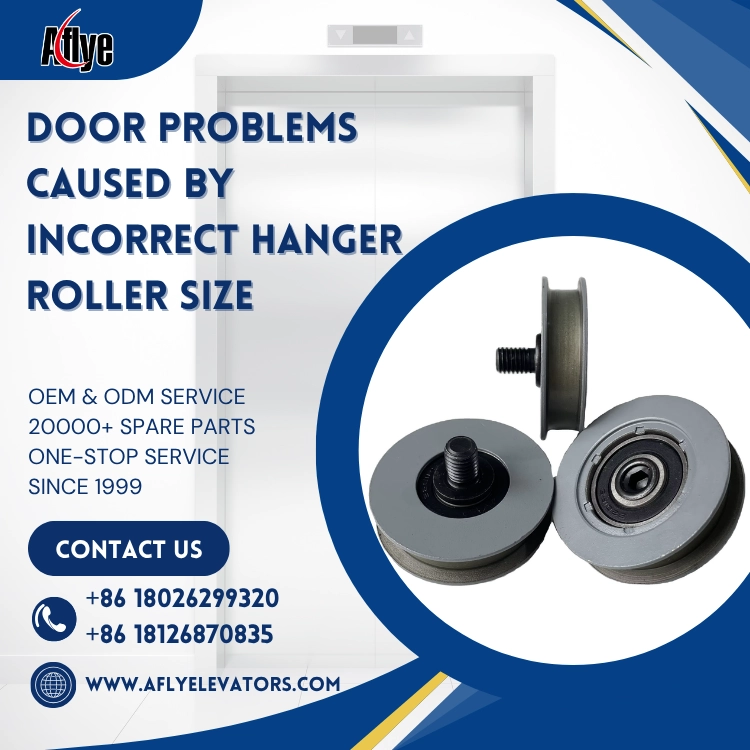
1. Door Noise and Rough Operation
If the outer diameter of the door hanger roller is too large or too small, the door panel height will change, causing improper contact between the roller and the guide rail. This can result in:
Friction noise
Rolling noise
Door panel vibration
Rough door movement
Over time, the guide rail may also wear prematurely, causing recurring noise problems.
Solution:
Before replacement, measure the original door hanger roller's:
Outer diameter
Width
Bearing specifications
Mounting structure
Avoid purchasing replacement parts based only on appearance or approximate model numbers.
2. Doors Fail to Close Properly or Repeatedly Open and Close
Incorrect door hanger roller dimensions can alter the alignment of the door panel, affecting the coordination between the door vane, door lock, door shoe, and door sill.
If the door cannot close smoothly, the elevator control system may detect an obstruction or determine that the door lock has not fully engaged. As a result, the elevator may experience:
Incomplete door closing
Repeated door opening and closing
Elevator shutdown
Inspection recommendations:
Maintenance technicians should check:
Door panel clearance
Door lock signals
Door shoe position
Door operator running resistance
If these problems appear immediately after replacing the roller, the first step should be to verify whether the door hanger roller dimensions are correct.
3. Increased Door Operator Load and Reduced Motor Life
An improperly sized elevator door hanger roller increases the resistance of the moving door panel, forcing the door operator motor to produce more torque during each opening and closing cycle.
Over time, this additional load can lead to:
Door operator belt wear
Motor overheating
Control board alarms
Higher maintenance costs
4. Elevator Door Roller Purchasing Recommendations
When purchasing elevator door rollers, buyers should confirm:
Roller outer diameter
Roller width
Bearing inner diameter
Material hardness
Mounting hole position
Compatible elevator brand
Installation location
If the exact model is unknown, it is recommended to provide the supplier with:
High-resolution photos of the original part
Accurate dimensions
Door operator brand
Installation location
This allows the supplier to identify the correct replacement model.
As a professional elevator and escalator spare parts supplier, A-FLY supplies elevator door hanger rollers, door shoes, door vanes, door locks, door operator components, light curtains, and a comprehensive range of elevator and escalator spare parts to maintenance companies, engineering contractors, and spare parts distributors worldwide.
A-FLY offers:
Multi-brand model matching
OEM/ODM customization
Bulk supply
Fast worldwide delivery
These services help customers reduce purchasing errors and improve maintenance efficiency.
Conclusion
Incorrect elevator door hanger roller dimensions are far more than a minor issue. They can lead to door operating noise, incomplete door closing, repeated door opening and closing, and increased load on the door operator.
When purchasing and replacing door hanger rollers, maintenance technicians should carefully verify all dimensional specifications and ensure full compatibility with the door system. Choosing a reliable elevator and escalator spare parts supplier helps ensure the long-term stability, safety, and reliability of the elevator door system.