
What Door System Problems Can Be Caused by Debris or Wear on Elevator Landing Door Sills?
In an elevator door system, the elevator landing door sill may not be a complex electrical component, but it plays a critical role in ensuring smooth door operation. The sill grooves can easily collect dust, stones, metal fragments, and construction debris. Over time, the sill itself may also become worn, deformed, or uneven. Once the sill is no longer in good condition, it can interfere with the door panels' travel path and lead to various door system malfunctions.
For maintenance technicians, regularly inspecting the elevator door sill, door sliders, and other landing door components is an effective way to reduce downtime and prevent door system failures.
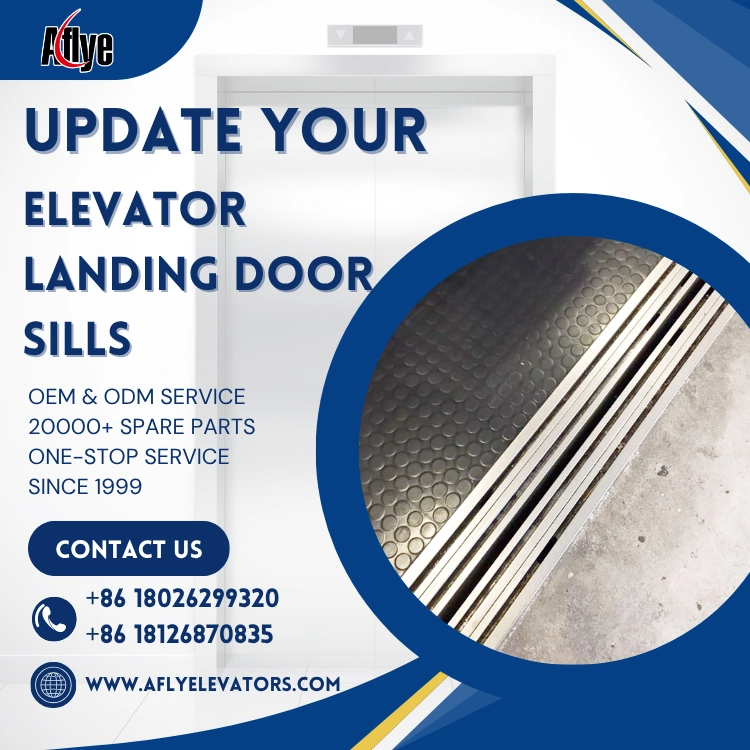
1. Elevator Landing Doors Fail to Close Completely
When debris accumulates inside the landing door sill groove, the elevator door slider may become obstructed during operation, preventing the landing door from closing completely. Once the control system detects that the door has not fully closed, the elevator may refuse to start or repeatedly attempt to close and reopen the doors.
Solution:
Maintenance personnel should remove all debris from the sill groove and inspect the door sliders for deformation, excessive wear, or damage. If the door sliders are worn or broken, they should be replaced with matching models to prevent recurring door-closing issues.
2. Door Jamming and Abnormal Operating Noise
As the elevator door sill becomes worn or deformed, the fit between the door slider and the sill groove deteriorates. During door operation, this may result in:
Friction noise
Scraping sounds
Door sticking
Door panel vibration
If left unresolved, the increased operating resistance can overload the door operator, shortening the service life of the door motor, door hanger rollers, and other door system components.
Inspection recommendations:
Check whether the sill groove remains smooth and level.
Inspect door sliders for uneven wear.
Verify that the landing door panels are not sagging or misaligned.
If necessary, also inspect the door hanger rollers, door vane, and door lock.
3. Abnormal Door Lock Signals
If debris inside the landing door sill or worn door sliders prevent the landing door from reaching its fully closed position, the elevator door lock may fail to engage properly.
As a result, the elevator control system may detect an abnormal safety circuit and cause:
Failure to start
Fault alarms
Elevator shutdown
Solution:
In addition to cleaning the door sill and replacing worn door sliders, technicians should inspect:
Door lock contacts
Lock hook alignment
Door panel clearance
This ensures that both the mechanical movement and electrical signals function correctly.
4. What Causes Long-Term Elevator Door Sill Wear?
Common causes of elevator landing door sill wear include:
Frequent door operation
Dust and debris accumulation
Aging door slider materials
Misaligned installation
Uneven loading on the door panels
High-traffic locations such as shopping malls, office buildings, hotels, and residential complexes are especially prone to sill groove wear and door slider damage.
5. Elevator Door System Spare Parts Purchasing Recommendations
When purchasing elevator landing door sills, door sliders, and other door system components, buyers should verify:
Compatible elevator brand
Installation dimensions
Material specifications
Groove profile
Door slider specifications
Installation position
Purchasing based solely on appearance may result in installation incompatibility, poor door performance, or premature wear.
As a professional elevator and escalator spare parts supplier, A-FLY supplies elevator landing door sills, landing door components, door sliders, door hanger rollers, door vanes, door locks, light curtains, and a complete range of elevator and escalator spare parts for maintenance companies, engineering contractors, and spare parts distributors worldwide.
A-FLY offers:
Multi-model compatibility matching
Bulk supply
OEM/ODM customization
Fast worldwide delivery
Our solutions help customers improve maintenance efficiency while minimizing elevator downtime.
Conclusion
Although debris or wear on an elevator landing door sill may appear to be a minor issue, it can lead to incomplete door closing, door slider jamming, abnormal door lock signals, and repeated door opening and closing.
Regular inspection of the elevator landing door sill, landing doors, and door sliders, combined with the timely replacement of high-quality elevator and escalator spare parts, is essential for ensuring the long-term reliability, safety, and smooth operation of the elevator door system.