
Why Does Elevator Door Hanger Roller Surface Hardening Cause Door Vibration and Noise?
In an elevator door system, the elevator door hanger roller supports the door panel and allows it to move smoothly along the door operator track. After long-term use, roller surface materials such as rubber or polyurethane may gradually age and harden.
As the roller surface loses its cushioning and vibration-absorbing properties, the elevator door may develop vibration, abnormal noise, or uneven opening and closing movement.
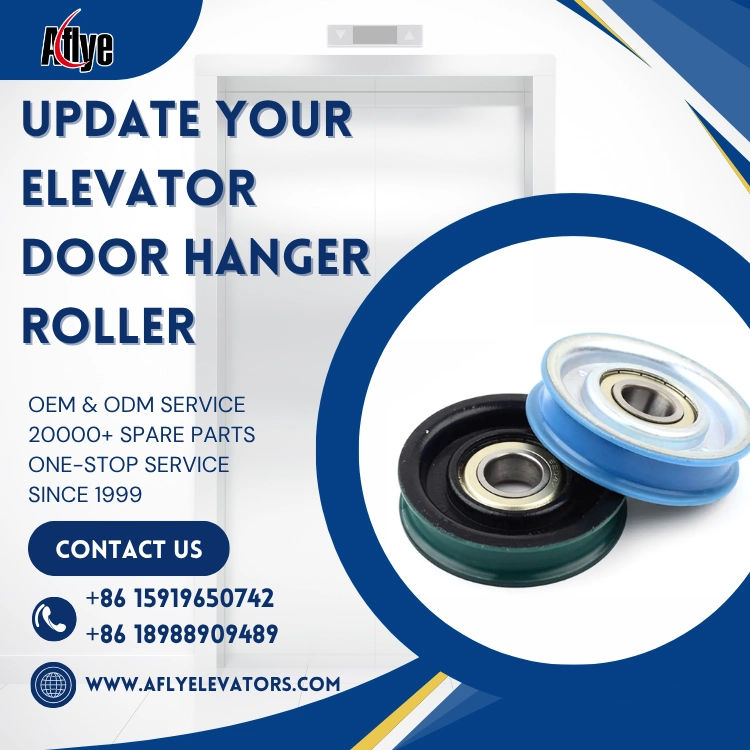
1. Why Does the Door Hanger Roller Surface Harden?
Common causes include:
Natural aging of the roller surface material after long-term operation;
High temperatures, dust, and other environmental conditions accelerating material deterioration;
Uneven loading of the door panel, causing some elevator door rollers to carry excessive loads;
Uneven track surfaces or foreign objects increasing roller surface wear;
Extended service life gradually reducing the elasticity of the roller material.
As the roller surface becomes harder, its ability to absorb small impacts during door movement gradually decreases.
2. Why Does Roller Surface Hardening Cause Vibration and Noise?
A properly functioning elevator door hanger roller has a certain degree of elasticity, allowing it to absorb minor impacts generated during door movement.
When the roller surface hardens, its cushioning ability is significantly reduced. As the roller passes over track joints, small surface irregularities, or debris, the resulting impact is transmitted more directly to the door panel.
Common symptoms include:
Continuous door panel vibration during opening and closing;
Increased rolling noise from the door rollers;
Regular or periodic abnormal elevator door noise;
Reduced smoothness of door panel movement;
Accelerated wear of the hanger rollers, bearings, and door operator track.
If the roller surface also develops uneven wear, cracks, or an out-of-round condition, vibration and noise may become even more noticeable.
3. How Should This Problem Be Handled During Elevator Maintenance?
When abnormal door vibration or noise is detected, technicians should inspect:
Roller surface hardness;
Amount of roller wear;
Roller roundness;
Bearing rotation condition;
Door operator track condition.
The door operator track should also be cleaned and checked for dirt, damage, or surface irregularities.
If the door hanger roller surface has hardened, cracked, or become noticeably out of round, timely replacement is recommended.
After replacement, the door panel alignment, door hanger plate position, and engagement between the rollers and track should be checked again to prevent uneven loading on the new rollers.
4. Elevator Door Hanger Roller Purchasing Tips
When purchasing an elevator door hanger roller, the following specifications should be carefully confirmed:
Roller outer diameter;
Roller width;
Bearing model;
Center hole or shaft dimensions;
Roller surface material;
Mounting structure.
Door hanger rollers used in different door operator systems may have similar dimensions but are not necessarily interchangeable.
Before purchasing, it is recommended to provide photos of the original part, model information, and measured dimensions to improve matching accuracy and reduce the risk of purchasing incompatible elevator door parts.
5. A-FLY Elevator & Escalator Parts Supply Capability
A-FLY supplies a wide range of elevator door system and wear parts, including:
Elevator door rope sheaves;
Door operator belts;
Other commonly replaced elevator parts.
These products are suitable for elevator maintenance, repair, and old elevator modernization projects.
For different project requirements, A-FLY supports model confirmation, dimensional matching, sample confirmation, and OEM/ODM services. A-FLY also supplies a wide range of escalator wear parts, providing customers with one-stop elevator and escalator spare parts purchasing solutions.
Conclusion
Hardening of the elevator door hanger roller surface reduces its cushioning and vibration-absorbing performance, making it a common cause of elevator door vibration and abnormal operating noise.
Regular inspection and timely replacement of aging door hanger rollers can help restore smooth door movement while reducing abnormal wear on bearings, tracks, and other elevator door system components.