
Common Causes of Escalator Handrail Cracking and Slipping
In shopping malls, subway systems, and other public transportation environments, escalators operate at high frequency for long periods. The condition of the escalator handrail directly affects passenger safety and equipment stability. Once the handrail develops cracks or begins to slip, it not only reduces riding comfort but may also lead to synchronization failures or even safety incidents. Therefore, understanding the causes of these issues and replacing the appropriate elevator and escalator components in time is essential.
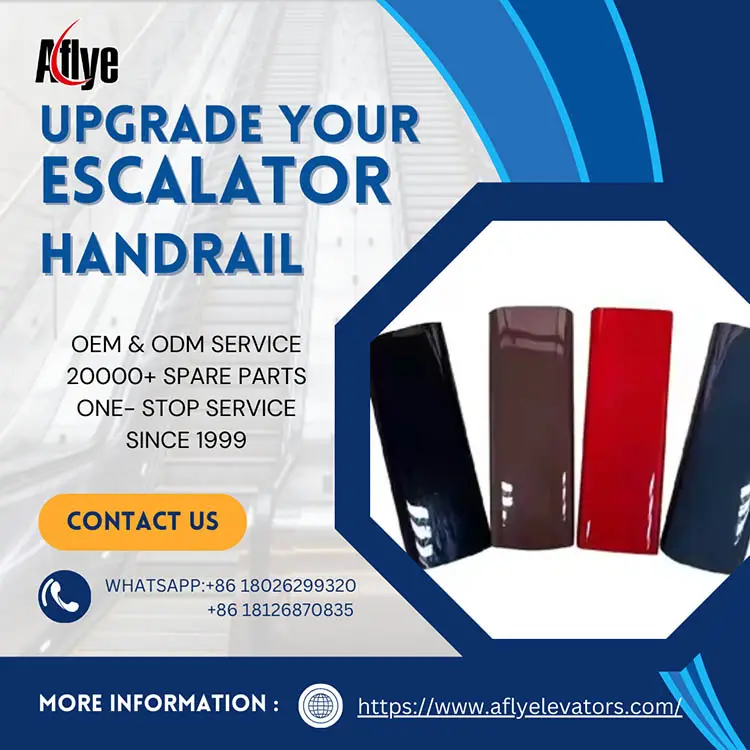
1. Common Causes of Handrail Cracking
The escalator handrail is a rubber composite elevator component that remains under constant bending, friction, and tension.
First, material aging is the primary cause. High temperatures, ultraviolet exposure, and air oxidation accelerate rubber hardening. Over time, the surface loses elasticity, small cracks appear, and eventually develop into visible splits.
Second, abnormal tension can also lead to cracking. If the handrail tensioning device is improperly adjusted and the tension is too high, uneven stress occurs between the internal steel cords and rubber layers, resulting in fatigue fractures.
In addition, drive wheel wear or misalignment can further intensify edge tearing of the handrail.
2. Main Causes of Handrail Slipping
Handrail slipping typically appears as the handrail moving out of sync with the steps, sometimes accompanied by vibration. The most common reason is insufficient drive friction. When the drive wheel surface becomes worn, hardened, or contaminated with oil, the friction coefficient decreases, preventing stable power transmission.
Another cause is internal handrail wear. Slippage within the inner structure reduces overall transmission efficiency. Additionally, a loose tensioning device is a key factor — insufficient tension allows the handrail to slip against the drive wheel.
3. When Should the Handrail Be Replaced?
Immediate replacement is recommended when:
Persistent slipping cannot be corrected by adjusting tension
Surface cracks exceed safety standards or delamination occurs
Abnormal noise or noticeable vibration occurs during operation
Ignoring these warning signs may lead to escalator shutdowns or even safety accidents.
4. Choosing a Reliable Elevator and Escalator Parts Supplier
A high-quality handrail should offer strong wear resistance, aging resistance, and stable tensile performance. As a professional elevator and escalator parts supplier, A-FLY provides handrails in multiple specifications along with related escalator spare parts. Our products are compatible with many major brands and are widely used across Asia, the Middle East, Europe, and the Americas, helping customers reduce maintenance costs and extend equipment service life.
Regular inspection and timely replacement of aging handrails are key to ensuring safe escalator operation. Choosing the right elevator components and a reliable supplier helps reduce failure rates at the source and improves overall operational efficiency.