
Common Causes of Elevator Brake Failure and How to Fix Them
In an elevator safety system, the elevator brake is a critical component responsible for safely stopping the elevator and holding it in position. Once the brake fails, it may cause elevator slipping, unstable stopping, or even serious safety hazards. Therefore, identifying the cause of brake failure and taking the correct corrective measures is essential for maintenance personnel.
As a professional elevator & escalator parts supplier, A-FLY has summarized the following common causes and solutions based on extensive maintenance experience.
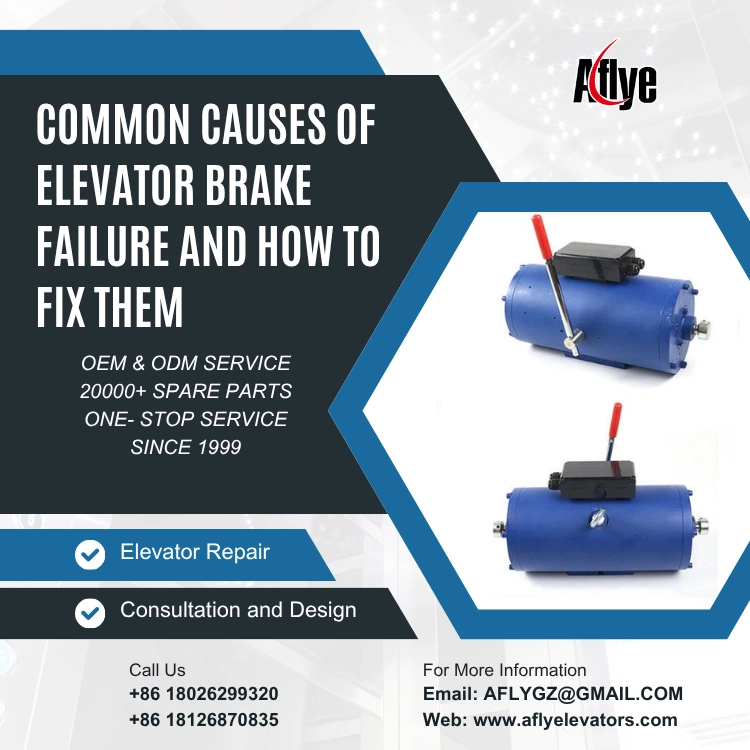
I. Common Causes of Elevator Brake Failure
1. Severe Brake Lining Wear
Brake linings gradually wear down during long-term operation. When the lining becomes too thin or the surface hardens, braking force decreases significantly and may no longer provide effective stopping power.
This is one of the most common mechanical failures affecting elevator brakes.
2. Improper Brake Gap Adjustment
An incorrectly adjusted brake gap can negatively affect brake performance:
Excessive gap may result in delayed brake response and insufficient braking force.
Insufficient gap may cause continuous friction and interfere with normal brake operation.
This issue is often related to inadequate maintenance practices.
3. Fatigued or Damaged Springs
Elevator brakes rely on springs to provide the clamping force required for braking. If the springs become fatigued or damaged, the holding force decreases, reducing overall braking effectiveness.
4. Electromagnetic Coil or Electrical Failure
Brake release and engagement are controlled by electromagnetic coils. If the coil is damaged, the power supply is unstable, or control signals are abnormal, the brake may fail to operate correctly.
This is a typical electrical elevator component failure.
5. Oil Contamination or Environmental Factors
Oil contamination on braking surfaces can reduce friction and significantly weaken braking performance.
In addition, environmental factors such as:
Dust accumulation
Moisture
High humidity
can also negatively affect brake operation and reliability.
II. Solutions for Elevator Brake Failure
1. Inspect and Replace Worn Components
Severely worn brake linings should be replaced promptly with compatible elevator spare parts to ensure proper contact and braking performance.
2. Adjust the Brake Gap
Readjust the brake gap according to technical specifications to ensure fast response while avoiding unnecessary friction during operation.
3. Inspect Springs and Mechanical Components
Check the condition of the springs and related mechanical structures. If fatigue, deformation, or damage is found, replace the affected elevator & escalator spare parts immediately.
4. Troubleshoot the Electrical System
Inspect the following components:
Electromagnetic coils
Power supply circuits
Control signals
to ensure stable and reliable brake operation.
5. Clean the Brake Assembly and Improve Environmental Conditions
Keep braking surfaces clean and free from oil, dust, and debris. Improving the operating environment can also help maintain optimal brake performance.
III. Daily Maintenance Recommendations
During routine maintenance, technicians should regularly inspect:
Brake lining wear
Brake response sensitivity
Electrical operating conditions
Mechanical component status
Maintenance records should be kept for future reference.
For critical elevator & escalator spare parts, preventive replacement is recommended to reduce the risk of unexpected failures and elevator downtime.
Conclusion
Understanding the common causes of elevator brake failure and the appropriate corrective actions is essential for maintaining elevator safety and reliability. The key is to identify problems early and apply targeted solutions.
Choosing high-quality elevator spare parts and following proper maintenance procedures are fundamental to ensuring safe elevator operation.
As a professional elevator & escalator parts supplier, A-FLY provides a wide range of elevator brakes and related elevator & escalator spare parts solutions, helping customers achieve safer, more efficient, and more reliable maintenance management.