
Causes of Elevator Emergency Intercom System Failure
In the elevator safety system, the emergency intercom system is an important communication channel between passengers and the outside world. In the event of passenger entrapment or emergencies, whether the intercom system functions properly directly affects rescue efficiency and passenger safety.
However, in actual operation, many projects experience problems such as no sound, failed calls, or unstable communication.
As a professional elevator & escalator parts supplier, A-FLY has summarized the following common causes based on maintenance experience.
1. Abnormal Power Supply
The emergency intercom system requires a stable power supply.
If the power module fails, the voltage becomes unstable, or the backup power supply malfunctions, the intercom equipment may fail to start or operate unstably.
During power outages, if the backup power supply cannot switch over in time, the intercom system may also fail completely.
2. Communication Line Faults
Wiring problems are one of the most common causes of intercom system failure.Issues such as:
Aging cables
Loose connectors
Poor electrical contact
Signal interference
may cause intermittent communication or complete loss of connection.
For equipment that has been in operation for a long time, wiring-related elevator spare parts are more likely to develop hidden risks.
3. Aging or Damaged Intercom Equipment
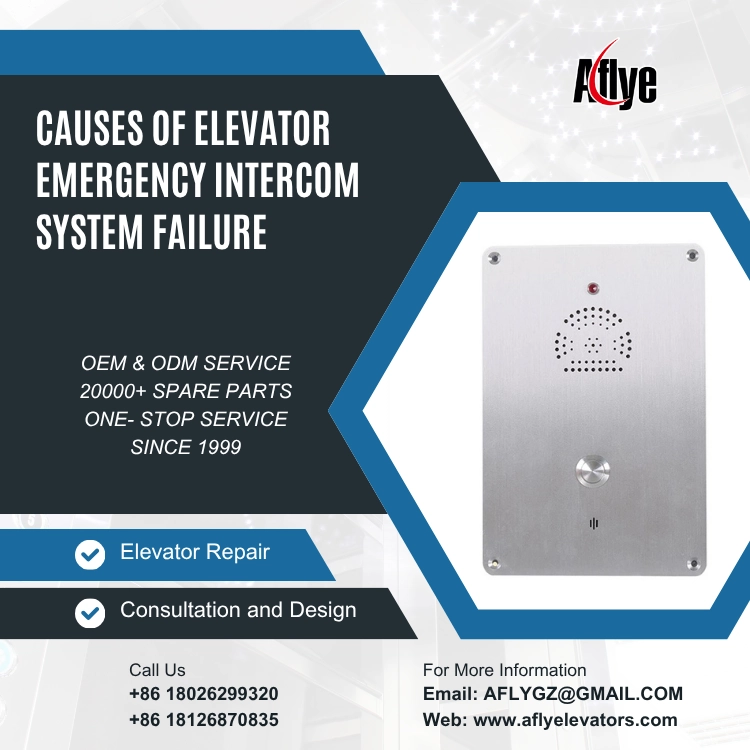
Intercom master units, cabin handsets, and machine room communication devices are all critical elevator & escalator spare parts.
After long-term use, they may develop problems such as:
Unresponsive buttons
Damaged microphones
Silent speakers
These faults usually appear as failed calling functions or one-way communication only.
4. Control System or Interface Abnormalities
Some elevator intercom systems are linked with the control cabinet or monitoring platform.If there are:
Abnormal interface signals
Faulty control modules
Incorrect parameter settings
the intercom function may not operate properly.
Such issues usually require troubleshooting together with the electrical control system.
5. Environmental Factors
Environmental conditions such as humidity, high temperature, dust, or vibration can also affect intercom system stability.For example:
Oxidized wiring terminals
Moisture damage
Aging internal components
may reduce overall system reliability.
This is often an overlooked factor but can have a major impact on system performance.
Maintenance Recommendations
During routine maintenance, technicians should regularly inspect:
Power supply status
Communication lines
Intercom devices
Connection interfaces
At the same time, communication tests should be performed regularly to ensure the system works properly during emergencies.
For aging or unstable elevator & escalator spare parts, timely replacement is recommended to avoid failures during critical situations.
Conclusion
Understanding the causes of elevator emergency intercom system failure helps maintenance teams identify hidden risks early and improve elevator safety protection capabilities.
Choosing reliable elevator spare parts and a stable elevator & escalator parts supplier is essential for ensuring long-term stable system operation.
A-FLY provides various elevator intercom systems and related spare part solutions to help customers achieve more efficient and safer maintenance management.