
Analysis of the Causes of Excessive Elevator Door System Noise
During elevator operation, the elevator door system is one of the parts most directly noticed by passengers. If the noise during door opening and closing becomes significantly louder, it not only affects riding comfort, but also often indicates that certain elevator spare parts have become worn, loose, or improperly aligned.
As a professional elevator & escalator parts supplier, A-FLY has found through long-term maintenance support and spare parts supply projects that excessive door system noise is usually related to the following issues.
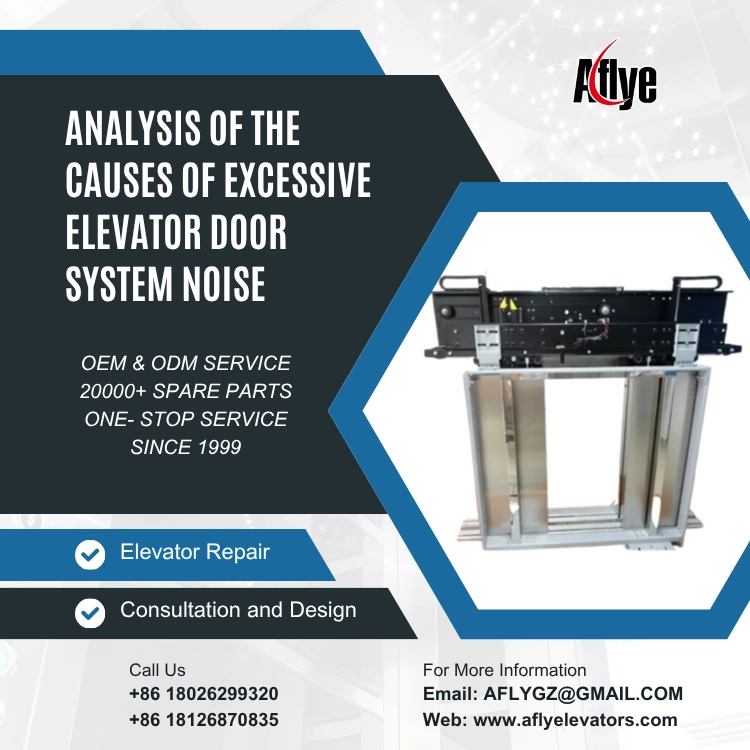
1. Worn Door Hanger Rollers or Damaged Bearings
Elevator door hanger rollers are responsible for supporting the door panels and allowing them to slide smoothly along the door rail.
If the roller surface becomes worn, the bearings age, or the internal balls are damaged, the door system may produce:
Rolling noise
Friction sounds
Sharp abnormal noises during opening and closing
For many door system noise problems, the first component to inspect is the door hanger roller.
2. Aging Door Guides or Poor Alignment
Although door guides are small components, they directly affect the stability of door panel movement.
If the guides become worn, cracked, or excessively loose, the door panels may shake or rub during operation, causing continuous abnormal noise.
If left untreated, this may also accelerate the wear of other elevator & escalator spare parts.
3. Deformed or Worn Door Rails
The door rail is the basic running path for the door hanger rollers.
Once the rail becomes:
Bent
Loose
Uneven on the surface
Partially worn
the force applied to the rollers during operation becomes abnormal, resulting in increased noise.
If only the rollers are replaced while ignoring the rail problem, the abnormal noise is often difficult to eliminate completely.
4. Abnormal Coordination of Door Vanes, Door Locks, or Guide Components
When the door vane becomes misaligned, the door lock operates improperly, or guide components wear out, the door system may generate:
Friction sounds
Impact noises
Repetitive operation noise during linkage movement
These abnormal sounds are especially noticeable near the end of door closing or when the elevator doors open after arriving at a floor.
5. Unstable Door Operator Operation or Loose Installation
In addition to mechanical spare parts, the operating condition of the door operator also affects noise levels.If:
The door operator belt tension is incorrect
Mounting screws are loose
The drive output is unstable
the door system may produce vibration and abnormal sounds during startup and stopping.
In such cases, both the control system and mechanical components should be inspected together.
Maintenance Recommendations
When excessive elevator door system noise occurs, it is recommended to first inspect key components such as:
Door guides
Door rails
Check whether there is:
Wear
Looseness
Misalignment
Insufficient lubrication
For aging or damaged elevator & escalator spare parts, matching replacement components should be installed promptly to prevent minor issues from developing into door faults, door lock abnormalities, or elevator shutdowns.
Conclusion
Increased elevator door system noise is often not caused by a single fault, but rather by the combined effects of long-term wear across multiple components.
Timely inspection and replacement of suitable elevator spare parts can help improve operational smoothness and passenger comfort.
As a professional elevator & escalator parts supplier, A-FLY provides various elevator door system spare parts and related solutions to help customers improve maintenance efficiency and reduce elevator downtime risks.