
Door Problems Caused by Worn Elevator Landing Door Sills
In daily elevator fault handling, many maintenance teams focus on the door operator, elevator buttons, or door locks, while easily overlooking a seemingly minor elevator component—the landing door sill.
In reality, once the landing door sill becomes worn or deformed, it often triggers a series of door opening and closing problems, and can even affect the overall operational stability of the elevator.
As an experienced elevator & escalator spare parts supplier, A-FLY has found in real projects that many door system failures originate from long-neglected sill-related issues.
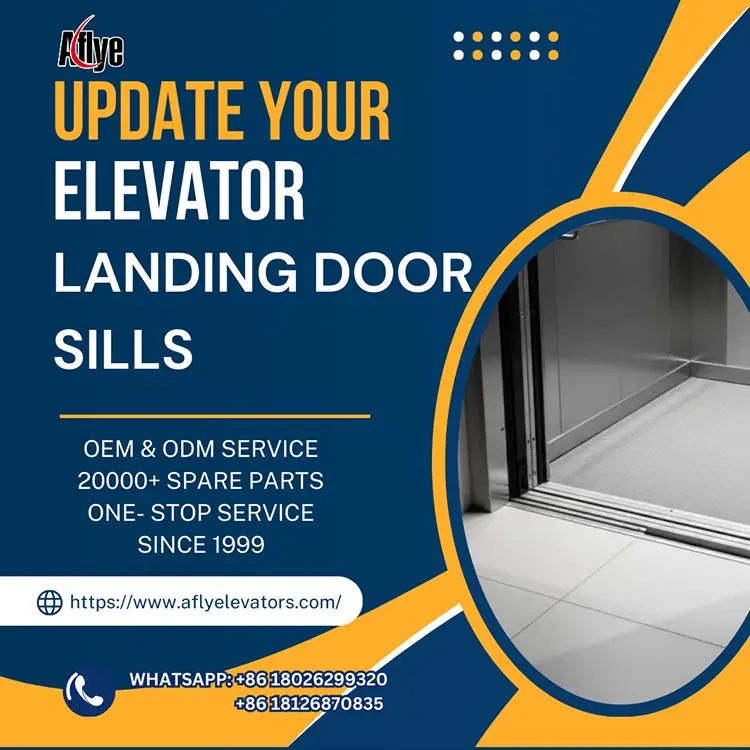
1. What Is the Function of an Elevator Landing Door Sill?
The landing door sill is located at the bottom of the landing door and serves as a fundamental guiding and sliding base for door operation.
It not only supports door guidance, but also directly affects:
Smoothness of door opening and closing
Relative positioning between the door panel and door lock
Door operator resistance and load
Overall service life of the door system
In short, the landing door sill is a critical foundational component in the elevator door system.
2. Common Door Operation Problems Caused by Worn Landing Door Sills
1) Unsmooth door operation, jamming, or resistance
After long-term use, sill wear, deepened grooves, or accumulated debris increase resistance for door shoes or rollers, resulting in:
Slower door opening speed
Pauses or vibration during door closing
Repeated start-stop behavior of the door operator
If not addressed promptly, this accelerates secondary damage to door operators, door rollers, and other related components.
2) Door panel misalignment, scraping, or abnormal noise
Uneven sill wear or local deformation causes unbalanced forces on the door panel, shifting its travel path. Typical symptoms include:
Door panels rubbing against the sill or door frame
Metal friction noise during door movement
Uneven door gaps affecting appearance
Over time, this may also deform the door panels themselves, increasing replacement costs.
3) Poor door lock engagement leading to frequent elevator shutdowns
This is one of the most hidden yet serious consequences of landing door sill wear.
When sill height changes or door panels shift, the relative position between the door lock and door vane changes, which may cause:
Door lock contacts failing to close properly
The control system misjudging the door as “not fully closed”
The elevator failing to start or stopping unexpectedly during operation
In maintenance practice, these issues are often mistaken for door lock faults, while the true root cause lies in the worn sill.
4) Light curtain misoperation and repeated door cycling
When sill wear leads to unstable door movement, increased door wobble can interfere with light curtain signals:
Doors reopening frequently with no passengers present
Doors automatically reopening just before closing
Reduced passenger experience and operating efficiency
Over time, this also shortens the service life of light curtains and other elevator components.
3. When Should the Landing Door Sill Be Inspected or Replaced?
Maintenance teams should prioritize checking the landing door sill if any of the following occur:
Frequent door problems without obvious electrical faults
Noticeably widened or deepened sill grooves
Cracks, deformation, or severe wear marks on the sill surface
Door issues persist even after debris cleaning
In such cases, simply adjusting door operator parameters or replacing door rollers usually treats the symptom, not the root cause.
4. Practical Maintenance and Replacement Recommendations
For routine maintenance, it is recommended to:
Regularly clean sand, dust, and debris from the sill
Check whether sill wear is even
Inspect door shoes and door rollers at the same time
For older elevators, prioritize sills made from wear-resistant materials
When wear exceeds safe limits, decisive replacement of the landing door sill is necessary to prevent cascading failures.
5. Choosing Reliable Elevator Landing Door Sill Components Is Essential
Landing door sills are typical foundational elevator components. Although structurally simple, they demand high precision and material quality.
Low-quality sills are prone to early wear and deformation, ultimately increasing long-term maintenance costs.
As a professional elevator & escalator spare parts supplier, A-FLY provides multiple specifications of high wear-resistant landing door sills compatible with various elevator door systems—helping maintenance companies and project owners improve door system stability and reduce repeated repairs.
Elevator door opening and closing problems are not always caused by the door operator or control system.
In many cases, the real issue lies at the very bottom—in the landing door sill.
Regular inspection and timely replacement of high-quality landing door sill components not only improve door operation experience, but also significantly reduce overall door system failure rates.
Choose reliable elevator components. Choose A-FLY—for smoother, safer, and more reliable elevator operation.