
The Role of Elevator Emergency Power Systems
In modern buildings, elevators have become an essential means of vertical transportation. However, in the event of a sudden power outage, elevators may stop operating and trap passengers inside the car, creating potential safety risks. Therefore, the elevator emergency power system has become a critical elevator component for improving overall safety.
As a professional elevator and escalator parts supplier, A-FLY has found in global maintenance and modernization projects that more and more customers are prioritizing the configuration and upgrading of emergency power systems to enhance safety levels.
1. Ensuring Safe Passenger Evacuation During Power Outages
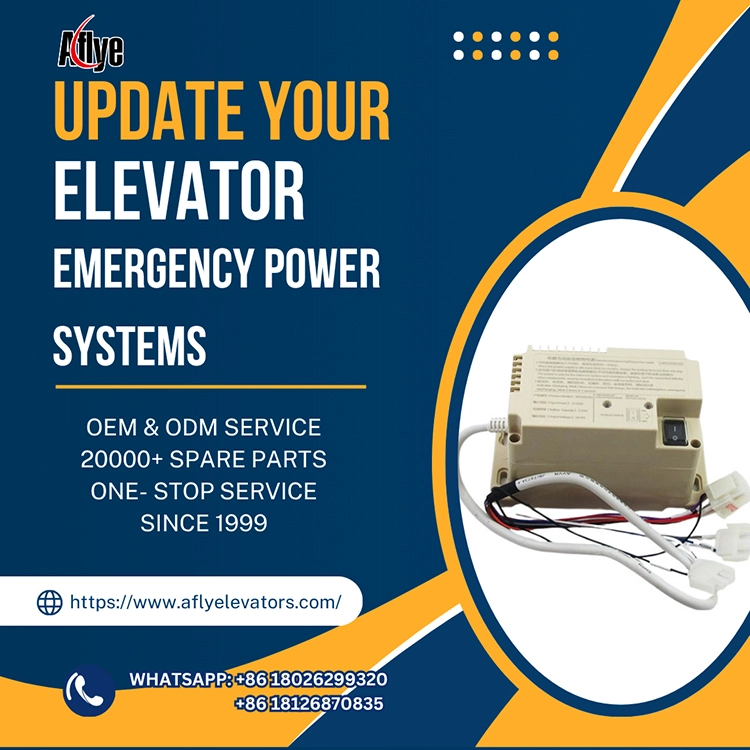
The core function of an emergency power system is to provide backup power when the main supply fails, allowing the elevator to travel to the nearest floor and open its doors.
This process is typically handled by an ARD (Automatic Rescue Device). Once a power failure is detected, the ARD immediately activates the backup power and drives the elevator at low speed to a safe landing, preventing passengers from being trapped.
Compared to elevators without emergency systems, this significantly improves safety.
2. Reducing Panic and Risks During Outages
When an elevator suddenly loses power without backup support, the car may become completely dark, causing passenger panic. Emergency power systems usually also supply basic lighting and control power, which means:
The car remains illuminated
The intercom system continues to function
Passengers can stay calm
Through the coordinated operation of these elevator components, both psychological stress and safety risks can be effectively reduced.
3. Protecting Control Systems and Electrical Equipment
Sudden power loss or voltage fluctuations can damage key electrical components such as the control system and inverter. Emergency power systems help stabilize the electrical environment to some extent, reducing the risk of damage.
This is especially important in areas with unstable power grids, where emergency systems serve both safety and equipment protection purposes.
4. Improving Operational Continuity
In critical locations such as hospitals, hotels, and commercial centers, elevators must maintain high operational continuity. Emergency power systems can sustain basic functionality during short outages, such as:
Prioritizing operation of selected elevators
Completing current travel cycles
Avoiding large-scale service interruptions
This is crucial for maintaining service quality.
5. Meeting Safety Standards and Project Requirements
In many countries and regions, emergency power systems have become a mandatory or recommended requirement for project approval or modernization—especially in public buildings and high-rise structures.
As a result, installing emergency systems is becoming a standard practice in both new installations and retrofit projects.
6. Working in Coordination with Other Components
Elevator emergency power systems typically work together with multiple components, such as:
Elevator intercom systems (for communication)
Car lighting systems (for visibility)
Door operator systems (for safe door opening)
Only through coordinated operation can a complete emergency response process be achieved.
7. How to Choose the Right Emergency Power System
When selecting an emergency power system, key factors to consider include:
System stability and response speed
Compatibility with elevator models and control systems
Battery capacity and service life
Ease of installation and maintenance
Choosing a reliable supplier is equally important.
8. A-FLY Emergency Power Solutions
As a professional elevator and escalator parts supplier, A-FLY offers a wide range of emergency power systems (ARD), intercom equipment, and related components suitable for various elevator brands and applications.
A-FLY products are known for their high stability, strong compatibility, and easy installation, helping customers quickly upgrade elevator safety and improve system reliability.
Conclusion
The elevator emergency power system is not only a safety feature but also an essential part of modern elevator systems.
By properly configuring key components such as ARD and partnering with a professional supplier like A-FLY, elevators can effectively handle unexpected power outages.
For property managers and maintenance teams, proactive planning and upgrades ensure that emergency systems are truly reliable when needed.