
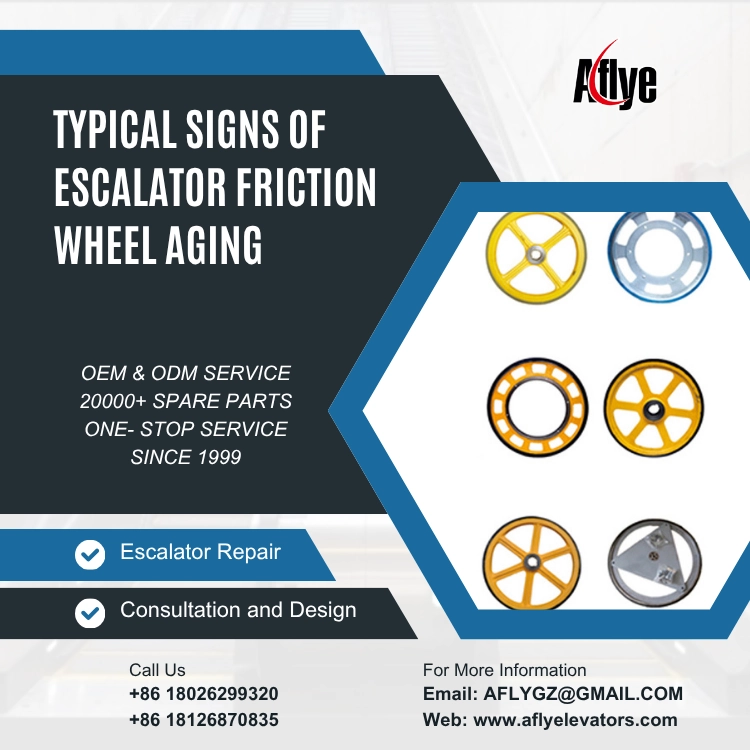
Typical Signs of Escalator Friction Wheel Aging
In an escalator drive system, the escalator friction wheel plays a crucial role in power transmission. As operating time increases, the friction wheel material gradually ages and its performance deteriorates, which can affect the stability of escalator operation. If not detected and addressed in time, it may lead to reduced transmission efficiency or even equipment shutdowns.
As a professional elevator & escalator parts supplier, A-FLY has summarized the most common signs of friction wheel aging based on extensive field experience.
1. Increased Friction Wheel Slippage
As the friction wheel ages, its surface friction coefficient decreases, making slippage more likely.
Common symptoms include:
Unstable escalator operation
Speed fluctuations
Weak starting performance
This issue becomes more noticeable during peak usage periods or under heavy loads.
2. Surface Hardening or Cracking
Long-term operation and environmental exposure can cause the friction wheel material to harden, crack, or partially deteriorate.
These conditions can:
Reduce contact efficiency between components
Cause uneven power transmission
Increase the risk of equipment failure
3. Increased Noise and Vibration
An aged friction wheel may generate:
Friction noises
Squeaking sounds
Periodic abnormal noises
These sounds are often accompanied by slight vibrations and are usually caused by uneven wheel surfaces or improper interaction with related elevator & escalator spare parts.
4. Reduced Transmission Efficiency
When the friction wheel loses its performance characteristics, the drive system must work harder to maintain normal operation.
As a result:
Transmission efficiency decreases
Energy consumption increases
Motors and other escalator components experience greater stress
5. Accelerated Wear of Other Elevator & Escalator Parts
Friction wheel aging is rarely an isolated issue.
Long-term slippage or uneven load distribution can accelerate wear on:
Chains
Bearings
Guide components
Other elevator and escalator spare parts
This ultimately increases overall maintenance costs.
Common Causes of Friction Wheel Aging
Friction wheel aging is commonly caused by:
High-frequency operation
Continuous heavy loads
Insufficient lubrication
Environmental conditions
Factors such as high temperatures, humidity, and dust accumulation can significantly accelerate material deterioration.
In addition, using low-quality elevator & escalator spare parts may shorten service life and reduce system reliability.
Maintenance and Replacement Recommendations
During routine maintenance, technicians should regularly inspect the friction wheel surface and check for:
Hardening
Cracks
Uneven wear
Signs of slippage
It is also important to monitor operating noise and vibration levels.
If significant aging is detected, the friction wheel should be replaced promptly with a compatible escalator spare part to prevent further system damage.
Conclusion
Understanding the typical signs of escalator friction wheel aging helps maintenance teams identify problems early and take corrective action before major failures occur.
Through proper maintenance and timely replacement of critical elevator & escalator spare parts, escalator reliability and operational stability can be significantly improved.
As a professional elevator & escalator parts supplier, A-FLY provides a wide range of escalator friction wheels and related spare parts solutions, helping customers achieve more efficient, reliable, and cost-effective maintenance management.