
Faulty Elevator Limit Switch: Symptoms & Replacement Tips
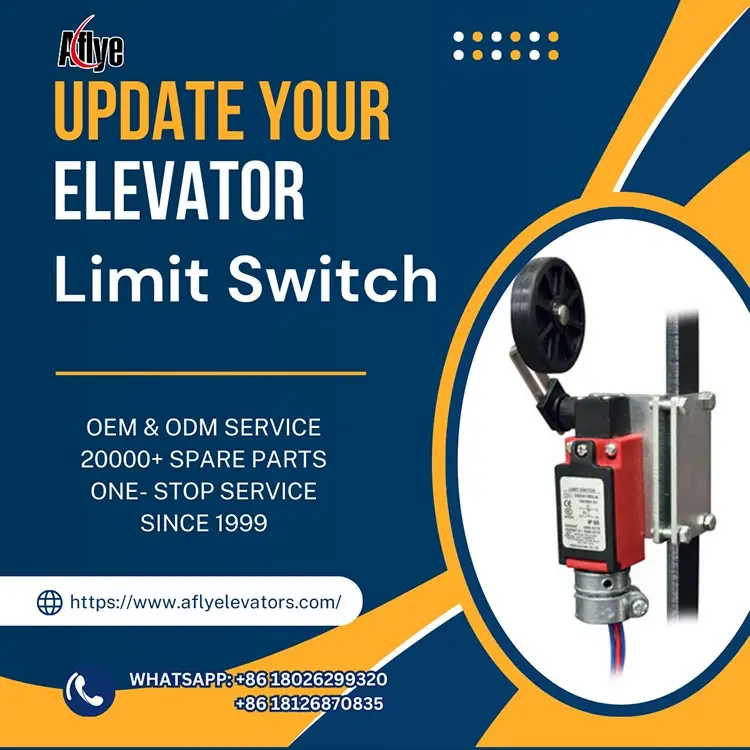
In an elevator safety system, the limit switch is one of the most critical yet often overlooked elevator components. It monitors the extreme travel positions of the car or counterweight to prevent overtravel, serving as a fundamental safety protection device.
Once a limit switch fails, it not only affects normal elevator operation but may also create serious safety risks.
As a long-term global elevator and escalator spare parts supplier, A-FLY has found that many unexpected elevator shutdowns are closely related to abnormal limit switch performance.
1. Main Function of the Elevator Limit Switch
Elevator limit switches are typically installed at the top and bottom of the hoistway. Their purpose is to cut off the control circuit or send a protective signal when the elevator approaches its travel limits.
Together with deceleration switches and final limit switches, they form a multi-layer safety protection system and are an essential part of the elevator safety circuit.
When functioning properly, passengers are unaware of their existence. However, once a failure occurs, the control system will immediately trigger a fault and stop operation.
2. Common Symptoms of a Faulty Limit Switch
During routine maintenance, the following symptoms indicate that the elevator limit switch should be inspected:
1. Elevator Fails to Start
The control system detects an open safety circuit, displays a safety fault code, and prevents the motor from running.
2. Sudden Shutdown Near Certain Floors
The car suddenly loses power when approaching the top or bottom of the shaft, indicating false triggering or contact instability.
3. Intermittent Faults
Poor internal contact or spring fatigue may cause unstable signals, leading to occasional shutdowns.
4. Abnormal Friction Noise at Shaft Top or Bottom
If a mechanical limit switch shifts position, it may be continuously pressed by the actuating cam, producing unusual friction sounds.
5. Safety Circuit Alarm with No Other Component Issues
After ruling out door locks and emergency stop switches, the limit switch often becomes the key inspection target.
3. Main Causes of Limit Switch Failure
Mechanical Wear
Frequent triggering by the cam causes fatigue or wear of internal springs and contacts.
Dust and Oil Contamination
The hoistway environment is complex. Dust intrusion can result in poor contact performance.
Misalignment or Loose Installation
If the switch becomes loose, abnormal force may cause false activation or premature triggering.
Electrical Aging
Oxidized contacts and increased resistance lead to unstable signal transmission.
Low-Quality Components
Inferior limit switches may have weak housings and poor contact materials, leading to early failure in high-frequency applications.
4. Key Precautions When Replacing an Elevator Limit Switch
Replacing this type of elevator safety component requires careful handling. The following points are essential:
1. Disconnect Main Power
Since the limit switch is part of the safety circuit, working on it while energized poses serious risk.
2. Select the Correct Specification
Different elevator brands require specific contact ratings, actuation strokes, and mounting dimensions. Confirm parameter compatibility before installation.
3. Adjust Proper Actuation Position
After replacement, ensure the cam activates the switch within the designed travel range—neither too early nor beyond the protection distance.
4. Ensure Secure Installation
Tighten mounting screws firmly to prevent vibration-induced displacement.
5. Test Safety Circuit Integrity
After installation, perform slow-speed and limit tests to verify effective protection functionality.
5. Why Choose High-Quality Limit Switch Components?
Although small in size, the limit switch directly impacts elevator safety. High-quality products typically feature:
Highly wear-resistant contact materials
Dust- and oil-resistant structural design
Stable actuation accuracy
Extended mechanical service life
Reliable elevator components help reduce false triggering, frequent shutdowns, and overall maintenance costs.
6. A-FLY Provides Reliable Elevator Safety Switch Solutions
As a professional elevator and escalator spare parts supplier, A-FLY provides a wide range of elevator limit switches, elevator safety switches, and safety circuit components for global maintenance companies.
These products are durable, stable, and compatible with multiple elevator brands and modernization projects. By selecting high-quality elevator components, maintenance teams can restore reliable operation while ensuring long-term safety and stability.
Conclusion
Although small in size, the elevator limit switch plays a vital role in the overall safety system. When abnormal shutdowns or safety circuit alarms occur, this component should be carefully inspected.
Strict replacement procedures and sourcing from professional suppliers such as A-FLY can significantly extend equipment service life, enhance operational safety, and ensure a reliable passenger experience.