
What Safety Hazards Can Be Caused by Elevator Light Curtain Failure?
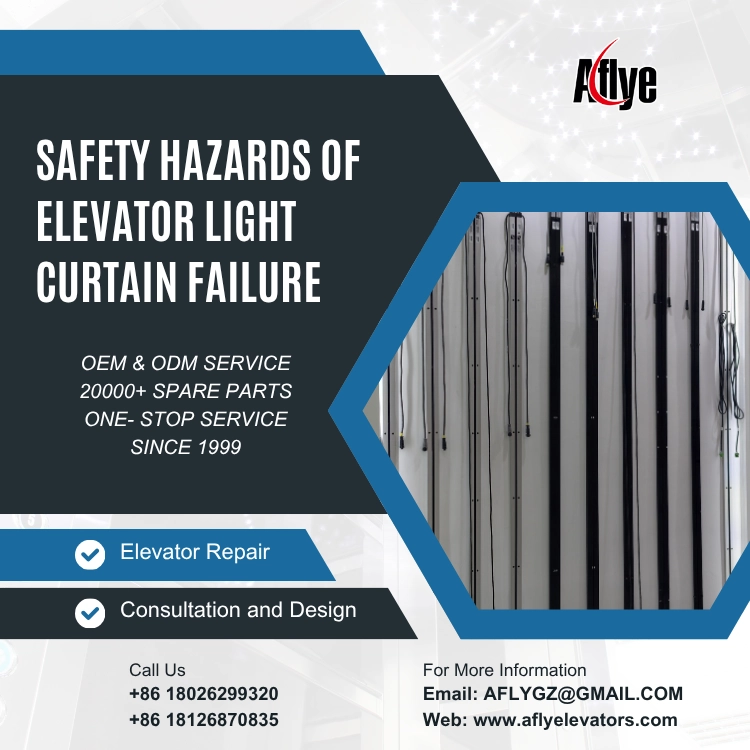
In an elevator door system, the elevator light curtain is an important safety protection device. It uses infrared sensors to detect obstacles in the doorway area, helping prevent passengers or objects from being trapped by the closing doors. Once the light curtain fails, the elevator door loses a critical layer of protection, potentially creating a variety of safety risks.
As a professional elevator & escalator parts supplier, A-FLY has found through practical maintenance experience that light curtain issues are often overlooked, yet their impact can be significant and immediate.
1. Increased Risk of Passenger Entrapment
The primary function of a light curtain is to monitor the doorway area.
When the light curtain fails, the elevator doors may no longer detect passengers or objects during the closing process, increasing the risk of:
Passenger entrapment
Object entrapment
Door-related accidents
This is one of the most direct and serious safety hazards, especially during peak traffic periods and in crowded public facilities.
2. Abnormal Door System Operation
A faulty light curtain signal can disrupt the normal logic of the door system.
Common symptoms include:
Doors stopping unexpectedly while closing
Repeated opening and closing cycles
Doors reopening immediately after closing
These issues not only affect passenger experience but also place additional stress on the door system.
3. Frequent Error Codes and Elevator Shutdowns
When the control system detects abnormal light curtain signals, it may activate safety protection functions.
As a result, the elevator may experience:
Frequent fault codes
Unexpected shutdowns
Interrupted service
These issues can affect normal operation and increase troubleshooting time for maintenance personnel.
4. Additional Wear on Other Elevator & Escalator Parts
When the light curtain fails, the door system may operate under unstable conditions.
This can place extra stress on related elevator & escalator spare parts, including:
Long-term operation under abnormal conditions can accelerate wear and increase overall maintenance costs.
5. Reduced Overall Safety Protection
The elevator light curtain is an important component of the elevator's multiple safety protection systems.
Once it fails, the overall safety level of the elevator is reduced, even if other systems continue to function normally.
In extreme cases, a light curtain failure combined with other faults may significantly increase operational risks.
Common Causes of Elevator Light Curtain Failure
Elevator light curtain failures are commonly caused by:
Dirty or contaminated sensor surfaces
Loose wiring connections
Control module malfunctions
Component aging
For example, dust accumulation, oil contamination, or moisture exposure can interfere with infrared signal transmission.
In addition, performance degradation caused by long-term use is another common factor.
Maintenance Recommendations
During routine maintenance, technicians should:
Regularly clean the light curtain surface
Ensure that sensor paths are free from obstructions
Check wiring connections for stability
Verify signal transmission and system operation
For aging or deteriorating elevator & escalator spare parts, timely replacement is recommended to ensure reliable light curtain performance.
Conclusion
The safety hazards caused by elevator light curtain failure should not be underestimated. A malfunctioning light curtain directly affects passenger safety and the stable operation of the elevator system.
Through regular inspections and timely replacement of critical elevator components, maintenance teams can effectively reduce risks and improve system reliability.
As a professional elevator & escalator parts supplier, A-FLY provides a wide range of elevator light curtains and related elevator & escalator spare parts solutions, helping customers achieve safer, more efficient, and more reliable elevator operation and maintenance management.