
What Problems Can Be Caused by Damaged Elevator Door Hanger Roller Bearings?
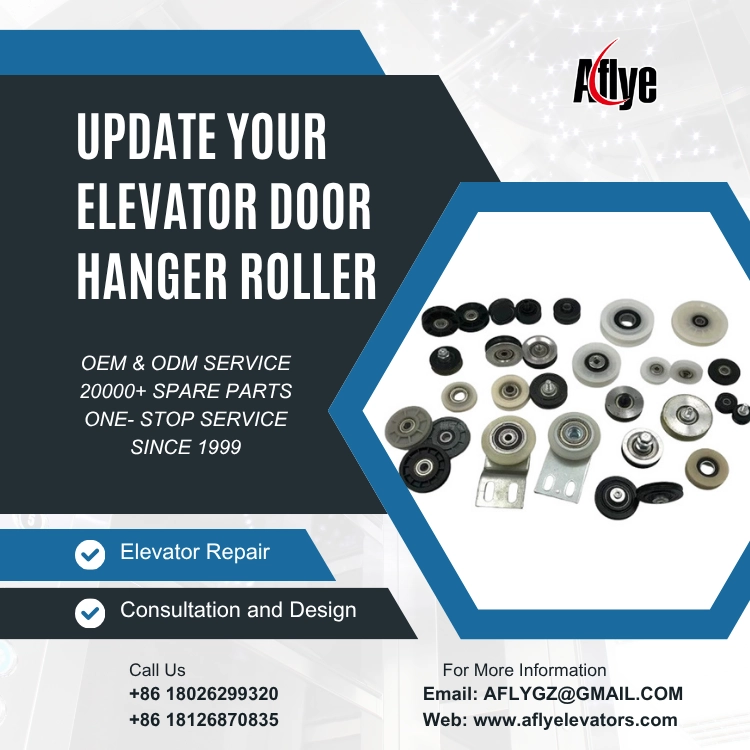
In an elevator door system, elevator door hanger rollers play an important role in supporting the door panels, guiding their movement, and ensuring smooth opening and closing operations. The bearings inside the rollers directly determine the flexibility and stability of the roller movement.
Once the door hanger roller bearings are damaged, the operating quality of the elevator door system will decline significantly. This not only affects the passenger experience, but may also lead to repeated door-closing faults, abnormal door operator loads, and even elevator shutdowns.
For maintenance personnel, identifying these abnormalities early and replacing matching elevator & escalator spare parts in time is extremely important.
1. Increased Noise During Door Operation
One of the most common signs of damaged door hanger roller bearings is increased abnormal noise during door opening and closing.
Typical sounds may include:
Friction noise
Rolling noise
Metallic scraping sounds
These noises are usually more noticeable when the elevator door starts or stops moving.
This often indicates that the bearing has suffered from internal wear, insufficient lubrication, or damaged rolling elements, preventing the door hanger roller from rotating smoothly.
If abnormal noise is ignored for a long time, it may further damage guide rails, door vanes, and other related elevator spare parts.
2. Unsmooth Door Opening or Closing
When the bearing becomes damaged, the resistance of the door hanger roller increases. As a result, the door panel may experience:
Jerky movement
Increased friction
Slower opening or closing speed
Passengers may notice that the elevator door no longer moves smoothly or that the closing action becomes noticeably delayed.
In some projects, this problem may also appear as:
Repeated door reopening
Incomplete door closing
Fault codes and elevator shutdowns
Although the issue may initially seem related to the door operator control system, the real cause may actually be damaged door hanger roller bearings.
3. Increased Door Operator Load and Higher Failure Rates
Poor roller rotation directly increases the workload of the door operator.
The door operator motor must overcome greater resistance when moving the door panels, which may eventually cause:
Higher operating current
Motor overheating
Control system fault codes
This secondary effect becomes even more obvious in older elevators or high-frequency usage environments.
Although the bearing is a small component, it continuously affects the entire door system and related elevator & escalator spare parts.
4. Door Panel Misalignment or Unstable Operation
After bearing wear occurs, the support precision of the door hanger roller decreases. During operation, the door panel may experience:
Slight sagging
Misalignment
Shaking or wobbling
At the early stage, this may only appear as uneven door gaps. Later, it may develop into friction between the door panel and:
Sill
Door frame
Guide rail
This further affects door opening and closing accuracy.
In such cases, simply adjusting the door operator parameters without solving the root problem usually results in repeated failures.
5. Accelerated Wear of the Entire Door System
When door hanger roller bearings are damaged, other door system components often begin to wear abnormally as well.
For example:
Increased guide rail wear
Abnormal force on door sliders
Poor alignment of door vanes
What initially starts as a simple bearing issue may eventually require replacement of multiple elevator spare parts, increasing maintenance costs and elevator downtime risks.
Therefore, when troubleshooting door system faults, maintenance personnel should not focus only on the door operator or control system. The condition of door hanger rollers and bearings is equally important.
Maintenance Recommendations
During routine maintenance, technicians should regularly inspect elevator door hanger rollers for:
Abnormal noise
Uneven wear
Looseness
Overheating
Unsmooth movement
Once signs of bearing damage are found, the matching door hanger rollers and related elevator & escalator spare parts should be replaced promptly to prevent small issues from developing into elevator shutdown faults.
For high-frequency usage projects, preventive inspection and scheduled replacement are especially important.
Conclusion
Understanding the problems caused by damaged elevator door hanger roller bearings helps maintenance teams quickly identify the root cause of door system faults, improve repair efficiency, and reduce repeated elevator shutdowns.
As a professional elevator & escalator parts supplier, A-FLY provides various types of elevator door hanger rollers and related elevator spare parts to help customers achieve more stable and efficient maintenance management.