
What Operating Problems Can Be Caused by Escalator Step Chain Tensioner Failure?
During long-term escalator operation, the escalator step chain tensioning device plays an important role in maintaining proper chain tension and ensuring smooth step movement. If the tensioning device fails, the escalator step chain may become loose, fluctuate, or experience uneven loading, which can lead to various operating problems and affect both equipment safety and passenger comfort.
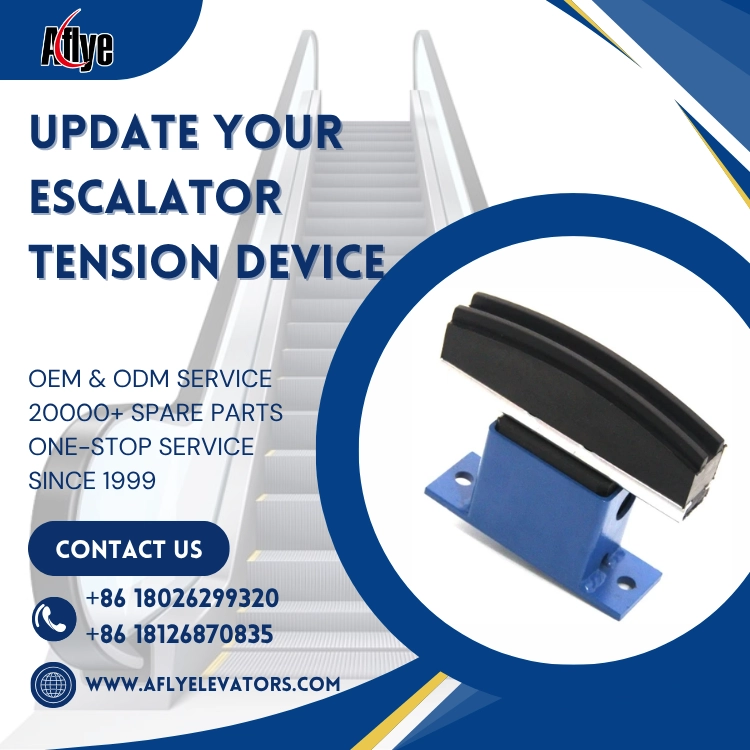
1. What Is the Function of an Escalator Step Chain Tensioner?
During operation, the escalator steps are driven in a continuous loop by the escalator step chain. Due to long-term loads, impacts, and friction, the chain may gradually elongate during service.
The escalator chain tensioning device compensates for changes in chain length and keeps the step chain within the proper tension range, preventing excessive slack and unstable operation.
If the tensioning function deteriorates, the synchronization of the escalator transmission system may be affected.
2. Common Causes of Escalator Step Chain Tensioner Failure
1. Fatigue of the Tension Spring or Mechanism
The tensioning device is subjected to repeated loads during long-term operation. Its internal spring may gradually fatigue and lose elasticity, reducing the effective tensioning force.
Common symptoms include:
Slight impact during step movement;
Increased chain slack;
Abnormal sounds during starting and stopping.
2. Long-Term Wear and Elongation of the Step Chain
The escalator step chain is a typical escalator wear part. Over time, wear between chain components creates additional clearance and increases the overall chain length.
When chain elongation exceeds the compensation range of the tensioning device, stable chain tension cannot be maintained even if the tensioning mechanism itself is functioning normally.
3. Wear of the Tensioning Wheel or Guide Components
Wear of the tensioning wheel, bearings, and other supporting components can affect the chain's running path and reduce the effectiveness of the tensioning system.
In severe cases, this may cause:
Chain misalignment;
Changes in step spacing;
Increased operating noise.
4. Insufficient Regular Escalator Maintenance
Some escalators operate for long periods without systematic inspection, making it easy to overlook the step chain tension condition.
Insufficient lubrication and accumulated component wear can accelerate tensioning device failure.
3. What Operating Problems Can Abnormal Step Chain Tension Cause?
1. Unstable Step Movement
When the escalator step chain has insufficient tension, the steps may experience impact when entering the drive area or return area, causing passengers to feel vibration or jerking.
2. Abnormal Operating Noise
A loose escalator chain can produce impact and friction noises during operation, which are often more noticeable around the upper and lower turning areas.
3. Accelerated Wear of the Step Chain and Sprockets
Improper chain tension can result in poor engagement between the chain and sprocket, increasing loads on the escalator transmission system and accelerating wear of components such as the escalator step chain and drive sprocket.
4. Increased Safety Risks
If step chain tension becomes seriously insufficient, it may affect synchronized step movement and cause abnormal escalator operation. In such cases, the escalator should be stopped and inspected promptly.
4. Solutions for Escalator Step Chain Tension Problems
When a tensioning device problem is suspected, maintenance personnel should conduct a comprehensive inspection.
First, check the mechanical condition of the escalator tensioning device, including the spring, tensioning wheel, and sliding mechanism.
Next, measure changes in the overall length of the escalator step chain to determine whether elongation exceeds the allowable range.
The chain lubrication condition and sprocket engagement should also be inspected.
If the tensioning device is damaged, it should be replaced with the correct escalator spare part. If the step chain is severely worn, the chain should also be replaced to prevent abnormal wear of the new components.
5. Purchasing Tips for Escalator Step Chains and Tensioning Devices
When purchasing escalator step chains, escalator tensioning devices, and related components, pay particular attention to:
Original equipment mounting dimensions;
Chain specifications and pitch;
Compatibility of the tensioning mechanism;
Material and wear resistance of the components.
For old escalator modernization projects, it is recommended to work with a supplier capable of providing a complete matching solution rather than purchasing individual components separately. This can help reduce installation and compatibility problems.
6. A-FLY Elevator & Escalator Parts Supply Capability
A-FLY specializes in the global supply of elevator and escalator parts, providing one-stop solutions including escalator step chains, escalator tensioning devices, escalator rollers, escalator steps, escalator drive chains, escalator safety components, and other escalator wear parts.
For escalator maintenance, modernization projects, and new escalator installations, A-FLY supports model confirmation, dimensional matching, and OEM/ODM customization, helping customers quickly source reliable elevator and escalator components.
Whether you need mechanical transmission components or safety-related escalator parts, A-FLY can provide stable supply and professional technical support.
Conclusion
Although the escalator step chain tensioning device is an auxiliary component, it plays an important role in maintaining the stability of the entire step system. Regularly checking the tensioning device, carrying out proper escalator maintenance, and choosing a reliable escalator parts supplier can effectively reduce operating failures, extend equipment service life, and improve escalator operating safety.