
What Operating Risks Can a Faulty Elevator Limit Switch Cause?
In an elevator safety protection system, the elevator limit switch is one of the most critical elevator safety switches. Its primary function is to limit the travel range of the elevator car and prevent it from moving beyond its designated operating limits. When the elevator reaches a preset position, the limit switch sends a signal to the control system, allowing the elevator to decelerate, stop, or activate protective functions in time.
If the elevator limit switch fails, it can create significant operational risks and may even compromise passenger safety.
For elevator maintenance technicians, regularly inspecting the limit switch and related elevator and escalator spare parts is essential to ensuring safe elevator operation.
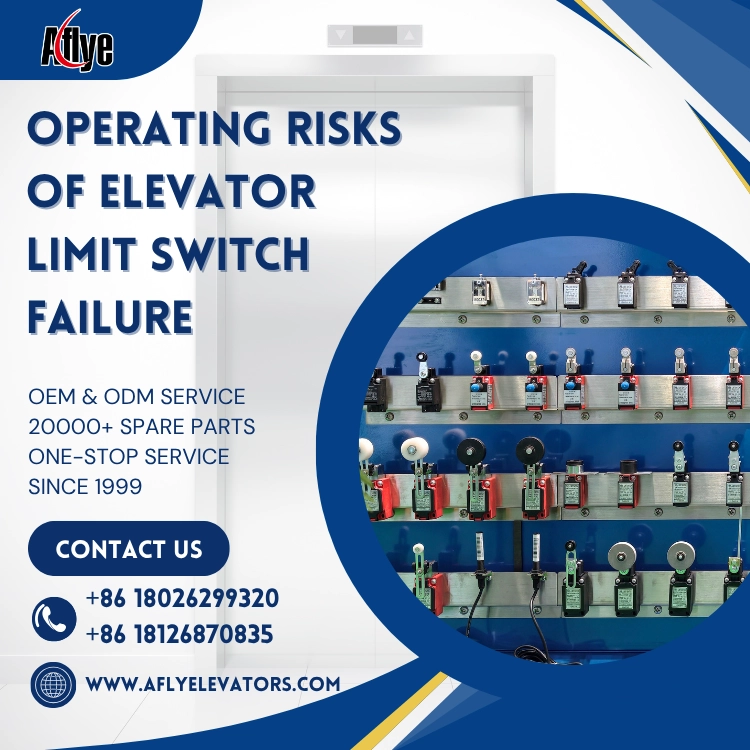
1. The Elevator May Overshoot Floors or Stop Incorrectly
When the elevator limit switch sends unstable signals, the control system may be unable to accurately determine the car's position, resulting in:
Floor overshooting
Inaccurate leveling
Abnormal deceleration
Failure to stop correctly at the landing
These problems are particularly common in older elevators, where worn switch contacts or misaligned installation positions can lead to unreliable operation.
Solution:
Maintenance personnel should verify that:
The limit switch is installed correctly
The actuating mechanism moves freely
The switch operates reliably
If the signal is intermittent, replace the elevator limit switch with a compatible model as soon as possible.
2. Increased Risk of Overtravel at the Top or Bottom
The elevator limit switch is a vital component of the elevator's terminal safety protection system.
If the upper or lower limit protection fails, the elevator may not stop in time during abnormal operating conditions, increasing the risk of:
Overtravel at the top of the shaft
Bottom overrun (bottoming)
Although modern elevators are equipped with multiple layers of safety protection, a failed limit switch should never be ignored.
Inspection recommendations:
Regularly test the operation of both the upper and lower limit switches, and inspect:
Switch brackets
Actuating cams
Wiring terminals
Safety circuit connections
Ensure that protective signals are transmitted reliably to the elevator control system.
3. Safety Circuit Faults May Cause Elevator Shutdown
Poor contact inside the elevator safety switch, loose wiring, oxidized contacts, or moisture intrusion can all cause safety circuit failures.
When the control system detects unstable safety signals, it may trigger:
Fault alarms
Automatic elevator shutdown
This affects both passenger service and maintenance efficiency.
Solution:
Check whether:
Wiring connections are secure
Contacts are burned or oxidized
Cables are damaged
If the switch housing is cracked, the mechanism sticks, or internal components have deteriorated, replace the switch promptly rather than relying on temporary repairs.
4. Elevator Limit Switch Purchasing Recommendations
When purchasing an elevator limit switch, buyers should verify:
Brand and model
Mounting method
Contact configuration
Voltage and current ratings
Protection rating
Actuation type
Compatibility with the elevator control system
Different elevator brands and control cabinets require different safety switch specifications, so appearance alone should never be used as the basis for selection.
As a professional elevator and escalator spare parts supplier, A-FLY provides elevator limit switches, elevator safety switches, leveling switches, door lock switches, elevator control cabinet components, and a comprehensive range of elevator and escalator spare parts for maintenance companies, engineering contractors, and spare parts distributors worldwide.
A-FLY offers:
Multi-brand compatibility matching
Bulk supply
OEM/ODM customization
Fast worldwide delivery
These services help customers improve elevator maintenance efficiency while minimizing downtime.
Conclusion
A faulty elevator limit switch can lead to floor overshooting, inaccurate stopping, fault-related shutdowns, and even increase the risk of top or bottom overtravel.
Maintenance personnel should place great importance on routine inspection of elevator safety switches and replace unreliable elevator and escalator spare parts promptly to ensure the long-term safety, stability, and reliability of elevator operation.