
Causes of Elevator Compensation Chain Noise and Swinging
In an elevator system, the elevator compensation chain is designed to balance the weight difference between the elevator car and the counterweight, helping to maintain smooth and stable operation. This is especially important in high-rise elevators, where the condition of the compensation chain has a direct impact on ride comfort.
If the elevator compensation chain produces abnormal noise, excessive swinging, rubbing, or vibration, it can not only generate noticeable operating noise but also reduce ride quality and accelerate the wear of related components.
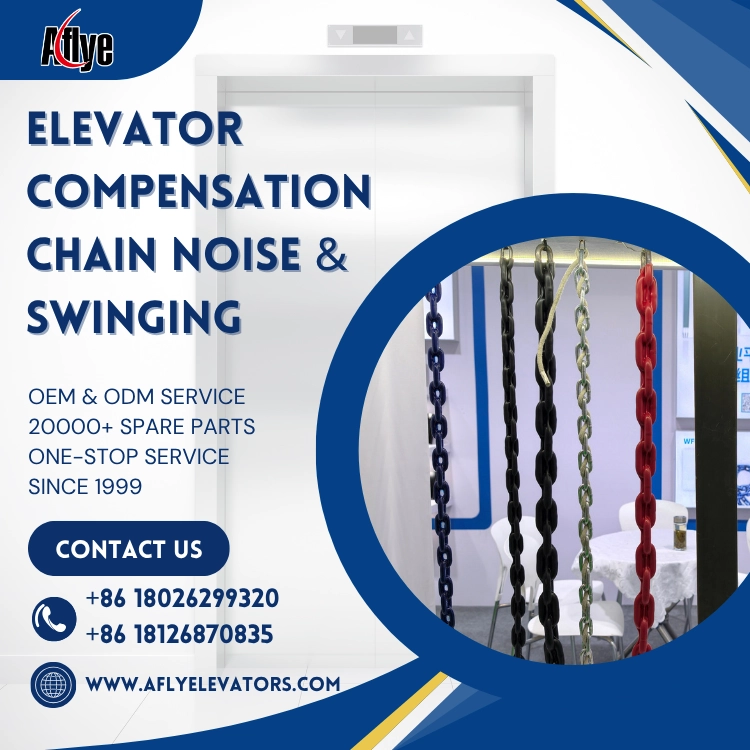
1. Compensation Chain Wear or Aging
After long-term operation, the rubber coating on the compensation chain may become worn, cracked, or hardened, while the chain links themselves may become loose.
When the compensation chain rubs against guide devices, pit components, or hoistway structures, it may produce:
Knocking noises
Dragging sounds
Periodic abnormal noise
Solution:
Maintenance technicians should inspect the compensation chain for:
Surface damage
Deformation
Cracks
Localized wear
If the chain shows significant signs of aging, replace it with a compatible elevator compensation chain to prevent further problems.
2. Compensation Chain Guide Roller Does Not Rotate Smoothly
The compensation chain guide roller helps guide the chain smoothly during operation.
If the guide roller has:
Seized bearings
Worn rolling surfaces
Misalignment
Loose mounting
the compensation chain may begin to bounce, swing, or generate friction noise during operation.
Inspection recommendations:
Check whether the guide roller:
Rotates freely
Produces bearing noise
Has worn grooves
Is properly aligned
If the guide roller is damaged, replace it promptly to prevent premature wear of a new compensation chain.
3. Improper Installation or Incorrect Tension
Incorrect installation, improper chain length, or uneven tension can also cause excessive swinging.
During high-speed operation or acceleration and deceleration, the compensation chain may oscillate significantly and strike hoistway components, creating noticeable noise.
Solution:
Inspect:
Compensation chain length
Fixed-end connections
Guide device position
Operating path
Ensure that the chain moves smoothly inside the hoistway without contacting surrounding components.
4. Related Components Should Also Be Inspected
Abnormal elevator compensation chain noise is not always caused by the chain itself. Other components that can affect chain stability include:
Guide rollers
Pit guide devices
Mounting brackets
Connecting hardware
Elevator car operating condition
Maintenance should involve a complete system inspection rather than replacing only one component.
5. Elevator Compensation Chain Purchasing Recommendations
When purchasing an elevator compensation chain, buyers should confirm:
Elevator travel height
Rated load
Operating speed
Chain specifications
Rubber coating type
Installation length
Compatible elevator brand
Related elevator and escalator spare parts, such as compensation chain guide rollers and connecting components, should also be matched in terms of dimensions and mounting methods to avoid installation problems or recurring operating noise.
As a professional elevator and escalator spare parts supplier, A-FLY supplies elevator compensation chains, compensation chain guide rollers, guide sheaves, traction sheaves, steel wire ropes, guide shoes, and a comprehensive range of elevator and escalator spare parts for maintenance companies, engineering contractors, and spare parts distributors worldwide.
A-FLY offers:
Multi-brand compatibility matching
Bulk supply
OEM/ODM customization
Fast worldwide delivery
These services help customers improve maintenance efficiency while reducing elevator downtime.
Conclusion
Abnormal elevator compensation chain noise and swinging are typically caused by chain aging, faulty compensation chain guide rollers, improper installation, or uneven tension.
Maintenance technicians should regularly inspect the compensation chain and related elevator and escalator spare parts, replacing worn or unreliable components promptly to ensure the elevator operates safely, smoothly, and reliably over the long term.