
Aging Elevator Buffers: Identification & Replacement Cycles
In an elevator safety system, the elevator buffer serves as the final passive protection device. It is one of the most critical yet often overlooked elevator components. In the event of uncontrolled downward movement or overtravel, the buffer absorbs impact energy to reduce equipment damage and protect passenger safety. Therefore, the condition of the buffer directly affects the overall safety level of the elevator.
As a long-term global elevator and escalator spare parts supplier, A-FLY has observed in numerous projects that buffer aging often becomes a hidden safety risk. Many maintenance teams only replace buffers after inspection failures occur.
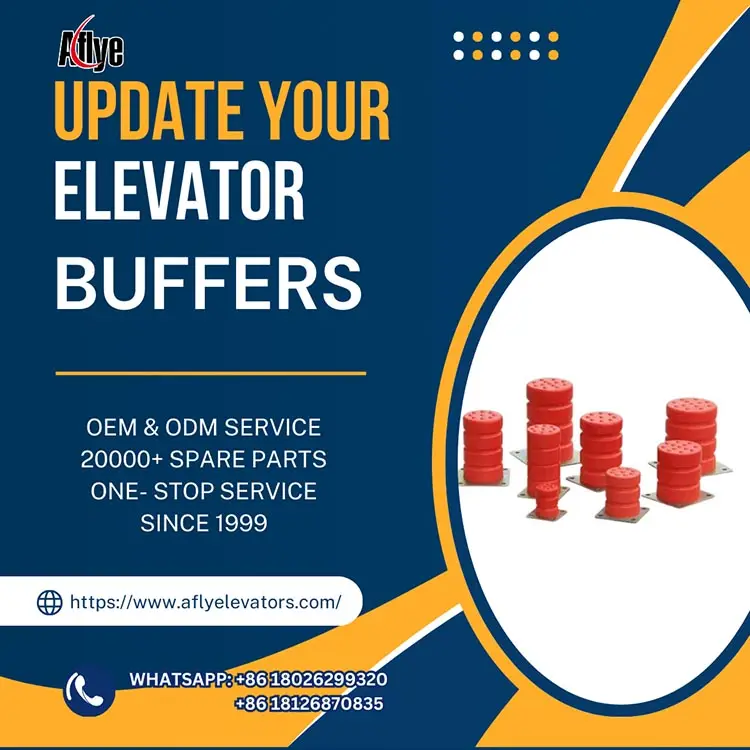
1. Basic Types of Elevator Buffers
Elevator buffers are generally classified into two main types:
Spring Buffer
Spring buffers have a simple structure and absorb impact energy through spring compression. They are commonly used in low-speed elevators.
Hydraulic Buffer (Oil Buffer)
Hydraulic buffers absorb kinetic energy through oil damping and are widely used in medium- and high-speed elevators. This type is more common in modern elevator safety systems.
Regardless of type, buffers are installed at the bottom of the hoistway, where they are exposed to temperature fluctuations, humidity, and dust—conditions that accelerate aging.
2. Typical Signs of Elevator Buffer Aging
During routine inspections, the following symptoms often indicate that a buffer has entered the aging stage:
Visible Corrosion or Structural Deterioration
Rust, deformation, or surface damage on the housing suggests reduced structural integrity.
Slow Return Movement
If a hydraulic buffer does not quickly return after compression, internal seals may have aged or hydraulic oil performance may have degraded.
Oil Leakage
Oil stains at the base of a hydraulic buffer indicate seal deterioration, which significantly reduces damping performance.
Spring Fatigue or Deformation
In spring buffers, reduced height or abnormal spring spacing signals decreased energy absorption capability.
Insufficient Stroke During Testing
If annual inspections show inadequate buffering stroke or abnormal damping, internal structural aging is likely.
Oil Accumulation or Odor in the Pit
Leaking hydraulic oil mixed with dust can form sludge, interfering with normal buffer operation.
These signs indicate that the buffer may no longer provide its designed energy absorption capacity.
3. Main Causes of Buffer Aging
Humid Environment
Elevator pits are often damp, leading to corrosion of metal components.
Temperature Fluctuations
Hydraulic oil viscosity may degrade over time due to temperature changes, affecting buffering performance.
Long-Term Inactivity
Buffers are rarely activated under normal operation. Prolonged inactivity can accelerate seal aging and failure.
Dust and Debris Accumulation
Poor pit maintenance can obstruct free buffer movement.
Low-Quality Components
Inferior buffers often use low-durability seals, leading to oil leakage and performance decline within a few years.
4. Recommended Replacement Cycle for Elevator Buffers
Although replacement cycles vary by brand and operating conditions, global maintenance experience suggests:
Hydraulic buffers should be carefully evaluated after 5–8 years of service
Spring buffers should undergo performance testing after 6–10 years
Immediate replacement is required if oil leakage, slow return, or inspection failure occurs
It is important to note that buffers are mandatory safety inspection components. If they fail to meet standards, the elevator will not pass safety certification.
5. Key Precautions When Replacing Elevator Buffers
When replacing this type of safety component, the following points are essential:
Disconnect the main elevator power supply before starting work
Confirm that the new buffer matches the original specifications (model, rated stroke, load capacity)
Secure the base firmly to prevent misalignment
Inspect hydraulic seals for possible transport-related loosening
Conduct slow-speed test runs after installation to verify proper coordination with the safety system
6. Importance of Choosing High-Quality Elevator Buffers
High-quality elevator buffers typically feature:
Hydraulic oil resistant to extreme temperatures
High-strength sealing components
Corrosion-resistant housing
Stable and reliable damping curves
These characteristics significantly extend service life, reduce inspection risks, and lower long-term maintenance costs.
7. A-FLY Provides Reliable Elevator Buffer and Safety Components
As a professional elevator and escalator spare parts supplier, A-FLY supplies elevator oil buffers, spring buffers, safety buffers, and hoistway safety components for global maintenance and modernization projects.
Selecting stable and reliable elevator components not only enhances safety levels but also reduces unexpected shutdowns and repetitive repairs.
Conclusion
Although elevator buffers usually remain unnoticed during normal operation, they play a crucial protective role in critical situations. By regularly checking for aging signs, planning reasonable replacement cycles, and selecting high-quality elevator components, long-term safe operation can be effectively ensured.Partnering with an experienced supplier such as A-FLY is a reliable way to enhance maintenance quality and overall elevator safety performance.