
Common Wear-and-Tear Elevator Spare Parts List
In daily elevator maintenance, most elevator shutdowns are not caused by major structural failures, but by the sudden damage or aging of commonly used elevator spare parts. If replacement parts are not available on site, repair time may be extended and equipment downtime increased. Therefore, for elevator maintenance companies or engineering teams, establishing a well-planned inventory of frequently used wear parts is extremely important.
As a long-term global elevator and escalator spare parts supplier, A-FLY has found through numerous maintenance projects that many common faults are concentrated in small components that require frequent replacement. Keeping these spare parts in stock can significantly improve maintenance efficiency.
1. Elevator Push Buttons and COP / LOP Components
Elevator push buttons are among the most frequently used components by passengers, making them one of the most failure-prone elevator parts. Continuous pressing, dust intrusion, or aging micro switches can lead to issues such as button malfunction, backlight failure, or unresponsive triggering.
Maintenance teams usually keep the following spare parts in stock:
Button light boards
COP (Car Operating Panel) buttons
LOP (Landing Operating Panel) call buttons
These parts are replaced very frequently in residential buildings, office buildings, and commercial facilities.
2. Wear Parts in the Elevator Door System
The door system is one of the most common sources of elevator faults and accounts for a large proportion of maintenance work. Typical problems include rough door closing, door panel vibration, or door operator alarms.
Maintenance engineers usually stock the following components:
Door operator belts
These parts endure constant friction and impact, making them typical high-replacement components.
3. Safety Protection Components
Elevator operation relies heavily on multiple safety protection devices. Some of these components may lose sensitivity or develop contact issues after long periods of use.
Common safety-related wear parts include:
Limit switches
Door lock assemblies
Safety contacts
Once these parts fail, the elevator system usually enters protection mode, requiring immediate replacement.
4. Common Electrical Control Components
Within the elevator control system, some small electrical components may appear simple but perform critical functions.
Common spare parts include:
Relays
Contactors
Encoders
Temperature-controlled fans
Although these components are generally inexpensive, they are essential for stable system operation.
5. Frequently Replaced Components Inside the Elevator Car
Inside the elevator car, there are also several small components that often require replacement, such as:
Cabin fans
Cabin lighting power supplies
Display boards
Buzzer modules
While these parts do not directly affect the drive system, they significantly impact passenger experience.
6. Why Maintenance Teams Must Maintain a Spare Parts Inventory
For maintenance companies, one of the worst situations is an elevator breakdown without the necessary spare parts available. Preparing commonly used elevator parts in advance offers several advantages:
Shorter repair time – Engineers can complete repairs immediately without waiting for procurement or shipping.
Higher customer satisfaction – Quick restoration of elevator operation is a key concern for property managers.
Lower long-term maintenance costs – Bulk purchasing of elevator and escalator spare parts usually results in more stable pricing.
7. A-FLY: One-Stop Elevator and Escalator Spare Parts Supplier
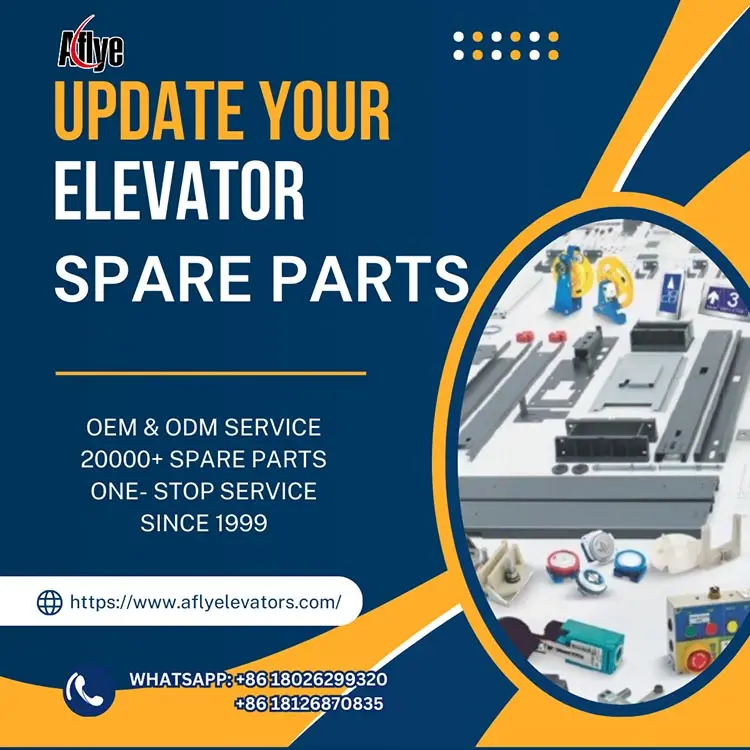
As a professional supplier, A-FLY provides more than 20,000 types of elevator and escalator spare parts, covering door systems, electrical control systems, safety devices, and structural components. These products are compatible with various elevator brands and models, providing reliable support for maintenance companies and engineering teams.
With comprehensive inventory and fast delivery capability, A-FLY helps customers quickly obtain the spare parts they need when equipment failures occur, improving maintenance efficiency.
Conclusion
In elevator maintenance, what truly determines repair efficiency is often not complex technology, but whether commonly used spare parts are prepared in advance. For every maintenance engineer, establishing a scientific list of wear parts and maintaining a reasonable inventory is a key strategy for ensuring long-term stable elevator operation.
Choosing a reliable supplier such as A-FLY not only provides a wide selection of products but also ensures more efficient and stable spare-parts support for elevator maintenance work.