
Replaced the Elevator Door Motor but the Door Still Runs Unsteadily? Check These 5 Possible Causes
When an old elevator's door motor is replaced, problems such as door vibration, abnormal operating noise, jerky movement during startup, or impact when closing may still occur. This does not necessarily mean the new motor is defective. An elevator door system consists of multiple components, including the motor, controller, belt, door hanger rollers, and guide rails. Any mismatch or malfunction within the system can affect door operation and stability.
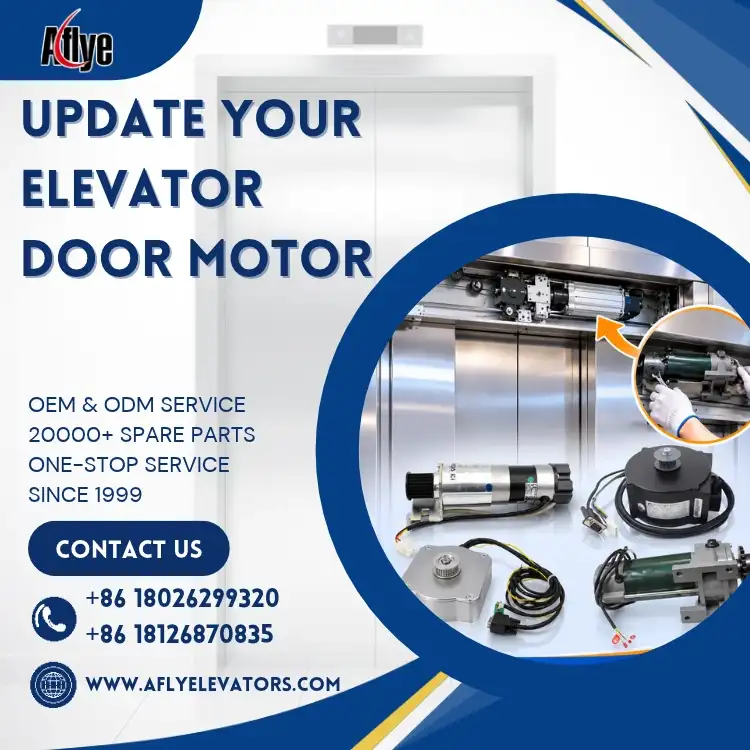
1. Why Does the Elevator Door Still Run Unsteadily After Motor Replacement?
1. Motor and Door Operator Controller Incompatibility
If the new motor's rated voltage, rotational speed, power, or feedback method is incompatible with the original controller, it may cause abnormal speed regulation, startup impact, or speed fluctuations.
2. Door Operator Parameters Have Not Been Readjusted
After replacing the motor, the acceleration and deceleration curves, opening and closing speeds, and torque parameters should be adjusted according to the characteristics of the new motor. Otherwise, the elevator doors may vibrate or close with excessive impact.
3. Worn Door Operator Belt and Door Hanger Rollers
An aging or loose door belt, worn door hanger roller bearings, or excessive guide rail resistance can increase the operating load. Even with a new motor, these mechanical problems may remain unresolved.
4. Uneven Door Panel Resistance
Deformed door panels, worn door sliders, dust accumulation on guide rails, or installation misalignment can cause uneven resistance during opening and closing, resulting in jerky movement and abnormal noise.
5. Abnormal Electrical Feedback or Wiring
Problems with the encoder, connecting cables, or control interfaces may prevent the door operator from accurately detecting the motor's operating status, affecting speed control and position detection.
2. How Should You Troubleshoot an Elevator Door After Motor Replacement?
Qualified maintenance personnel should check the compatibility between the motor and controller, verify wiring and feedback signals, and readjust the operating parameters according to the equipment manufacturer's requirements.
At the same time, inspect the door operator belt, door hanger rollers, door sliders, and guide rails to identify excessive mechanical resistance or installation misalignment.
If abnormalities involve the safety circuit or door lock signals, the relevant electrical connections should also be inspected. Simply increasing motor torque to compensate for an underlying fault is not recommended.
3. Purchasing Recommendations for Elevator Door Motors
When purchasing an elevator door operator motor, confirm the following specifications:
Original door operator model
Motor power rating
Rated voltage
Rotational speed (RPM)
Installation dimensions
Shaft diameter
Compatibility with the door operator controller
For old elevator modernization projects, it is recommended to provide the motor nameplate, original controller model, and installation photos to ensure accurate matching. Do not select replacement motors based solely on appearance or power rating.
4. A-FLY Elevator Door System Spare Parts Supply
A-FLY provides elevator door operator motors, door operator controllers, door belts, door hanger rollers, door sliders, door vanes, and door lock components.
We support model identification, dimensional matching, OEM/ODM customization, and bulk supply to meet different elevator maintenance and modernization requirements.
We also supply elevator control cabinets, push buttons, display boards, encoders, and other elevator and escalator spare parts for elevator repairs, door system upgrades, and old elevator modernization projects.
Conclusion
Replacing an elevator door motor is only one step toward resolving door operation problems.
Only by checking controller compatibility, operating parameters, mechanical resistance, and feedback signals together can the root cause of unstable door movement be accurately identified, helping improve the operational reliability of the entire elevator door system.