
Elevator Button Activated but No Response? Analysis of Signal Transmission and Control System Failures
In daily elevator operation, passengers may occasionally encounter a situation where they press an elevator button, the button lights up, indicating that the command has been entered, but the elevator fails to respond. This is a typical elevator button fault that not only affects the passenger experience but may also indicate deeper system issues.
Many people assume that an illuminated button means everything is functioning properly. In reality, from the moment a button is pressed to the moment the elevator executes the command, the process involves elevator button signal transmission, communication module processing, and elevator control system response. A problem in any of these stages can result in a situation where the button is activated but the elevator does not respond.
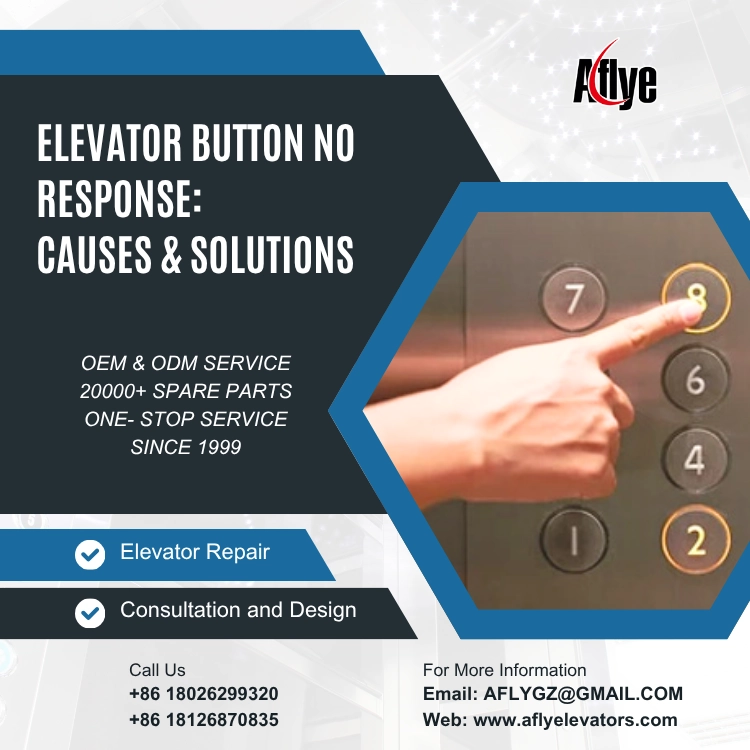
1. Elevator Button Failure
Although the button light is illuminated, it does not necessarily mean that the internal contacts of the button are functioning correctly. Older elevator buttons may suffer from:
Oxidized contacts
Poor microswitch connections
Abnormal signal output
Damaged internal wiring
In these cases, the button light may still operate because it is powered by a separate circuit, while the control system never receives a valid command signal.
Solution:Check the continuity of the button contacts and test whether the signal output is functioning properly. For buttons that have been in service for many years, a complete elevator button replacement is often the most effective solution.
2. Faults in Button Signal Transmission Wiring
Signals generated by the elevator button must be transmitted to the control system through various wiring connections. Common issues include:
Loose wiring terminals
Aging communication cables
Oxidized connectors
Damaged ribbon cables
Faulty interface boards
Any of these issues can interrupt the transmission of elevator button signals.
Troubleshooting Recommendation
Focus on inspecting:
Wiring terminals
Communication interfaces
Ensure the entire signal transmission path is intact and functioning properly.
3. Button Board or Interface Board Failure
Modern elevators commonly use button boards, communication boards, and signal acquisition modules. When a button board fails, the following symptoms may occur:
Button lights up but the floor call is not registered
Floor signals are lost
Certain buttons stop functioning
Commands fail to upload to the control system
This issue is particularly important in high-rise buildings and group-control elevator systems, where communication stability is critical.
Solution:Use fault codes and communication diagnostics to determine whether the button board or interface board is malfunctioning. Replace the affected elevator and escalator spare parts as necessary.
4. Elevator Control System Failure
If the button signal is successfully transmitted but the elevator still does not respond, the issue may lie within the elevator control system itself.
Common causes include:
Main control board failure
Communication errors
Software logic faults
Damaged input/output modules
Safety circuit protection activation
When the control system cannot properly process incoming commands, the elevator will not execute the requested action even though the button appears to function normally.
Solution
Inspect:
Control cabinet operating status
Fault history records
Communication logs
Verify whether the system has entered an alarm or protection state.
5. Safety Circuit Preventing Elevator Operation
In many cases, neither the button nor the control system is actually defective. Instead, the elevator may be prevented from operating due to a safety circuit issue.
Examples include:
Door lock not fully engaged
Activated safety switches
Abnormal limit switch signals
Light curtain failures
Emergency stop circuit activation
When the control system detects these abnormal conditions, it automatically blocks elevator operation commands.
Therefore, when troubleshooting an elevator button fault, maintenance personnel should also inspect the associated safety systems.
Elevator Button Procurement Recommendations
When purchasing replacement elevator buttons, it is important to verify:
Elevator button model
Operating voltage
Wiring configuration
Button dimensions
Illumination color
Control system compatibility
Selecting buttons based solely on appearance may result in communication incompatibility or signal transmission issues after installation.
A-FLY Elevator & Escalator Spare Parts Supply Capabilities
As a professional elevator and escalator spare parts supplier, A-FLY provides a comprehensive range of products for maintenance companies, engineering contractors, and spare parts distributors worldwide, including:
Button boards
Display boards
Communication boards
Control boards
Various elevator and escalator spare parts
With extensive experience and a comprehensive database of brands and models, A-FLY can quickly identify the correct replacement product based on:
Button photos
Dimensions
Product codes
Control system information
A-FLY also offers OEM and ODM customization services, helping customers shorten procurement cycles and improve maintenance efficiency.
Conclusion
When an elevator button is activated but the elevator does not respond, the fault is not necessarily caused by the button itself. Problems may occur anywhere along the chain, including elevator button signal transmission, button boards, communication wiring, interface modules, or the elevator control system.
By following a systematic troubleshooting process and partnering with a reliable elevator and escalator spare parts supplier, maintenance teams can improve repair efficiency, reduce elevator downtime, and ensure stable, reliable elevator operation.