
In an escalator safety system, the escalator comb plate switch is an important safety device. When foreign objects enter the area between the step and comb plate, the comb plate moves and activates the switch, cutting off the safety circuit to prevent accidents.
However, during escalator maintenance, problems such as frequent activation, false alarms, or failure to reset are common. Correctly identifying the root cause is more important than simply replacing the switch.
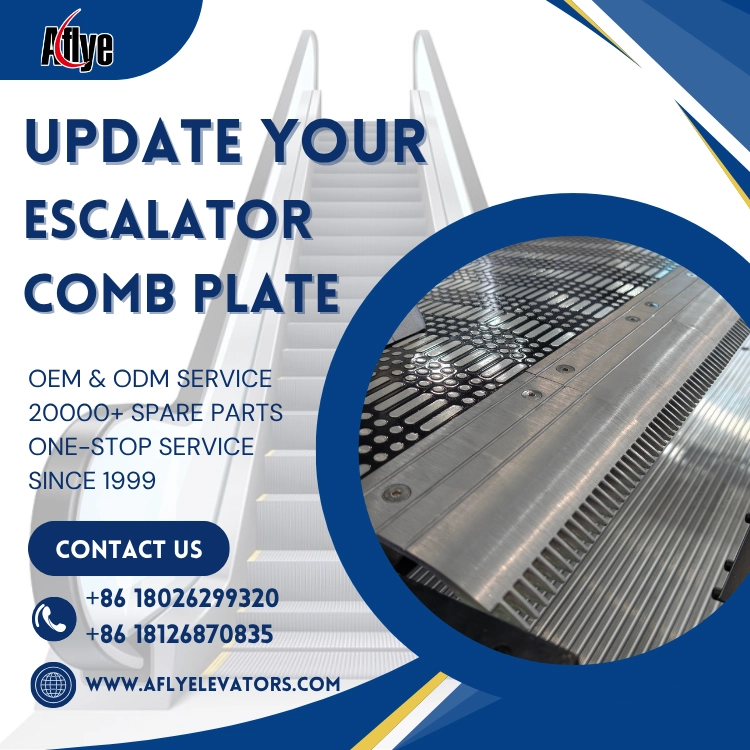
1. Comb Plate Deformation Causes False Activation
Long-term impact from passengers, carts, or foreign objects may deform the comb plate. Changes in the gap between the comb plate and steps can trigger the safety switch even without an object entering.
Common symptoms:
Random escalator shutdown
Occasional comb plate switch alarms
Temporary recovery after restart
Solution:Check the comb plate condition, installation position, and safety gap. Replace the comb plate assembly if necessary.
2. Switch Contact Aging or Mechanical Failure
The comb plate safety switch usually uses a micro switch structure. After long-term operation, problems may occur, including:
Contact oxidation
Spring fatigue
Mechanical wear
Water or dust damage
Inspection method:
Test the switch continuity with a multimeter and check whether the activation point is stable. Replace switches with slow response or poor contact.
3. Foreign Objects Causing Continuous Activation
Coins, screws, stones, and plastic debris entering the comb plate area are common causes of continuous safety switch activation, especially in:
Shopping malls
Metro stations
Airports
Public transportation areas
Solution:Clean the comb plate area completely, check step engagement, and remove all foreign objects.
4. Step System Alignment Problems
Some comb plate switch failures are actually caused by step system issues, such as:
Stretched step chains
Worn step rollers
Guide rail deviation
Drive chain wear
These problems can cause abnormal contact between the steps and comb plate.
Maintenance focus:Check step chain tension, step rollers, and guide rail condition instead of only replacing the safety switch.
5. Electrical Circuit or Wiring Problems
False activation may also come from safety circuit issues, including:
Loose terminals
Aging cables
Oxidized connectors
Moisture-related leakage
These faults usually appear randomly, and replacing the switch may not solve the problem.
Escalator Comb Plate Switch Purchasing Tips
Before purchasing an escalator comb plate switch, confirm:
Installation size
Contact type (NO/NC)
Operating stroke
Working voltage
Protection rating
Compatible model
Choosing only by appearance may cause installation problems or incorrect activation points.
A-FLY Escalator Spare Parts Supply Capability
As a professional elevator and escalator spare parts supplier, A-FLY provides escalator comb plate switches, safety switches, step chains, step rollers, handrails, drive chains, brakes, and other escalator spare parts for maintenance companies, engineering companies, and distributors worldwide.
A-FLY supports:
Model matching
OEM/ODM customization
Bulk supply
Fast delivery
helping customers improve maintenance efficiency and reduce downtime.
Conclusion
Abnormal activation of an escalator comb plate switch does not always mean the switch itself is damaged. Problems such as comb plate deformation, foreign objects, step system deviation, and electrical faults can all cause safety switch failures.
Maintenance teams should perform systematic inspections from both mechanical and electrical aspects, and use reliable escalator spare parts to ensure safe and stable escalator operation.