
Why Does Escalator Step Chain Pitch Increase? How to Determine Whether Replacement Is Needed?
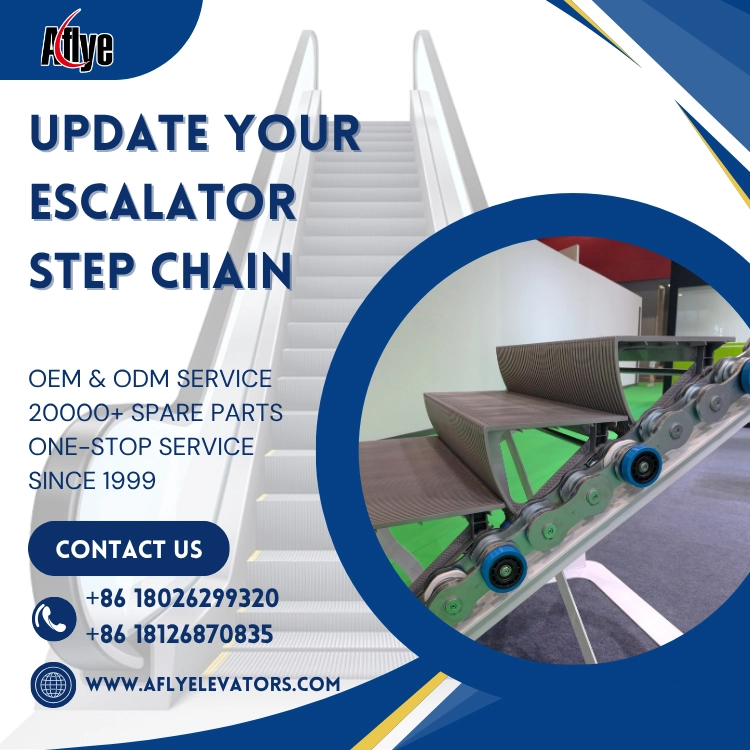
The escalator step chain is a core transmission component that drives the continuous circulation of escalator steps. Its condition directly affects step synchronization, transmission accuracy, and overall escalator safety.
During long-term operation, many maintenance engineers notice that the step chain becomes “longer.” In fact, the chain plates are not stretched. The actual cause is the gradual wear of internal components such as pins, bushings, and rollers, which increases the center distance between chain links, resulting in chain pitch elongation.
Continuing to use a severely worn escalator chain can reduce operating quality and may lead to more serious mechanical failures.
1. Why Does Escalator Step Chain Pitch Increase?
The step chain continuously withstands cyclic loads and impact forces during operation. The pins and bushings experience constant friction. When lubrication is insufficient, dust enters the chain system, or the escalator operates under heavy loads for a long time, wear will accelerate.
Common causes include:
Insufficient lubrication or degraded lubricating oil
Long-term operation under heavy loads
Dust and moisture causing chain wear
Poor chain and sprocket engagement
Fatigue wear caused by extended service life
Therefore, increased chain pitch is a normal result of wear over time, but once it exceeds the allowable limit, corrective action must be taken.
2. Failure Symptoms After Step Chain Elongation
When the escalator step chain pitch exceeds the allowable tolerance, the transmission system may show the following problems:
Unstable step movement with slight vibration
Impact feeling during startup or braking
Increased noise from chain and sprocket engagement
Reduced step synchronization
Uneven sprocket tooth wear or chain skipping
Safety shutdown in severe cases
These problems not only affect passenger comfort but also accelerate wear of related escalator components, such as step rollers, main drive chains, and sprockets.
3. How to Determine Whether Replacement Is Required?
During escalator maintenance, the step chain pitch should be checked regularly. Important inspection points include:
Measuring whether the total chain length exceeds the manufacturer’s allowable limit
Checking whether the chain remains loose after proper tension adjustment
Inspecting abnormal engagement between the chain and sprocket
Checking whether chain links have sticking, cracks, or corrosion
Monitoring whether operating noise and vibration continue to increase
If chain elongation reaches the replacement standard specified by the manufacturer, the escalator step chain should be replaced in time to prevent damage to the sprocket and other transmission components.
4. What Components Should Be Checked When Replacing the Step Chain?
The step chain is part of a complete transmission system and should not be replaced alone. The following components should also be inspected:
Main drive chain
Drive sprockets
Tensioning device
Guide rail system
Lubrication system
If the sprocket is already seriously worn, replacing only the new chain may reduce service life and even cause new engagement problems.
5. Escalator Step Chain Purchasing Recommendations
When purchasing an escalator step chain, the following parameters should be confirmed:
Chain pitch specification
Chain plate size and number of rows
Pin diameter
Material and heat treatment process
Tensile strength
Matching sprocket model
Compatible escalator brand and model
It is recommended to confirm specifications based on the original model, product code, drawings, or physical samples to ensure stable operation after installation.
A-FLY Elevator & Escalator Parts Supply Capability
As a professional elevator and escalator spare parts supplier, A-FLY has been providing global maintenance companies, engineering contractors, and spare parts distributors with:
Escalator chains
Main drive chains
Sprockets
Tensioning devices
Complete ranges of elevator and escalator spare parts
A-FLY supports:
OEM/ODM customization
Drawing confirmation
Sample matching
Fast delivery
Based on different escalator brands and models, A-FLY provides complete step chain matching solutions to help customers reduce purchasing risks and improve maintenance efficiency.
Conclusion
Escalator step chain pitch elongation is a typical sign of long-term chain wear and an important factor for evaluating chain service life.
By regularly measuring chain pitch, inspecting related transmission components, and replacing worn escalator step chains in time, problems such as chain skipping, abnormal noise, and unexpected shutdowns can be effectively prevented, ensuring long-term safe and stable escalator operation.