
Prepare These Key Devices in Advance for Greater Safety
In daily elevator use, sudden power outages are not very common, but when they occur, passengers may become trapped inside the car, leading to panic or even dangerous situations. This is especially critical in high-rise buildings, hospitals, shopping malls, and other high-traffic environments, where proactive safety preparation is essential.
In fact, by properly configuring key elevator components, emergency response capability and safety can be greatly improved during power outages. As a professional supplier serving the global market, A-FLY has found that the following devices are particularly important for enhancing elevator emergency preparedness.
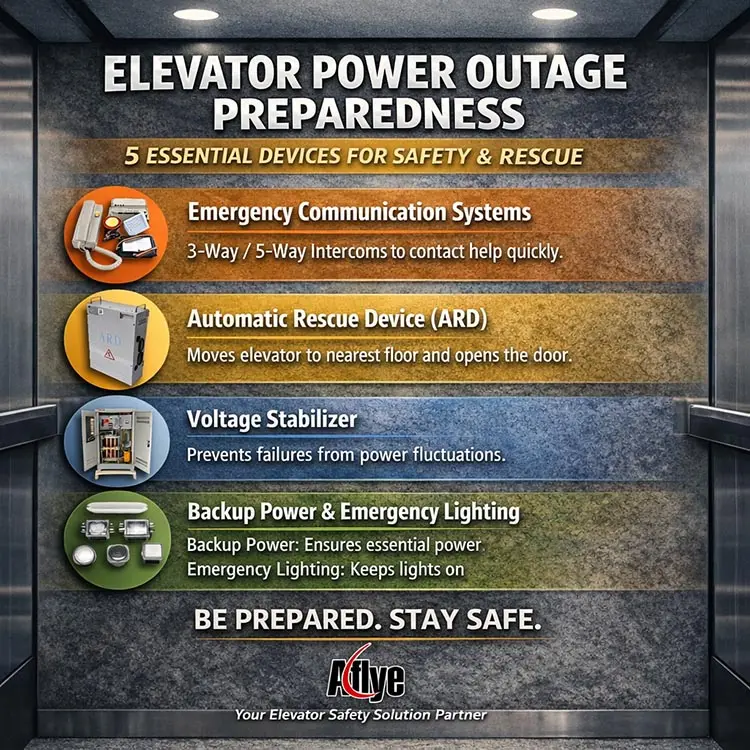
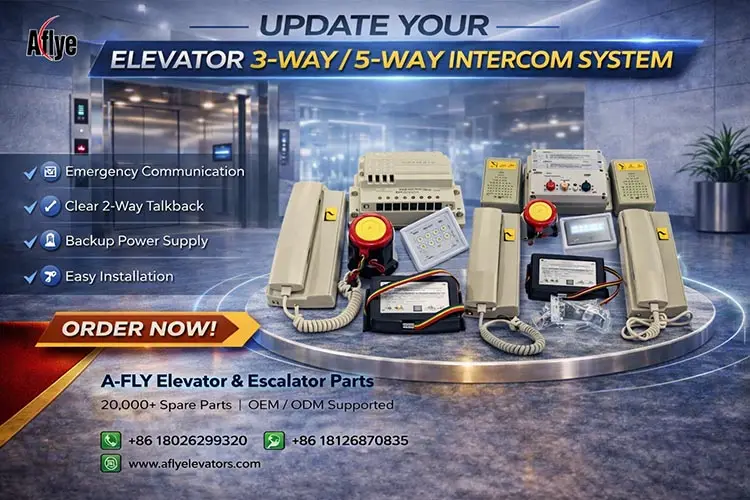
1. 3-Way Intercom System: Basic Emergency Communication
When a power outage or fault occurs, the most important need for passengers is communication with the outside world.
A 3-way elevator intercom typically connects the car, machine room, and duty room, providing basic communication functions.
Allows trapped passengers to contact maintenance personnel immediately
Enables faster rescue response
This type of elevator component is simple in structure, easy to install, and is a standard configuration in many elevators. For older elevators, upgrading to a 3-way intercom system is often the first step in improving safety.
2. 5-Way Intercom System: Advanced Emergency Communication
Compared to 3-way systems, 5-way intercom systems offer more comprehensive communication by connecting:
Elevator car
Machine room
Duty room
Monitoring center
Property management office
This multi-point communication ensures rapid information transfer during emergencies, significantly improving rescue efficiency. It is especially important in large commercial complexes and hospitals, where it has become a key escalator and elevator component.
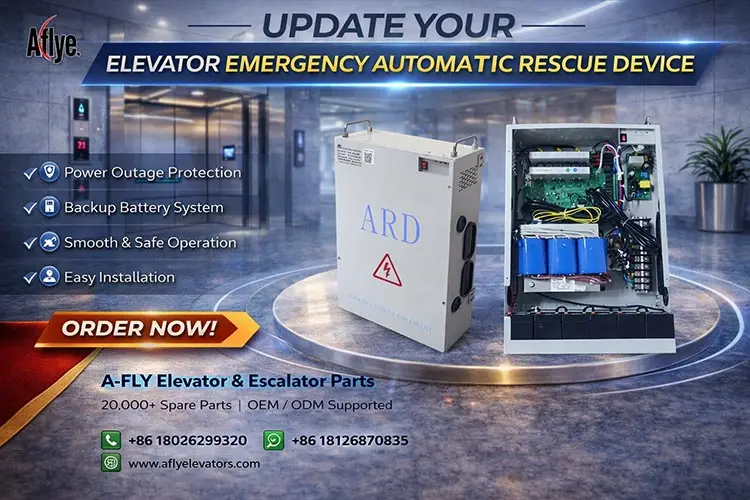
3. Automatic Rescue Device (ARD): The Core Emergency Solution
Among all emergency devices, the Automatic Rescue Device (ARD) is the most critical.
When a power failure occurs:
The ARD activates a backup power supply
Moves the elevator to the nearest floor
Opens the doors automatically
This allows passengers to exit safely even without external rescue, greatly enhancing safety. For high-rise buildings and crowded environments, ARD is now considered an essential elevator component.
A-FLY has found in multiple projects that installing ARD significantly reduces the risks associated with power outages.
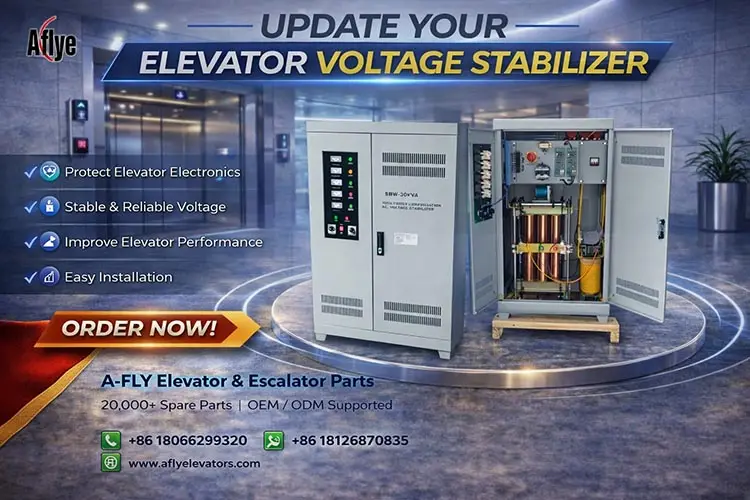
4. Voltage Stabilizer: Ensuring Electrical System Stability
A voltage stabilizer is another important component. Power fluctuations are one of the main causes of elevator faults and unexpected shutdowns.
Installing a stabilizer can:
Maintain stable power input
Reduce shutdowns caused by voltage irregularities
Protect key components such as control systems and inverters
Its importance is particularly evident in areas with unstable power grids or industrial environments.
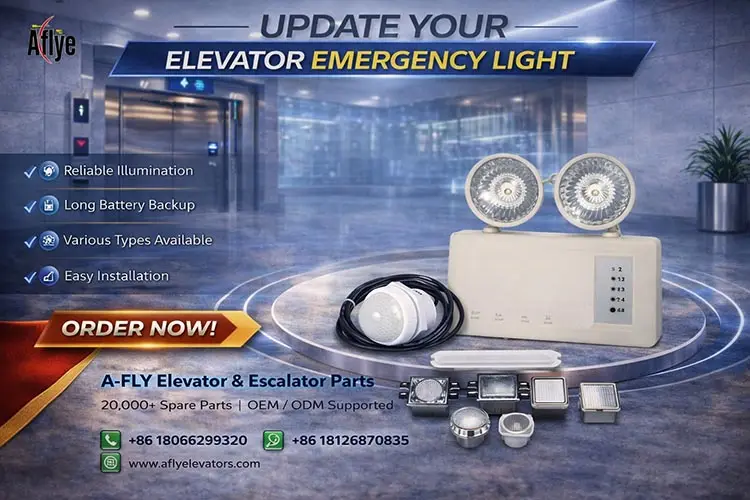
5. Emergency Lighting and Backup Power Systems
During a power outage, if the elevator car loses all lighting, it can easily cause passenger panic. Therefore, emergency lighting and backup power systems are essential.
These components can:
Automatically activate during power failure
Maintain basic lighting inside the car
Help passengers remain calm while waiting for rescue or automatic evacuation
6. Why Prepare These Devices in Advance?
Many elevator incidents are not caused by equipment failure itself, but by insufficient emergency preparation. Installing key elevator and escalator components in advance can:
Improve communication efficiency
Shorten rescue time
Reduce passenger panic
Enhance overall safety levels
For property managers and maintenance companies, this is a high-value investment in safety.
7. Choose a Reliable Supplier for Complete Solutions
In elevator safety upgrades, selecting high-quality components is crucial. As a professional supplier, A-FLY provides one-stop solutions including:
A wide range of elevator and escalator spare parts
With compatibility across multiple elevator brands and global delivery capabilities, A-FLY helps customers efficiently complete safety upgrades and modernization projects.
Conclusion
Although elevator power outages cannot be completely avoided, their risks can be significantly reduced through proper preparation.
By installing key components such as 3-way or 5-way intercom systems, ARD automatic rescue devices, and voltage stabilizers, and by working with a reliable supplier like A-FLY, elevators can remain safe and controllable even in emergency situations.
For elevator managers, prevention and preparation are the true foundations of safety.