
Problems Caused by Escalator Tensioning Device Failure
In an escalator transmission system, much attention is often given to the motor, main drive chain, or drive sprocket, while another equally critical component is overlooked — the escalator tensioning device. Its role is not merely supportive; it is one of the core structures that ensures long-term stable operation of the entire drive system. Once the tensioning device fails, minor issues like abnormal noise and vibration may occur, while severe cases can lead to chain skipping, jamming, or even escalator shutdown accidents.
For maintenance teams, tensioning-related elevator and escalator spare parts are high-risk components that require close monitoring.
1. Chain Slack Increases Transmission Impact
The primary function of the tensioning device is to maintain the main drive chain within a proper tension range. When springs fatigue, threaded rods seize, or guide rails wear out, the tension force drops, causing noticeable chain slack.
Once the chain becomes loose, a “chain whipping” effect may occur during startup and braking, which appears as:
Intermittent impact noises during operation
Slight escalator vibration or uneven step rhythm
Increased impact during chain and sprocket engagement
Long-term impact accelerates wear on drive sprockets, chains, bearings, and other elevator and escalator components, creating a chain reaction of damage.
2. Uneven Tension Leads to Chain Misalignment and Skipping
A failed tensioning device often cannot maintain equal tension on both sides of the chain, especially in dual-chain drive systems. As a result:
One chain side bears excessive load while the other becomes loose
The chain shifts sideways during operation
Friction between the chain and guide components produces metal debris
When load fluctuations occur (such as passengers standing in groups), the slack side chain can lift off the sprocket teeth, causing tooth jumping or even full chain skipping, which may trigger safety protection and stop the escalator.
3. Unstable Step Movement Reduces Ride Comfort
When the tensioning device fails, chain pitch stability is disrupted, causing slight forward and backward step movement during operation. Passengers may clearly feel:
Uneven running rhythm
A slight “jerking” sensation on the steps
Increased vibration at higher speeds
Although these issues may not immediately trigger fault alarms, they degrade operational quality and accelerate aging of other escalator spare parts.
4. Chain Interference with Guards Increases Safety Risks
If the tensioning device cannot maintain the correct chain path, the chain may sway or sag, leading to friction with guards, brackets, or lubrication system components.
This not only causes wear on chain side plates but may also result in:
Metal debris entering bearings or sprocket engagement areas
Lubrication oil contamination
Sudden increases in operating noise
If the chain becomes jammed, the escalator may stop suddenly, disrupting operations in malls or public facilities.
5. Accelerated Wear of the Entire Drive System
Failure of the tensioning device does not create a single-point issue but leads to systemic wear. Long-term abnormal tension may cause:
Irregular wear of drive sprocket teeth
Faster elongation of the main chain
Motor load fluctuations and increased temperature rise
Uneven load on gearbox bearings
The final outcome is higher maintenance costs and significantly increased replacement frequency of elevator and escalator spare parts.
6. Signs That the Tensioning Device Needs Inspection or Replacement
During maintenance, technicians should pay close attention to:
Noticeable increase in chain sag
Tensioning travel approaching its limit position
Rusted springs or reduced spring force
Seizing or sticking of threaded rods or sliding rails
Periodic impact noises during escalator operation
If insufficient tension compensation is found, the related tensioning components should be replaced promptly.
7. Choosing High-Reliability Tensioning System Components
A high-quality tensioning device should feature:
Springs with high fatigue life
Precision-machined threaded rod structures
Wear-resistant guide components
Anti-corrosion and anti-rust treatment
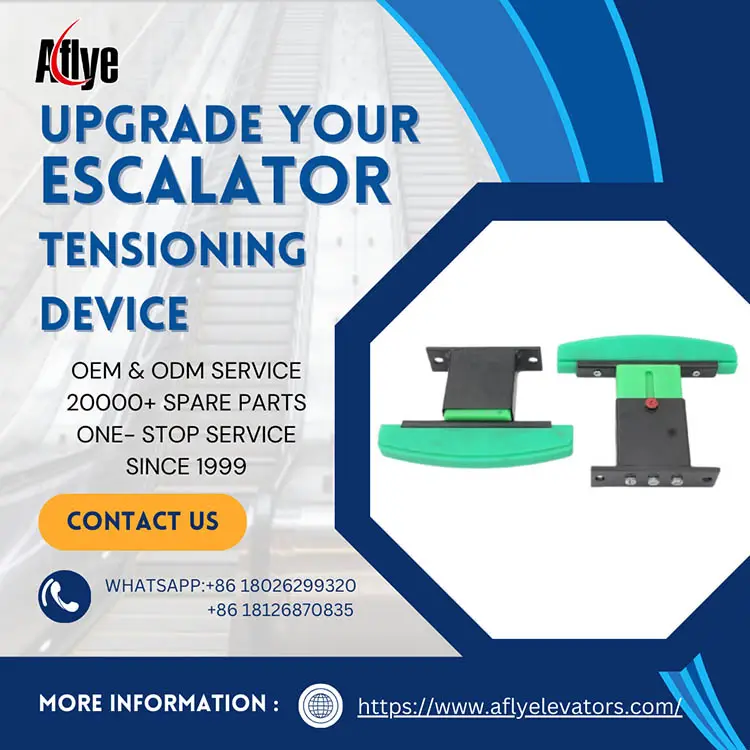
As a professional elevator and escalator parts supplier, A-FLY provides various specifications of escalator tensioning assemblies and supporting spare parts. Our products offer strong durability and structural stability, helping maintenance teams reduce unexpected shutdown risks and extend the service life of the entire drive system.
Summary
Although small in size, the escalator tensioning device directly determines transmission system stability. Ignoring it allows problems to escalate from abnormal noise to chain skipping and eventually shutdown accidents.
Regular inspection of tension conditions, timely replacement of aged components, and choosing reliable elevator and escalator spare parts brands like A-FLY are key to ensuring safe escalator operation and reducing long-term maintenance costs.