
What Elevator Door Problems Can Be Caused by Worn Door Vanes?
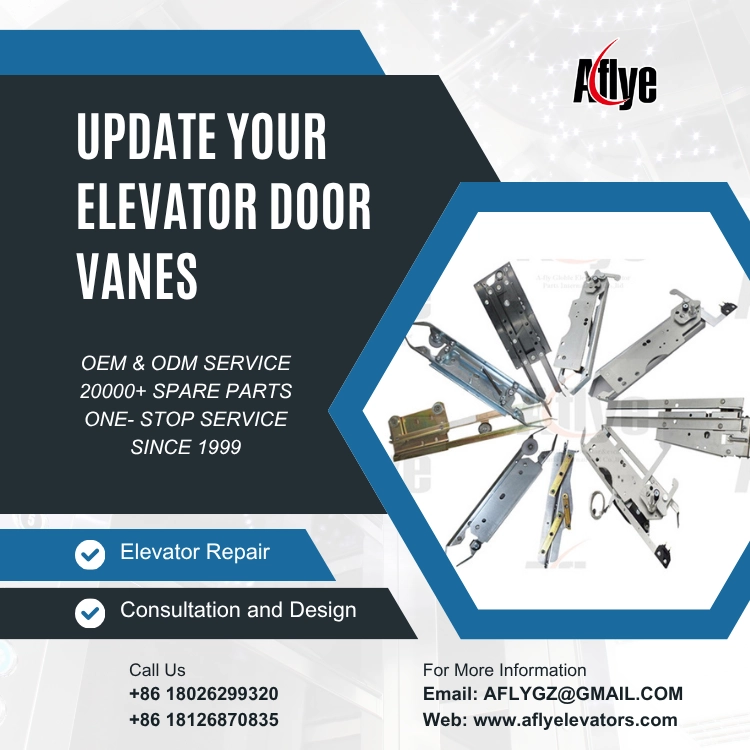
In the elevator door system, the door vane may not be the largest component, but it plays a very important linkage role. It directly affects the coordination accuracy between the car door and landing door, and also determines whether the door opening and closing actions operate smoothly.
Once the door vane becomes worn, it may not only reduce the smoothness of the door system operation, but also cause repeated door opening and closing, abnormal door lock contact, or even elevator shutdown faults. For maintenance personnel, regularly inspecting the door vane and related elevator spare parts is an important step in reducing door system failures.
1. Incomplete Door Opening or Closing
After the door vane becomes worn, the coordination between the car door and landing door may deteriorate, easily causing incomplete opening or closing.
Common on-site symptoms include:
The door moves but does not open fully
The door closes, but the system still detects an incomplete closing condition
These issues can directly affect normal elevator operation.
2. Repeated Door Opening and Closing
When the door vane is worn, deformed, or misaligned, unstable coordination may occur during door linkage operation.
This can cause:
Repeated door reopening
Continuous door closing cycles
Delayed or failed door opening after arrival
Many problems that appear to be door operator control faults are actually caused by door vane wear.
3. Poor Door Lock Contact
Abnormal coordination between the door vane and landing door mechanism can affect the accuracy of the door lock operation.
After poor door lock contact occurs, the system may:
Display fault codes
Refuse to start
Trigger protective shutdown during operation
For high-frequency usage projects, such faults not only affect passenger traffic flow but also increase maintenance pressure.
4. Abnormal Noise and Vibration During Door Operation
When the door vane is worn, the door system may produce:
Friction noise
Impact sounds
Slight vibration during opening and closing
These symptoms indicate that the coordination between the door vane and related components is no longer smooth.
If left untreated for a long time, it may also cause additional wear on other elevator & escalator spare parts such as:
Door guides
Guide rails
5. Increased Door Operator Load and Higher Failure Rate
Door vane abnormalities can create additional resistance when the door operator drives the door panels.
Over time, this may result in:
Door operator overheating
Increased operating current
Slower door movement
More control system faults
What initially seems like a small door system component issue may eventually increase the maintenance cost of the entire door system.
Maintenance Recommendations
During routine maintenance, technicians should regularly inspect the elevator door vane for:
Wear
Deformation
Looseness
Installation misalignment
At the same time, observe whether the door system shows symptoms such as:
Abnormal noise
Sticking
Repeated door opening and closing
Once abnormalities are found, the matching door vane and related elevator & escalator spare parts should be replaced promptly to prevent further expansion of the fault.
Conclusion
Door vane wear can directly affect the linkage accuracy and operating stability of the elevator door system. Minor issues may cause abnormal noise and unsmooth door operation, while serious cases may lead to door lock faults and elevator shutdown risks.
As a professional elevator & escalator parts supplier, A-FLY provides various elevator door vanes and related elevator spare parts to help customers improve maintenance efficiency and ensure long-term stable elevator operation.