
What Causes Noise from Elevator Door Hanger Rollers? A Maintenance Guide for Troubleshooting
During daily elevator operation, abnormal elevator door noise is one of the most common door system issues. Passengers may hear friction noises, rolling sounds, scraping noises, or knocking sounds while the elevator doors are opening or closing. In many cases, these problems are caused by worn elevator door hanger rollers, improper installation, or aging elevator door system components.
Although elevator door hanger rollers are relatively small, they play a vital role in supporting and guiding the door panels. Once the rollers become worn or damaged, they can affect the smooth operation of the doors and may eventually lead to incomplete door closing, repeated door opening and closing, or abnormal door lock signals.
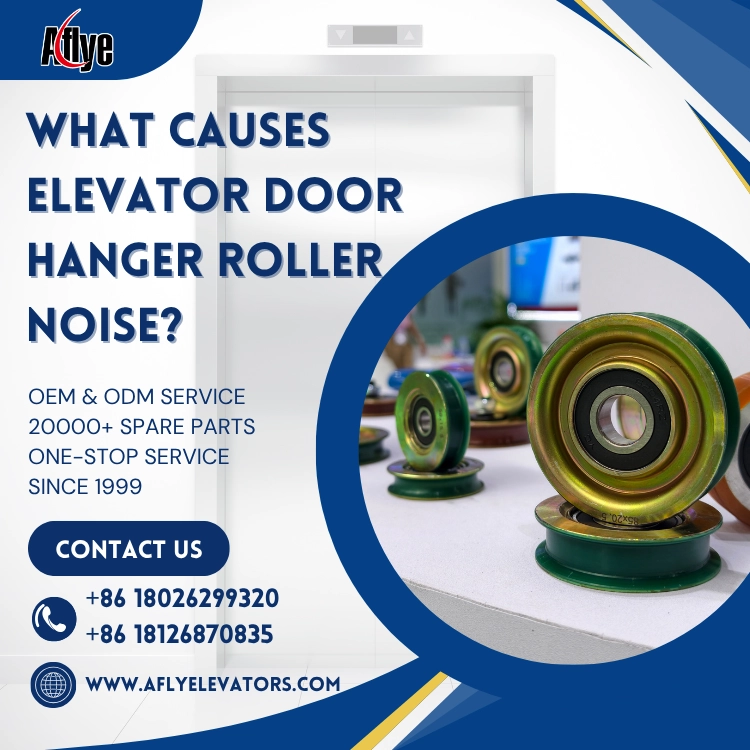
1. Worn Door Hanger Roller Tires
The rubber tire of an elevator door hanger roller continuously rolls along the door track during operation. Over time, the roller surface may become worn, deformed, or unevenly worn. When the roller is no longer perfectly round, it can produce uneven rolling, increased friction, and recurring operating noise during door movement.
How to identify the problem:
Maintenance technicians should inspect the roller tire for:
Flat spots
Cracks
Chips
Eccentric wear
They should also rotate the roller manually to check whether it turns smoothly. If the roller binds or has noticeable resistance, replacement is recommended.
2. Worn or Seized Bearings
If the bearing inside the elevator door hanger roller loses lubrication, becomes contaminated with dust, or wears out over time, rolling resistance increases significantly.Common symptoms include:
Squeaking noises
Grinding sounds
Low-frequency friction noise
If ignored, the increased resistance can overload the door operator, shortening the service life of both the door motor and the control system.
Solution:Inspect the bearing for looseness, seizure, or abnormal noise. If the bearing is severely damaged, replacing the complete door hanger roller is recommended rather than simply adding lubricant.
3. Dirt or Debris on the Door Track
Dust, sand, metal particles, and construction debris can accumulate on the elevator door track over time. These contaminants interfere with the smooth movement of the door hanger rollers, resulting in scraping noises or door sticking.
This issue is especially common in:
Shopping malls
Office buildings
Residential buildings undergoing renovation
Inspection recommendations:
Clean both the door track and the door sill groove thoroughly. Then verify that the door hanger rollers make proper contact with the track. If abnormal noise remains after cleaning, continue inspecting the door rollers, door sliders, door alignment, and door operator system.
4. Door Panel Sagging or Misalignment
If the elevator door panel sags, tilts, or develops uneven clearances, the load distribution on the door hanger rollers changes. One roller may carry excessive weight, resulting in abnormal operating noise.
Door misalignment may also affect the proper operation of:
Door vanes
Door locks
Door sliders
Solution:
Maintenance technicians should inspect:
Door panel alignment
Door gap uniformity
Door hanger roller mounting position
Fastening screws
If necessary, adjust or replace the affected elevator door system components.
5. Elevator Door Hanger Roller Purchasing Recommendations
When purchasing elevator door hanger rollers, buyers should verify:
Outside diameter
Roller width
Bearing specifications
Mounting hole dimensions
Material hardness
Compatible elevator brand
Installation position
Since door system designs vary among different elevator brands and models, purchasing based only on appearance can easily lead to installation incompatibility and recurring noise problems.
As a professional elevator and escalator spare parts supplier, A-FLY supplies elevator door hanger rollers, door sliders, door vanes, door locks, door operator components, light curtains, and a comprehensive range of elevator and escalator spare parts for maintenance companies, engineering contractors, and spare parts distributors worldwide.
A-FLY offers:
Multi-model compatibility matching
Bulk supply
OEM/ODM customization
Fast worldwide delivery
Our solutions help customers improve maintenance efficiency while minimizing elevator downtime.
Conclusion
Noise from elevator door hanger rollers is rarely caused by a single issue. It is often the result of roller wear, bearing deterioration, contaminated door tracks, door panel misalignment, or other door system component problems.
Maintenance technicians should inspect the elevator door hanger rollers together with all related elevator and escalator spare parts as soon as abnormal noise appears. Early diagnosis and timely replacement can prevent minor noises from developing into major door system failures and help ensure long-term, reliable elevator operation.