
Why Does Escalator Step Roller Wear Increase Operating Noise?
During escalator operation, the escalator step roller is an important moving component connecting the escalator steps with the guide rail system. Its main function is to support the weight of the steps and ensure that the steps move smoothly along the track.
Since escalators operate continuously every day, escalator rollers are constantly exposed to load, friction, and environmental factors, making them prone to wear, aging, and bearing failure.
When the performance of the escalator step rollers declines, the most obvious symptom is increased operating noise. In severe cases, it may also affect the stability of the entire escalator step system.
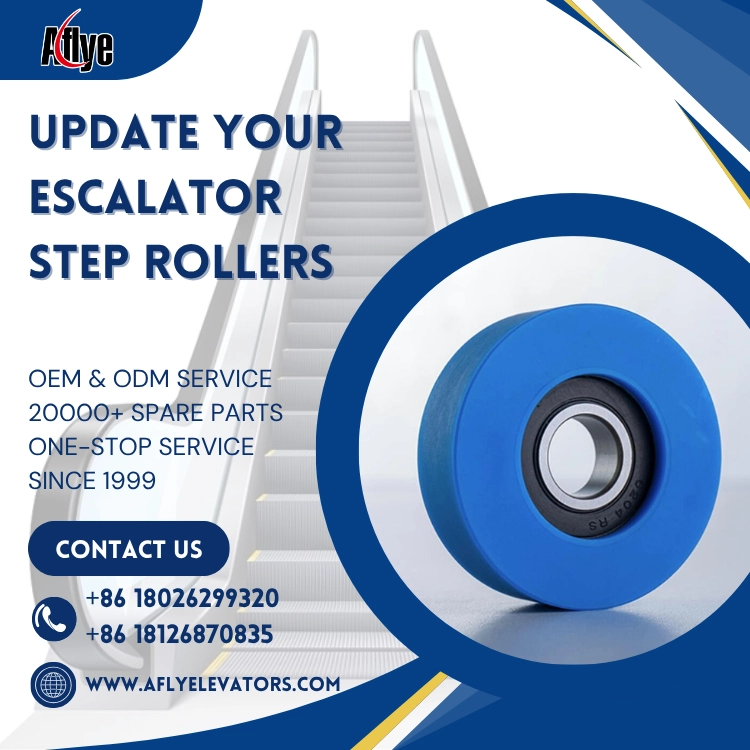
1. Escalator Step Roller Wear Increases Running Friction
Under normal conditions, escalator rollers reduce friction between the steps and guide rails through rolling motion, allowing the steps to operate more smoothly.
After long-term operation, the surface of escalator step rollers may experience:
Rubber layer wear;
Reduced roller diameter;
Surface hardening or cracking;
Increased rolling resistance.
When the contact condition between the roller and guide rail changes, greater friction is generated during step movement, resulting in noticeable operating noises, such as:
Continuous rolling noise;
Metal friction sounds;
Increased abnormal noise when steps pass through curved sections.
If the problem is not addressed in time, roller wear will further affect escalator riding comfort.
2. Escalator Roller Bearing Failure Causes Abnormal Noise
Besides external roller wear, internal bearing failure is also a major cause of escalator operating noise.
The escalator step roller usually contains a bearing structure. After long-term operation, the bearing may experience:
Insufficient lubrication;
Ball wear;
Increased internal clearance;
Bearing seizure.
When the bearing cannot rotate smoothly, the escalator roller generates additional resistance, causing periodic noise during step operation.
In severe cases, a damaged bearing may also cause the roller to tilt, resulting in slight step vibration and reducing passenger comfort.
3. Incorrect Roller Dimensions Affect Escalator Step System Stability
During escalator maintenance and spare parts replacement, proper roller matching is extremely important.
If the replacement escalator step roller has:
Incorrect diameter;
Improper width;
Mismatched bearing specifications;
Unsuitable material hardness;
it may cause:
Unstable step movement;
Poor matching between steps and guide rails;
Increased local impact force;
Higher escalator operating noise.
Therefore, when purchasing escalator rollers, buyers should not only focus on price but also confirm product dimensions, materials, and application conditions.
4. Main Causes of Escalator Step Roller Wear
1. Long-Term High-Load Operation
Escalators in shopping malls, airports, subway stations, and other public areas operate frequently. Step rollers are subjected to repeated impacts for long periods, which accelerates fatigue wear.
2. Guide Rail Contamination or Insufficient Maintenance
Dust, foreign objects, and contamination on guide rail surfaces can increase roller resistance and accelerate surface wear.
3. Poor Escalator Lubrication Maintenance
Without regular inspection and maintenance, roller bearing lubrication performance may decline, accelerating internal wear.
4. Unstable Spare Parts Quality
Low-quality roller materials may have insufficient wear resistance, resulting in shorter service life and higher maintenance costs.
5. How to Determine Whether Escalator Rollers Need Replacement?
During escalator maintenance, technicians should focus on checking:
Whether escalator step rollers have cracks or deformation;
Whether rollers rotate smoothly;
Whether abnormal noise exists;
Whether bearings have looseness;
Whether step movement shows vibration.
For escalators with long service periods, a preventive replacement plan should be established according to operating frequency to avoid larger system failures caused by small component damage.
6. Escalator Parts Purchasing Recommendations
When purchasing escalator step rollers and other escalator parts, it is recommended to choose suppliers with technical support capabilities and confirm:
Roller dimension specifications;
Material and wear resistance;
Bearing quality;
Sample testing results;
OEM/ODM customization capability.
Properly matched escalator rollers can not only reduce operating noise but also extend the service life of the escalator step system.
A-FLY Elevator & Escalator Parts Supply Capability
A-FLY focuses on global elevator and escalator parts supply, providing escalator maintenance companies, engineering contractors, and equipment buyers with various escalator component solutions, including:
And other escalator spare parts.
With extensive product supply experience and strong OEM/ODM customization capabilities, A-FLY can provide escalator rollers in different specifications according to customer requirements, helping customers solve challenges related to component matching, delivery time, and equipment maintenance.
Conclusion
Although escalator step rollers are small wear components, their operating condition directly affects the stability of the entire escalator step system.
Roller wear or bearing failure not only increases escalator operating noise but may also lead to abnormal step movement and other system problems.
Regular escalator maintenance, timely inspection and replacement of aging escalator rollers, and cooperation with a reliable elevator and escalator parts supplier are important measures to ensure safe and efficient escalator operation.