
Impact of Traction Sheave Groove Wear on Wire Rope Service Life
In an elevator traction system, the interaction between the traction sheave and the wire ropes is one of the key factors ensuring safe operation. Among these, the condition of the sheave grooves directly determines the load distribution and wear pattern of the wire ropes. Once the grooves become worn or deformed, it not only affects traction performance but can also significantly shorten the service life of the wire ropes.
As a professional escalator and elevator parts supplier, A-FLY has found in numerous maintenance cases that premature wire rope failure is often caused by worn traction sheave grooves rather than issues with the rope quality itself.
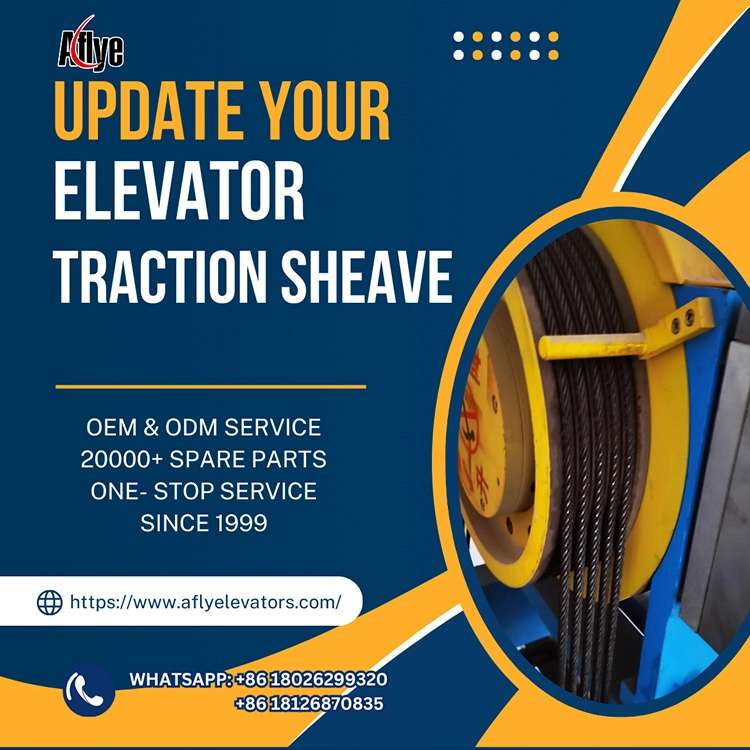
1. Uneven Load Distribution Caused by Groove Wear
The purpose of traction sheave grooves is to ensure uniform load distribution and stable contact with the wire ropes. When grooves become worn, their shape may change—becoming wider, shallower, or irregular.
These changes can lead to uneven stress during operation, resulting in:
Excessive localized stress
Uneven load distribution among rope strands
Compression deformation of the wire rope
Over time, this accelerates internal fatigue and shortens the rope’s service life.
2. Increased Wear Rate of Wire Ropes
Under normal conditions, the friction between the wire rope and the traction sheave should remain within a proper range. However, severely worn grooves may become rough or irregular, increasing friction resistance.
This abnormal friction can cause:
Accelerated surface wear of the wire rope
Deterioration of lubrication conditions
Breakage of outer wire strands
In practice, many early-stage wire rope damages are directly linked to groove wear.
3. Reduced Stability of Traction Force
Worn sheave grooves can also affect the stability of traction force. When proper matching between the groove and the rope is lost, slippage or unstable traction may occur. Common symptoms include:
Unstable elevator operation
Jerky starts or stops
Slipping under heavy load
These issues not only affect ride comfort but also impose additional dynamic loads on the wire ropes.
4. Accelerated Fatigue and Wire Breakage
When wire ropes run in irregular grooves, they are subjected to repeated bending and compressive stresses. This leads to internal fatigue over time. Typical signs include:
Broken wires on the rope surface
Loosened rope strands
Structural deformation of the rope
As the number of broken wires increases, the safety performance of the rope declines significantly, requiring timely replacement of related elevator components.
5. Mismatch Between Groove and Wire Rope
In some cases, groove wear alters the dimensions, making them incompatible with the wire rope diameter. This mismatch further accelerates wear. For example:
Overly wide grooves reduce contact area
Shallow grooves increase the risk of slippage
Improper contact angles
All of these factors negatively affect the operating condition of the wire rope.
6. How to Identify Groove Wear
During maintenance, the condition of traction sheave grooves can be assessed by:
Observing whether the groove surface is smooth or deformed
Checking for irregular wear patterns
Measuring changes in groove dimensions
Monitoring whether wire rope wear is localized
If abnormalities are detected, the relevant escalator and elevator components should be repaired or replaced promptly.
7. Maintenance and Replacement Recommendations
To extend the service life of wire ropes, the following practices are recommended:
Regularly inspect traction sheave groove condition
Maintain proper lubrication of wire ropes
Ensure proper matching between grooves and ropes
Avoid long-term overload operation
When necessary, both the traction sheave and wire ropes should be replaced simultaneously to restore optimal system performance.
8. Importance of Choosing High-Quality Elevator Components
As a critical elevator component, the machining accuracy and surface treatment quality of the traction sheave directly impact wire rope life. High-quality sheaves provide more uniform load distribution, thereby reducing wear.
As a professional escalator and elevator parts supplier, A-FLY offers a wide range of traction sheaves, wire ropes, and related components suitable for various elevator systems. With excellent wear resistance and precision, these products help improve operational stability.
Conclusion
Wear of traction sheave grooves is a key factor affecting the service life of wire ropes.
Through regular inspection of critical escalator and elevator components, timely replacement of worn parts, and cooperation with a reliable supplier like A-FLY, the service life of wire ropes can be effectively extended and elevator safety ensured.
For maintenance teams, attention to detail is essential to reducing failure rates and improving equipment reliability.