
What Parameters Should Be Confirmed When Purchasing an Elevator PCB Board? Avoid Model Mismatches
In elevator maintenance and spare parts replacement, elevator PCB boards are among the most critical electrical components. Whether it is an elevator display board, hall call board, car communication board, main control board, door operator board, or interface board, selecting the wrong model can lead to installation issues, communication failures, display abnormalities, software incompatibility, and other operational problems.
Therefore, purchasing an elevator PCB board should never be based solely on appearance or a partial model number. Instead, it should be verified according to the elevator brand, control system version, and on-site fault conditions to avoid unnecessary downtime caused by incompatible parts.
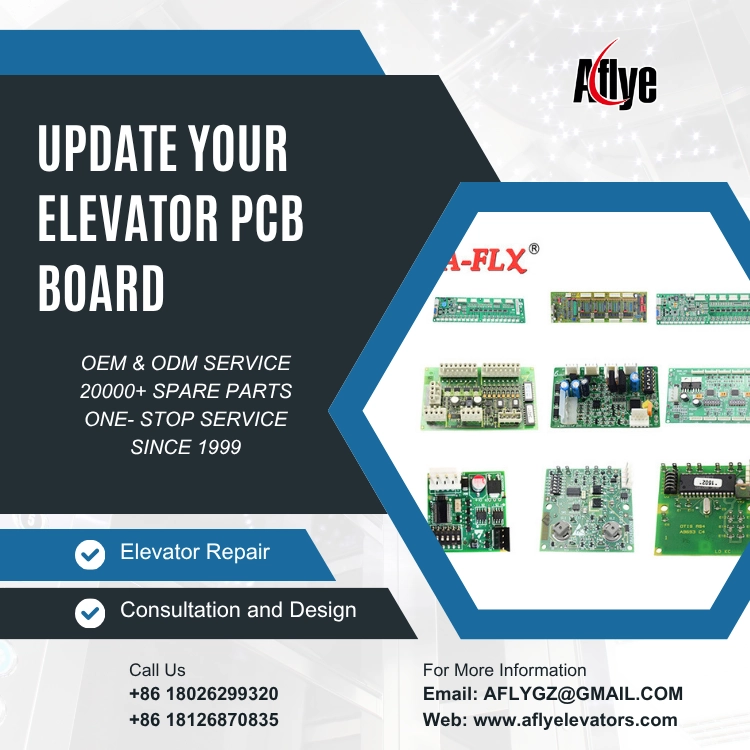
Why Are Elevator PCB Boards Often Purchased Incorrectly?
Many elevator PCB boards look very similar, but significant differences may exist between different production batches, system versions, and software revisions. For example, display boards from the same product series may have different interface layouts, voltage requirements, communication protocols, button functions, or display formats.
Common reasons for purchasing the wrong PCB board include:
Providing only unclear product photos
Ignoring suffixes in the part number
Failing to confirm the software version
Not verifying the number of connectors or interfaces
Not confirming compatibility with the elevator control system
For maintenance technicians and procurement personnel, the more detailed the information provided, the higher the likelihood of obtaining the correct replacement part.
Key Parameters That Must Be Confirmed Before Purchasing
When purchasing an elevator PCB board, the following information should be verified first:
1. Board Number and Complete Model Information
Confirm the complete board identification, including:
Main model number
Suffix codes
Version number
Production batch information
Many elevator main board purchases fail because only the first portion of the model number is checked while important suffix differences are overlooked.
2. Voltage and Interface Type
Verify the electrical and connection specifications, such as:
DC 24V
AC 220V
Communication interface type
Ribbon cable connectors
Pin configuration and connector quantity
Even if two boards perform similar functions, incompatible interfaces may prevent direct replacement.
3. Software Version and System Compatibility
Some elevator PCB boards must match the original system software.If the software version is incompatible, problems may occur such as:
Communication failures
Incorrect floor display information
Unresponsive buttons
Fault codes and system alarms
Always verify that the PCB board is compatible with the existing elevator control system.
Special Considerations When Purchasing Elevator Display Boards
When purchasing an elevator display board, it is important to verify more than just the board number.Additional factors include:
Display dimensions
Mounting hole locations
Display content format
Communication method
Floor numbering format
Direction arrow configuration
Backlight color
For modernization projects or replacement of original display boards, it is also important to determine whether customized display content is required. Failure to do so may result in:
Garbled characters
Incorrect floor indications
Wrong direction arrows
Display communication errors
Common Causes of Problems After PCB Board Replacement
If the elevator still fails to operate properly after replacing a PCB board, the issue may not be a defective new board.Possible causes include:
Incorrect board model
Wiring errors
Power supply issues
Software incompatibility
Additional faults within the original system
Recommended Troubleshooting Procedure
Verify power input and wiring connections.
Confirm board number and model information.
Check interface compatibility.
Verify communication protocols.
Review parameter settings and software versions.
If the issue involves interaction between the main control board, inverter, communication board, or other system components, the entire elevator control system should be inspected rather than replacing a single part repeatedly.
Conclusion
When purchasing an elevator PCB board, it is essential to verify the model number, version, voltage, interface type, software configuration, and system compatibility. Careful parameter verification helps avoid purchasing the wrong board and prevents problems such as installation failures, communication errors, and system incompatibility.
Choosing a reliable elevator and escalator spare parts supplier can also make elevator PCB board procurement more efficient, secure, and dependable, helping maintenance teams reduce downtime and improve service efficiency.