
Escalator Step Structure Analysis and Common Failure Points
In an escalator system, the escalator step is the key component that passengers stand on and one of the most important moving parts of the entire structure. The steps circulate continuously through the chain and drive system, allowing passengers to move safely and smoothly between floors. Due to long-term exposure to load, friction, and continuous operation, the step system and its related components are prone to wear and aging.
In escalator maintenance and inspections, understanding the step structure and its common failure points is essential for ensuring safe operation. As a professional supplier serving the global market, A-FLY has found that many escalator performance issues are closely related to wear in the step system and associated escalator parts.
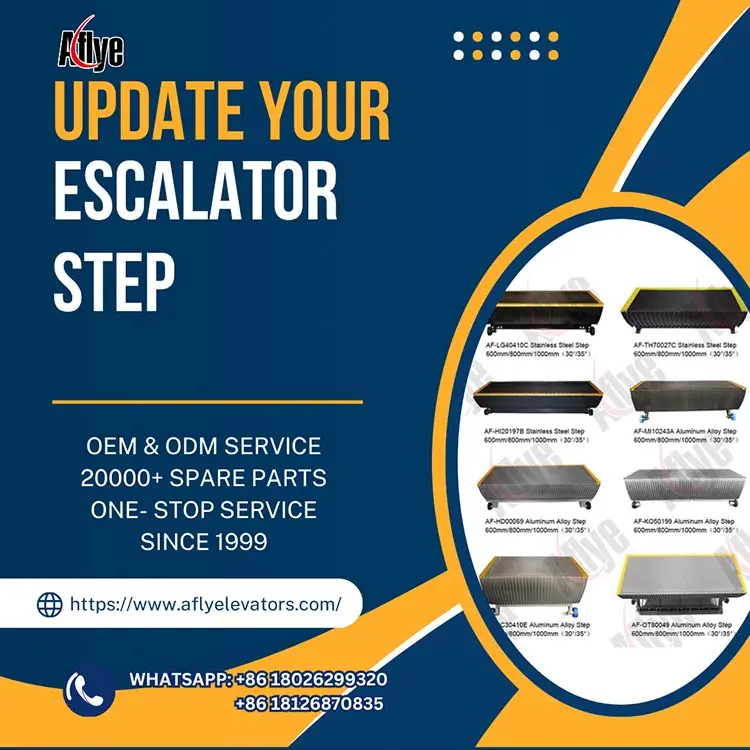
1. Basic Structure of Escalator Steps
An escalator step is typically composed of several structural components, including:
Step tread (step plate)
Step axle
Step chain connection structure
These components together form a complete step unit, which is linked by chains into a continuous circulation system.
The step tread is usually made of aluminum alloy, offering high strength and wear resistance. Step rollers are mounted on both sides and run along guide rails, ensuring smooth motion. The step axle and connection structure link the step to the drive chain, enabling power transmission.
All these elements work together to ensure stable operation of the escalator step system.
2. Step Rollers: The Most Common Wear Point
Among all components, step rollers are one of the most frequently worn escalator parts. They continuously roll along the guide rails while bearing passenger loads, making their bearings and surfaces prone to wear.
When step rollers are worn, the escalator may show:
Increased operating noise
Higher vibration levels
Uneven or unstable step movement
If not replaced in time, worn rollers can also damage guide rails and other structural components.
3. Wear in Step Chain Connection Structures
Steps are connected by chains to form a continuous loop, making the chain and its connection components critical parts. Over time, chains may stretch or wear. Common signs include:
Irregular step movement rhythm
Periodic vibration
Increased chain noise
Regular inspection of step chains and connection structures is essential for maintaining system stability.
4. Damage to Step Tread Surface
The step tread directly bears passenger weight and is constantly exposed to friction from footwear and environmental factors. Over time, it may become worn or deformed. Severe wear can lead to:
Reduced anti-slip performance
Surface cracks
Decreased structural strength
Therefore, the step tread is a key inspection point in escalator safety checks.
5. Guide Rail Wear Affecting Step Operation
Step rollers run along guide rails, so any wear or deformation in the rails can alter the step trajectory. Guide rail issues often result in vibration or misalignment of steps.
Thus, when inspecting the step system, it is also important to check guide rails and related components.
6. How to Reduce Step System Failures
To extend the service life of the escalator step system, maintenance engineers should regularly:
Check step roller bearings
Inspect step chain tension
Observe step tread wear condition
Examine guide rail alignment and condition
Routine maintenance helps identify problems early and allows timely replacement of related escalator parts, preventing larger failures.
7. A-FLY Provides Professional Escalator Parts Solutions
As a professional elevator and escalator parts supplier, A-FLY offers a wide range of step system components, including:
Drive sprockets
Other related escalator parts
These products are compatible with various escalator models and help maintenance teams efficiently complete repairs and upgrades.
A-FLY is committed to providing reliable elevator and escalator parts solutions worldwide, ensuring long-term safe and stable operation.
Conclusion
Although the escalator step system is structurally complex, most faults are concentrated in a few key components.
By regularly inspecting step rollers, chains, and treads—and choosing reliable suppliers like A-FLY—maintenance teams can effectively extend escalator lifespan and ensure safe operation.
In long-term escalator operation, timely maintenance of the step system is essential for both equipment stability and passenger safety.