
Why Does Escalator Step Roller Wear Cause Operating Noise and Step Vibration?
During escalator operation, escalator step rollers support the steps and guide them smoothly along the tracks. They are key wear components in the escalator step system.
Because step rollers are continuously exposed to passenger loads, repeated friction, and operating impacts, they may gradually develop surface wear or bearing damage. These problems can lead to increased escalator noise, step vibration, and unstable operation.
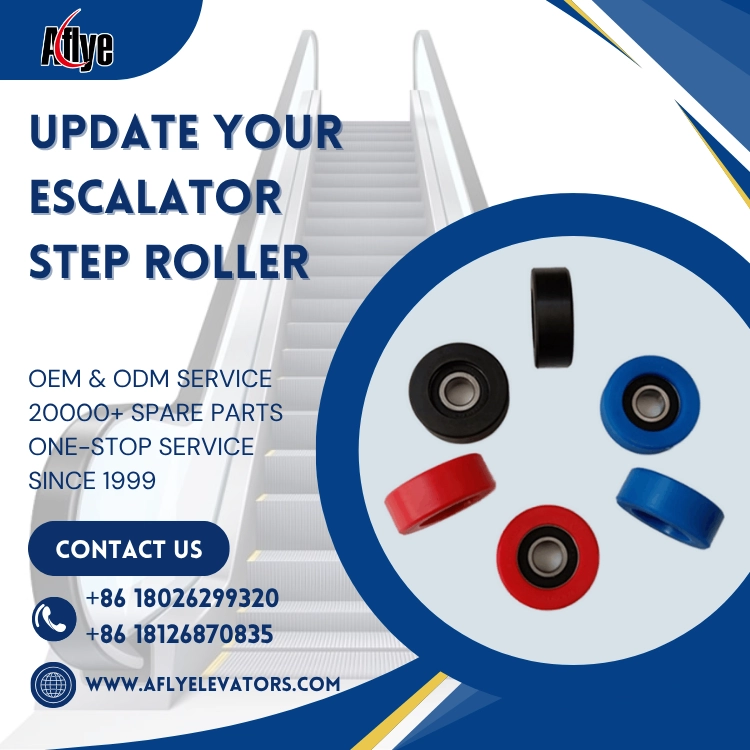
1. Main Causes of Escalator Step Roller Wear
1. Wear Caused by Long-Term Operation
Escalators operate frequently every day, causing the roller surfaces to remain in continuous contact with the tracks. Over time, this may result in:
Reduced roller outer diameter;
Surface aging or cracking;
Increased rolling resistance.
As roller wear becomes more severe, the stability of step movement may gradually decrease.
2. Roller Bearing Damage
The bearings inside escalator step rollers operate continuously under load. Insufficient lubrication or extended service time may cause:
Unsmooth roller rotation;
Increased bearing clearance;
Abnormal operating noise.
Bearing problems can significantly affect the smooth movement of escalator steps.
3. Abnormal Tracks or Excessive Loads
Worn or deformed escalator tracks can increase the load on step rollers. Long-term heavy-duty escalator operation may also place additional stress on the rollers, accelerating wear and damage.
2. What Problems Can Worn Escalator Step Rollers Cause?
1. Increased Escalator Operating Noise
Under normal conditions, step rollers should operate smoothly with relatively low noise. When the rollers become worn or their bearings develop problems, they may produce:
Abnormal rolling noise;
Friction noise;
Periodic operating noise.
2. Increased Step Vibration
When roller dimensions change due to wear, the clearance between the steps and tracks may increase.This can result in:
Step shaking;
Increased operating impact;
Reduced passenger comfort.
Severely worn rollers may make step movement noticeably less stable.
3. Accelerated Wear of Other Escalator Parts
Abnormal step rollers can change the load distribution within the escalator step and transmission system, accelerating wear on other components, including:
Escalator step chains;
Escalator tracks;
Step connecting components.
Therefore, replacing worn rollers in time can also help protect other related escalator parts.
3. Solutions and Purchasing Tips
When increased escalator noise or step vibration is detected, the following items should be inspected promptly:
Step roller wear condition;
Bearing operating condition;
Roller and track alignment.
If the rollers show obvious wear, cracking, or abnormal rotation, timely escalator step roller replacement is recommended.
When purchasing replacement rollers, confirm:
Roller dimensions;
Bearing model;
Installation method;
Compatibility with the original escalator model.
Choosing correctly matched escalator spare parts can help reduce future maintenance costs and improve equipment operating stability.
4. A-FLY Elevator & Escalator Parts Supply Capability
A-FLY specializes in the global supply of elevator and escalator spare parts, offering products including:
Escalator safety components and other wear parts.
For escalator maintenance, modernization, and bulk purchasing requirements, A-FLY provides model confirmation, dimensional matching, and OEM/ODM customization services, helping customers quickly find compatible escalator parts for different projects.
Conclusion
Although the escalator step roller is a relatively small component, it directly affects escalator operating stability and passenger comfort. Worn or damaged rollers can cause increased noise, step vibration, and accelerated wear of related components.
Through regular escalator maintenance, timely detection and replacement of worn step rollers, and cooperation with a reliable elevator and escalator spare parts supplier, operators can effectively improve escalator stability and extend equipment service life.