
What Causes Escalator Inspection Box Button Failure or Control Problems?
During escalator maintenance and routine inspections, the escalator inspection box is an important control device used by technicians for equipment testing, inching operation, and safety checks. Through the escalator inspection control box, maintenance personnel can control functions such as start, stop, upward movement, and downward movement, helping improve maintenance efficiency and operational safety.
However, after long-term use, an escalator inspection box may develop problems such as button failure, no control response, or incorrect running direction. These problems can affect the normal operation of the escalator maintenance switch and make maintenance work more difficult. Therefore, identifying the causes and solving these problems in time is important.
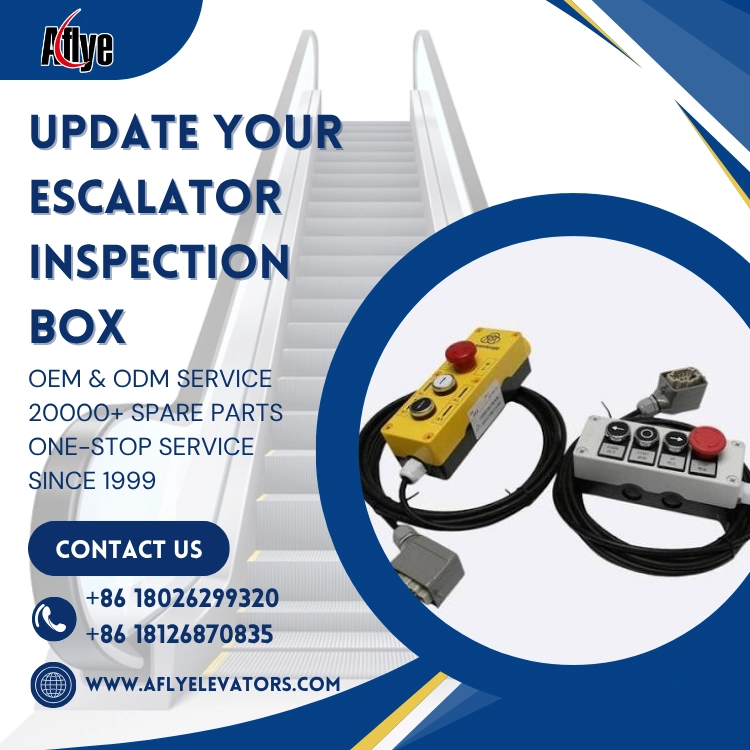
1. Common Symptoms of Escalator Inspection Box Button Failure
When an escalator inspection box develops a fault, common symptoms include:
No response after pressing the start button;
Stop button does not function properly;
Abnormal response from the UP or DOWN buttons;
Buttons need to be pressed several times before responding;
Inspection mode cannot be switched correctly.
These problems are usually related to the button components, electrical wiring, or control signal transmission.
2. Main Causes of Escalator Inspection Box Failure
1. Worn or Oxidized Button Contacts
After frequent long-term use of the escalator inspection box, the internal button contacts may be affected by mechanical wear and environmental conditions.
Common problems include:
Increased contact resistance;
Oxidized contact surfaces;
Fatigue of internal spring contacts.
These problems may prevent the button from generating a reliable control signal when pressed, resulting in intermittent or complete button failure.
2. Abnormal Internal Wiring Connections
An escalator inspection control box contains multiple control wires and connection terminals. After long-term operation, problems may develop due to:
Loose wiring;
Oxidized terminals;
Aging cables.
These conditions can prevent control signals from being transmitted reliably and may result in abnormal escalator operation.
3. Water or Dust Ingress Due to Reduced Protection
Escalators often operate in environments where inspection boxes may be exposed to dust, oil, moisture, or other contaminants.
If the sealing structure deteriorates, contaminants or moisture may enter the box and cause:
Short circuits;
Poor electrical contact;
Control failure.
4. Aging Internal Control Components
After extended use, internal components such as relays, switches, and other electrical control devices may deteriorate, resulting in unstable or unreliable control operation.
3. How to Solve Escalator Inspection Box Problems
Different faults require different maintenance solutions.
First, inspect the internal wiring connections of the escalator inspection box and confirm whether the power input and control signal outputs are operating normally.
If the problem is caused by slight oxidation of the button contacts, cleaning and maintenance may restore normal operation. If the mechanical structure of a button is damaged, replacing the button component is recommended.
If the escalator inspection control box has severe aging, water damage, or multiple control functions have failed, replacing the complete inspection box is recommended to ensure reliable maintenance operation.
During escalator maintenance, related escalator safety components, including emergency stop switches, maintenance switches, and safety circuits, should also be inspected.
4. Escalator Inspection Box Purchasing Tips
When purchasing an escalator inspection box, several specifications should be carefully confirmed:
IP protection rating;
Number of buttons and function configuration;
Wiring and connection method;
Operating voltage;
Housing material and durability.
Control interfaces may vary between different escalator models. Therefore, the specifications of the original equipment should be confirmed before purchasing to avoid compatibility or installation problems.
Choosing a reliable escalator parts supplier can help reduce future maintenance costs and improve equipment operating safety.
5. A-FLY Elevator & Escalator Parts Supply Capability
A-FLY specializes in the global supply of elevator and escalator spare parts, providing one-stop solutions for escalator repair, modernization, and maintenance projects.
Our escalator parts range includes:
Escalator inspection control boxes;
Escalator maintenance switches;
Escalator steps and step chains;
Escalator handrails and other commonly replaced escalator parts.
With extensive experience in supplying elevator and escalator spare parts, A-FLY provides model matching, OEM/ODM customization, and bulk purchasing services, helping customers efficiently meet escalator repair and equipment modernization requirements.
Conclusion
Although the escalator inspection box is an auxiliary control component, it directly affects maintenance safety and work efficiency. When button failure or abnormal control occurs, the condition of the buttons, electrical wiring, terminals, and internal control components should be inspected promptly.
Through regular escalator maintenance and the use of reliable escalator safety components, maintenance teams can improve escalator operating stability and reduce the risk of unexpected downtime.