
Frequent Static Electricity on Older Escalator Handrails? These Potential Causes Should Not Be Overlooked
After years of operation, some older escalators may cause passengers to experience static electric shocks when touching the handrail, especially in dry environments or when the handrail operates continuously for long periods. Static electricity on an escalator handrail does not necessarily mean the handrail itself is damaged. It may also be related to grounding, static discharge components, guide rollers, and the condition of the handrail material.
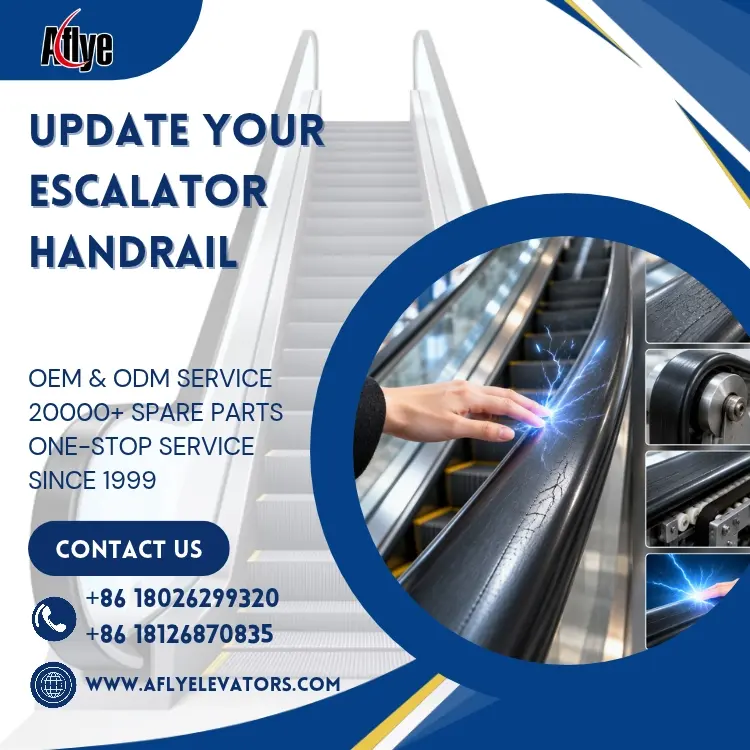
1. Why Are Escalator Handrails Prone to Static Electricity?
1. Low Air Humidity
In dry environments, the air has lower electrical conductivity, making it more difficult for accumulated electrical charges generated during handrail operation to dissipate naturally. As a result, static electricity is more likely to build up on the handrail surface.
2. Continuous Friction Between the Handrail and Rollers
During operation, the handrail continuously passes over guide rollers, support rollers, pressure rollers, and drive wheels, creating ongoing friction. When the handrail material ages and becomes hardened, its friction characteristics may change, potentially increasing static charge accumulation.
3. Abnormal Static Discharge Paths
If the escalator's static discharge device, grounding wires, or related conductive components have poor electrical contact, accumulated charges cannot be released effectively, making static electricity on the escalator handrail more noticeable.
4. Wear on the Handrail and Guide Components
Abnormal handrail alignment, uneven roller wear, or surface aging can change the contact and friction conditions, increasing the likelihood of static electricity problems.
2. How Should Escalator Static Electricity Problems Be Inspected?
When static discharge occurs, do not immediately assume that the handrail needs replacement. The following areas should be checked:
Whether the handrail surface shows aging, cracks, or abnormal wear
Contact conditions between the handrail and rollers
Whether the static discharge device is functioning properly
Reliability of grounding wires and connection points
Whether the handrail running path is misaligned
Grounding conditions of the related escalator metal structures
If the discharge path is abnormal, restore reliable static discharge and grounding conditions first, then determine whether handrail replacement is necessary.
3. How Can These Problems Be Addressed During Older Escalator Modernization?
During older escalator modernization or maintenance upgrades, static electricity issues can be addressed together with overall handrail system maintenance.
If the handrail has deteriorated significantly, it should be replaced according to the equipment requirements. At the same time, inspect the guide rollers, support rollers, pressure rollers, and drive wheels to prevent recurring static electricity problems caused by excessive resistance or abnormal friction.
Inspections involving electrical grounding and safety protection must be carried out by qualified maintenance personnel in accordance with equipment requirements and applicable regulations.
4. Escalator Parts Purchasing Recommendations
When purchasing escalator handrail components, confirm the escalator model, handrail specifications, cross-sectional dimensions, length, guide structure, and installation method.
If purchasing an escalator static discharge device or related conductive components, also verify the installation position, grounding method, and compatibility with the original escalator structure. Do not select replacement parts based on appearance alone.
5. A-FLY Elevator & Escalator Parts Supply
A-FLY supplies escalator handrails, friction wheels, guide rollers, support rollers, pressure rollers, static discharge components, and other escalator wear parts for escalator maintenance, repairs, and modernization projects.
We support model identification, dimensional matching, sample confirmation, and OEM/ODM customization. We also provide a wide range of mechanical, electrical, and safety components for elevators and escalators, meeting the one-stop procurement needs of engineering contractors, maintenance companies, and distributors.
Conclusion
Static electricity on older escalator handrails is not necessarily just a material-related problem. Air humidity, friction conditions, grounding, and static discharge paths can all affect charge accumulation.
During escalator maintenance and modernization, a systematic inspection of the entire handrail system, including the static discharge device, is a more effective way to reduce recurring static electricity problems.