
Escalator Handrail Drive System Maintenance Guide
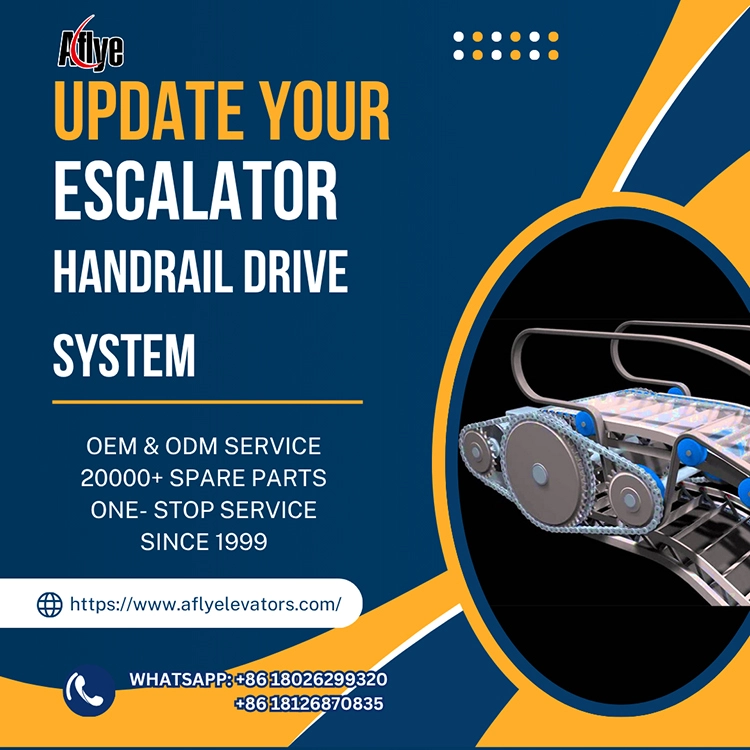
In an escalator system, the handrail drive system is a key component that ensures the handrail moves in synchronization with the steps. This system typically consists of multiple elevator and escalator components, including the drive wheel, transmission mechanism, tensioning device, and guiding structure.
If maintenance is inadequate, issues such as slipping, speed mismatch, or even unexpected shutdowns may occur.
In practical maintenance work, handrail system issues account for a notable proportion of escalator faults. As a professional elevator and escalator parts supplier, A-FLY has developed a set of practical maintenance guidelines through global service experience to help engineers improve equipment stability and safety.
1. Regularly Inspect Drive Wheel Wear
The handrail drive wheel is the core component responsible for power transmission. Its surface condition directly affects friction and transmission efficiency.
After long-term operation, the drive wheel may become worn or polished, reducing its grip.
During routine maintenance, focus on checking:
Whether the surface has become smooth
Whether wear is uneven
Whether there are cracks or damage
If abnormalities are found, replace the relevant components promptly to prevent handrail slippage.
2. Check the Handrail Tensioning Device
The tensioning device maintains proper tension to ensure sufficient friction between the handrail and the drive wheel.
Insufficient tension may cause slipping
Excessive tension may accelerate component wear
During maintenance, check:
Whether the tension is evenly distributed
Whether the tensioning mechanism operates smoothly
Whether there is looseness or misalignment
Proper adjustment is essential for stable system operation.
3. Maintain the Guiding System in Good Condition
During operation, the handrail passes through guide rails and guide rollers. Problems in the guiding system—such as poor lubrication or structural wear—can increase resistance.
Common issues include:
Worn guide rollers
Uneven guide rail surfaces
Insufficient lubrication
Regular inspection and maintenance of these components are necessary to ensure smooth operation.
4. Inspect the Transmission System Connections
In some escalator designs, the handrail drive system is connected to the main drive via chains or gears. If these transmission components become loose or worn, power transfer may become unstable.
Check for:
Chain elongation or wear
Abnormal gear wear
Loose connection components
Ensuring transmission stability is key to preventing speed irregularities.
5. Regularly Clean the Handrail and Drive Area
Dust, oil, and debris can reduce friction between the handrail and drive wheel, leading to slipping or abnormal operation.
It is recommended to:
Clean the handrail surface regularly
Remove debris from the drive area
Keep the equipment clean
A clean environment helps extend the lifespan of components.
6. Monitor Operating Conditions and Abnormal Signals
During routine inspections, observe whether the handrail operates normally:
Is it synchronized with the steps?
Are there abnormal noises?
Is the operation smooth?
If abnormalities are detected, promptly inspect related components to prevent further issues.
7. Plan Reasonable Replacement Cycles
The handrail drive system includes several wear-prone components, such as drive wheels, guide rollers, and chains. Their performance will decline over time.
It is recommended to establish replacement cycles based on usage frequency and operating conditions to reduce unexpected failures.
8. Importance of Choosing High-Quality Components
High-quality components offer better wear resistance, structural stability, and anti-aging performance, significantly reducing maintenance frequency.
As a professional supplier, A-FLY provides a wide range of handrails, drive wheels, tensioning devices, and related components suitable for various escalator models. With stable performance, these products help improve operational efficiency and reduce maintenance costs.
Conclusion
The stable operation of the handrail drive system is fundamental to escalator safety and passenger comfort.
Through standardized maintenance, regular inspection of key components, and cooperation with a reliable supplier like A-FLY, equipment lifespan can be extended and failure rates significantly reduced.
For maintenance engineers, scientific maintenance is not only about efficiency—it is the key to ensuring long-term safe operation.