
What Operating Problems Can Be Caused by Poor Elevator Guide Rail Alignment?
In an elevator operating system, elevator guide rails play a critical role in guiding the elevator car and counterweight during smooth vertical movement. The installation accuracy and alignment quality of guide rails directly affect elevator ride comfort, safety, and component service life.
If the elevator guide rails are not properly aligned, the elevator car may experience problems such as vibration, deviation, abnormal noise, and accelerated wear of guide shoes. In severe cases, it can increase maintenance difficulty and the risk of elevator downtime.
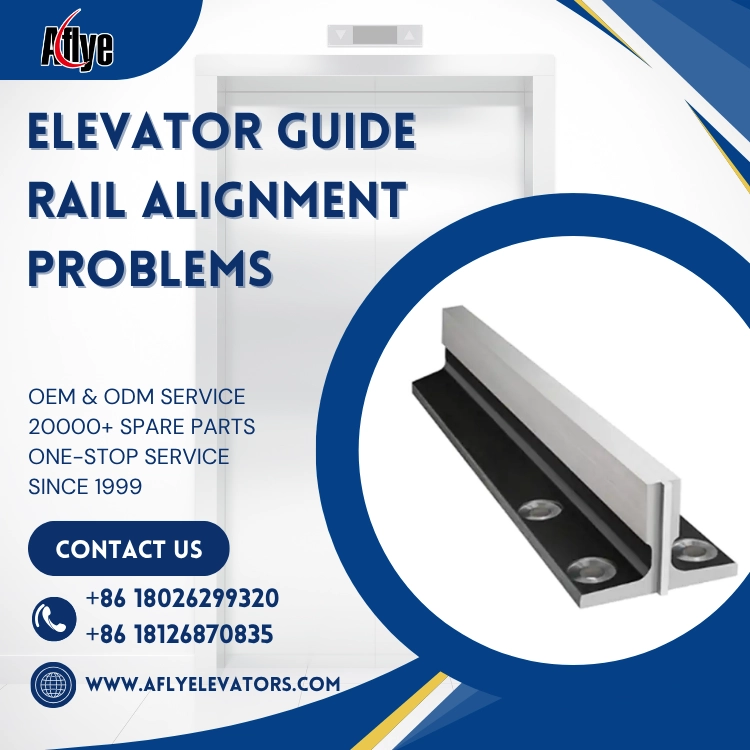
1. Elevator Car Vibration or Shaking
When the vertical alignment, parallelism, or joint positions of the elevator guide rails are incorrect, the car travel path can be affected. Passengers may feel:
Slight shaking
Vibration
Side-to-side movement
especially during elevator start-up, deceleration, or high-speed operation.
Solution:
Maintenance technicians should use professional elevator maintenance tools to inspect:
Guide rail verticality
Joint gaps
Guide rail bracket fixing conditions
to ensure smooth and stable elevator movement.
2. Increased Elevator Operating Noise
Poor guide rail alignment can cause uneven contact between the guide shoes and guide rails, resulting in:
Friction noise
Rolling noise
Periodic abnormal sounds
If guide rail joints are uneven or misaligned, passengers may also feel impact vibrations and hear noticeable collision sounds during operation.
Inspection recommendations:
Check the guide rails for:
Surface scratches
Misaligned joints
Loose fixing bolts
Uneven guide shoe wear
If abnormal noise occurs only in a specific section of the hoistway, that area should be carefully inspected for guide rail installation problems.
3. Accelerated Wear of Guide Shoes and Guide Shoe Rollers
Guide rail misalignment can cause uneven loading on the elevator guide shoes, accelerating wear of:
Roller bearings
Simply replacing worn guide shoes without correcting the guide rail alignment may result in premature failure of the new parts.
Solution:When replacing elevator spare parts such as guide shoes or guide shoe rollers, technicians should also inspect the condition of the elevator guide rails to eliminate the root cause and avoid repeated repairs.
4. Impact on Leveling Accuracy and Operation Stability
Poor guide rail alignment can increase resistance during elevator travel and indirectly affect:
Deceleration performance
Stopping accuracy
Leveling accuracy
For high-speed elevators and high-rise elevators, guide rail precision has an even greater impact on ride comfort and overall operating performance.
5. Elevator Guide Rail and Related Parts Purchasing Recommendations
When purchasing elevator guide rails and related components, buyers should confirm:
Guide rail model
Specifications
Length
Material
Machining accuracy
Fishplates/joint plates
Guide rail clamps
Compatible elevator type
At the same time, suitable elevator maintenance tools should be used during installation and inspection to ensure the guide rails meet required alignment standards.
As a professional elevator and escalator spare parts supplier, A-FLY provides elevator guide rails, guide shoes, elevator guide shoe rollers, guide rail brackets, guide rail clamps, traction system components, and a wide range of elevator and escalator spare parts for maintenance companies, engineering contractors, and spare parts distributors worldwide.
A-FLY supports:
Multi-model matching
Bulk supply
OEM/ODM customization
Fast delivery
helping customers improve elevator maintenance efficiency and reduce downtime.
Conclusion
Poor elevator guide rail alignment is not just an installation issue. It can lead to elevator car vibration, operating noise, guide shoe wear, and leveling problems.
Maintenance teams should pay close attention to guide rail inspection and calibration, while using reliable elevator and escalator spare parts and professional elevator maintenance tools to ensure long-term safe, smooth, and stable elevator operation.