
How Does an Elevator Encoder Failure Affect Elevator Operation?
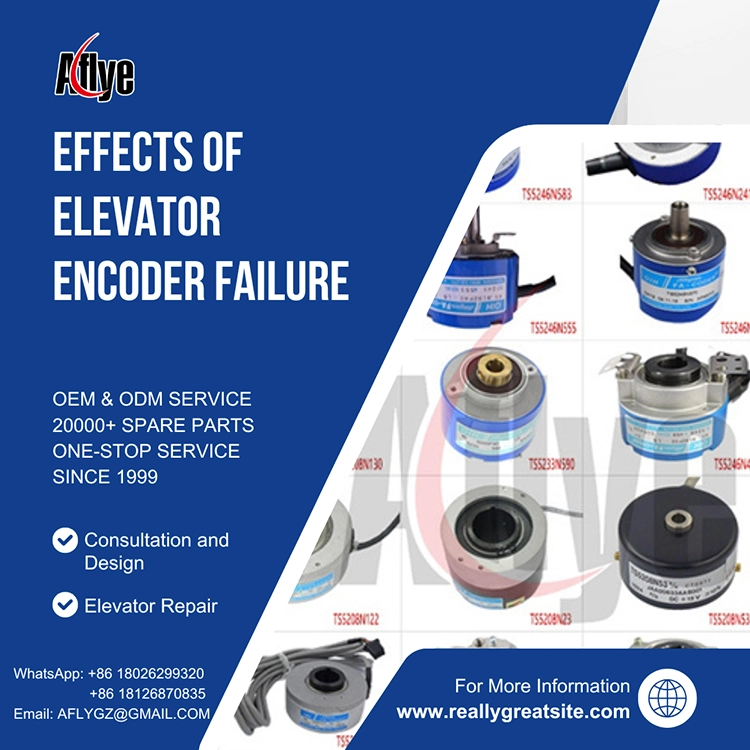
In an elevator control system, the elevator encoder is a critical feedback component. It collects information such as the traction machine's rotational speed, travel direction, and position, then transmits this data to the control system. If the encoder signal becomes abnormal, the controller cannot accurately determine the elevator car's operating status, which may result in speed fluctuations, inaccurate leveling, vibration, fault alarms, or even unexpected shutdowns.
For elevator maintenance professionals, identifying encoder faults promptly and replacing the appropriate elevator and escalator spare parts is essential for ensuring safe and reliable elevator operation.
1. Abnormal Elevator Speed Feedback
One of the primary functions of an elevator encoder is to provide accurate speed feedback. If encoder pulses are lost, signal waveforms become abnormal, or wiring connections are poor, the control system may no longer be able to regulate the traction machine correctly.
Common symptoms include:
Elevator vibration during startup
Rough acceleration or deceleration
Fluctuating travel speed
Unexpected protective shutdowns during operation
Simply adjusting the inverter parameters without inspecting the encoder signal often fails to resolve these issues permanently.
2. Elevator Leveling Problems
When the elevator encoder provides inaccurate position feedback, the elevator car may stop above or below the landing floor, resulting in poor leveling accuracy. This not only affects passenger convenience but also increases the risk of tripping.
Recommended inspection:
Maintenance technicians should check:
Whether the encoder is securely mounted
Whether the coupling is slipping
Whether the encoder cable is damaged
Whether the shield grounding is properly connected
Whether the control cabinet displays any related fault codes
3. Elevator Vibration or Incorrect Direction Detection
An unstable encoder signal may cause the elevator control system to misinterpret the elevator's travel direction or speed changes. As a result, the elevator may experience:
Excessive vibration during operation
Harsh braking
Startup failure
Protective shutdowns
In these situations, technicians should carefully inspect:
Encoder connectors
Wiring terminals
Encoder power supply voltage
Signal output quality
If the encoder's internal components have deteriorated or failed, replacement is recommended.
4. Elevator Encoder Purchasing Recommendations
When purchasing an elevator encoder, be sure to verify the following specifications:
Brand and model
Pulse resolution (PPR)
Shaft diameter
Mounting method
Output signal type
Operating voltage
Connector type
Compatibility with the elevator control system
Different elevator systems require different encoder specifications. Purchasing based solely on appearance or an approximate model number can easily result in compatibility issues.
As a professional elevator and escalator spare parts supplier, A-FLY provides elevator encoders, inverters, control cabinet components, main control boards, leveling switches, and a wide range of elevator and escalator spare parts for maintenance companies, engineering contractors, and spare parts distributors worldwide.
A-FLY offers:
Multi-model compatibility matching
Bulk purchasing support
OEM/ODM customization
Fast worldwide delivery
Our goal is to help customers improve maintenance efficiency while minimizing elevator downtime.
Conclusion
An elevator encoder failure can directly affect speed feedback, operational stability, and leveling accuracy. Maintenance technicians should perform a comprehensive diagnosis by combining fault codes, operating conditions, and on-site signal testing. Choosing reliable elevator and escalator spare parts is essential for ensuring the long-term safety, stability, and performance of elevator systems.