
Door Failures Caused by Aging Elevator Door Lock Contacts
In daily elevator operation, door opening and closing failures are among the most common problems encountered by maintenance personnel. Behind many of these issues, aging elevator door lock contacts are often the real “hidden culprit.” They are not easy to detect at first glance, yet they directly affect whether the elevator can operate safely.
As a long-term supplier serving the global market, A-FLY has found in many on-site cases that faults initially misdiagnosed as door operator or control system problems often originate from aged or poorly contacting door lock contacts.
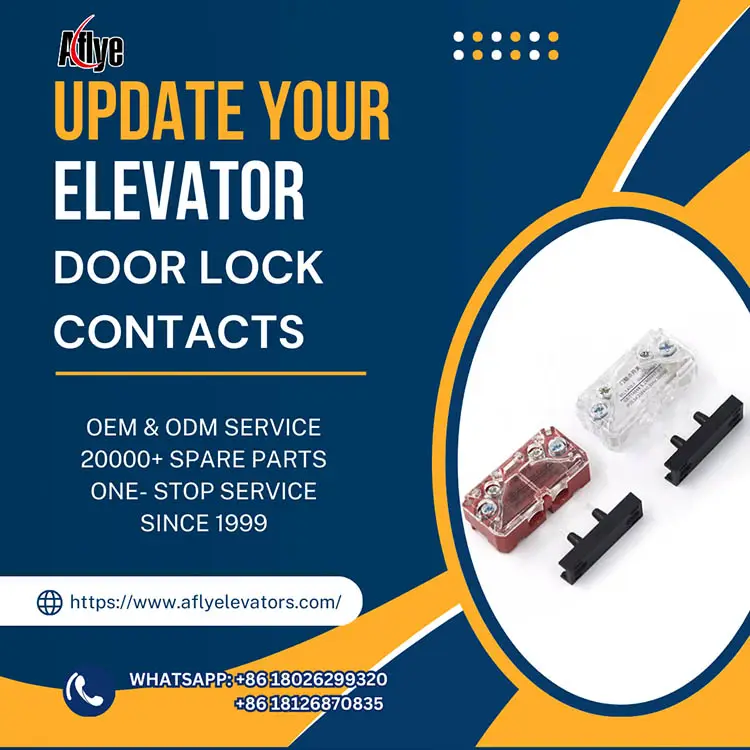
1. The Critical Role of Door Lock Contacts in the Door System
Elevator door lock contacts are an essential part of the safety circuit. Their main functions are to confirm:
Whether the landing door and car door are fully closed
Whether the door lock mechanism is securely engaged
Whether the elevator meets the conditions for safe operation
Only when the door lock contacts operate normally will the control system allow the elevator to start or continue running.
2. Why Door Lock Contacts Are Prone to Aging
Door lock contacts are high-frequency electrical components, and over time they are affected by multiple factors:
Repeated mechanical operation causing contact wear
Electrical arc erosion leading to surface oxidation
Moisture and dust causing poor electrical contact
Spring fatigue reducing contact pressure
These changes usually occur gradually, rather than causing immediate failure.
3. Common Door Operation Failures Caused by Aging Contacts
When door lock contacts begin to age, elevators may show the following symptoms:
The door closes, but the elevator cannot start
Doors repeatedly open and close without locking properly
Intermittent elevator shutdown during operation
Frequent door lock–related alarm messages
Because these issues often occur intermittently, they can easily lead to incorrect diagnosis.
4. Why Door Lock Contact Problems Are Often Misdiagnosed
In actual maintenance work, aging door lock contacts are frequently mistaken for:
Door operator control problems
Unstable signals from the main controller
False triggering of the light curtain
Excessive mechanical resistance in the door system
If technicians focus only on the symptoms and ignore the condition of the door lock contacts, repeated repairs may fail to solve the problem.
5. Potential Safety Risks of Aging Door Lock Contacts
If door lock contacts do not function reliably, they may lead to safety concerns such as:
Incorrect door lock status detection
Instability in the safety circuit
Frequent emergency stops of the elevator
From a safety perspective, door lock contacts are critical elevator components that must be carefully monitored.
6. When Should Door Lock Contacts Be Replaced?
Replacement should be considered in the following situations:
Contact surfaces show obvious burning or oxidation
Insufficient contact pressure or abnormal spring rebound
Faults repeatedly occur despite adjustments
The elevator has been in service for many years and the door system shows clear aging
Compared with repeated adjustments, replacing reliable components is often a more efficient solution.
7. Key Points When Replacing Door Lock Contacts
To prevent recurring problems, attention should be paid to:
Ensuring the contact model matches the original door lock structure
Securing all wiring connections to avoid loose contacts
Testing the stability of the door lock safety circuit after replacement
Checking the operation of the door operator and door panels simultaneously
8. Reliable Door Lock Contact Solutions from A-FLY
As a professional elevator and escalator spare parts supplier, A-FLY provides a wide range of elevator door lock contacts and door system spare parts, compatible with various elevator brands and door lock structures. These components help customers effectively reduce door operation failures and repeated maintenance.
Conclusion
Aging elevator door lock contacts may seem like a small issue, but they directly affect operational safety and reliability. Early detection and timely replacement of critical elevator components can prevent recurring door operation problems and ensure stable elevator performance.
During elevator maintenance and modernization projects, choosing an experienced and reliable spare parts supplier like A-FLY is an important step toward reducing risks and improving maintenance efficiency.