
Analysis of Common Causes When Elevator Buttons Do Not Respond
During daily elevator operation, unresponsive elevator buttons are one of the most common faults encountered. Whether it is a button on the Car Operating Panel (COP) or a Hall Call Panel (HOP), button failure can directly affect the passenger experience. Many users assume that the button itself is defective, but in reality, the issue often involves multiple systems and related elevator components.
As a professional elevator and escalator spare parts supplier, A-FLY has summarized the following common causes based on extensive maintenance experience.
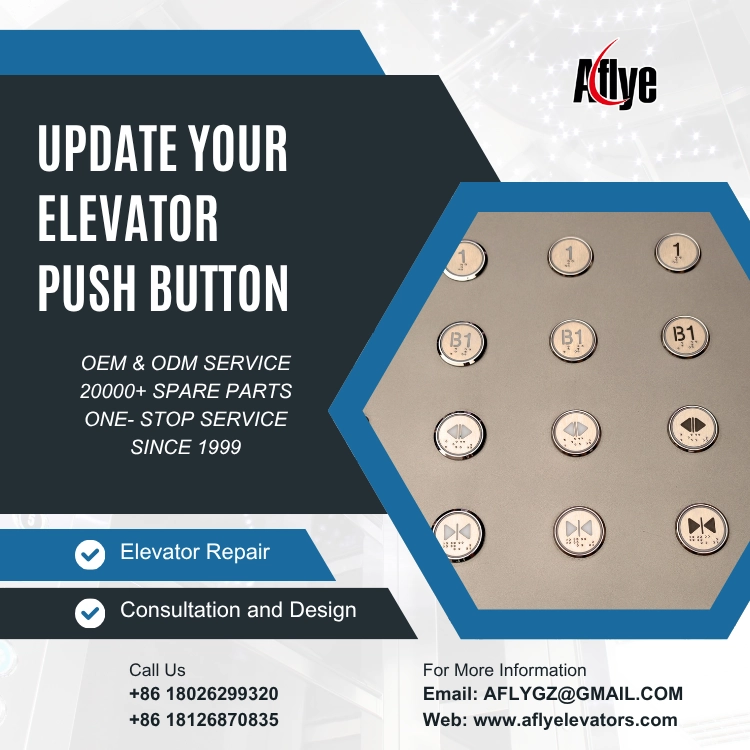
1. Worn or Damaged Button Contacts
After long-term and frequent use, the internal contacts of elevator buttons may gradually wear out, preventing proper signal transmission when pressed.
This issue is particularly common in high-traffic locations such as shopping malls and office buildings.Typical symptoms include:
No response when the button is pressed
Indicator light does not illuminate
Multiple presses are required before activation
If the button shows clear signs of aging, it is recommended to replace it with a compatible elevator spare part as soon as possible.
2. Faulty Internal Micro Switch
Many elevator buttons use micro-switch mechanisms internally. If the spring contacts become fatigued, stuck, or damaged, the button may fail to function properly.
These faults are not always visible from the outside but can directly affect signal transmission.
Many seemingly "intermittent" button failures are actually caused by aging internal components.
3. Loose Wiring or Electrical Circuit Problems
A button may appear normal while the system itself is experiencing wiring issues.
Loose terminals, poor electrical connections, or aging cables can all prevent the button signal from reaching the control system.
For elevators that have been in service for many years, wiring-related elevator and escalator spare parts are often more susceptible to faults.
4. PCB Control Board Failure
After a button is pressed, the signal is typically processed through the elevator's PCB control board.If the board suffers from:
Interface failures
Component aging
Communication faults
the system may be unable to recognize the button signal.
Common symptoms include:
Multiple buttons failing simultaneously
Unstable indicator lights
Intermittent operation
In such cases, troubleshooting should include the entire control system.
5. Power Supply Problems
Abnormal power supply conditions can affect both button signals and LED illumination.Possible causes include:
Power supply module failure
Unstable voltage
Blown fuses
These issues may prevent buttons from functioning properly.
Elevator buttons equipped with LED backlighting are especially sensitive to power quality and voltage stability.
6. Environmental Factors: Moisture, Dust, and Oxidation
Humid environments, accumulated dust, and long-term oxidation can affect the reliability of button contacts.
This type of issue is particularly common in outdoor installations or areas with high humidity levels.
Therefore, maintenance personnel should inspect not only the button itself but also the surrounding operating environment.
How to Troubleshoot an Unresponsive Elevator Button
When diagnosing button failures, it is recommended to follow this sequence:
Check whether the button itself is damaged.
Inspect wiring connections and power supply conditions.
Test PCB control board signal processing.
Check for cable aging or connector abnormalities.
Any aging or unstable elevator and escalator spare parts should be replaced promptly to prevent recurring failures.
Maintenance Recommendations
To reduce button-related failures, maintenance personnel should regularly inspect:
Button contact condition
LED backlight functionality
Wiring security and connection quality
Control board communication stability
Signs of moisture or oxidation on button panels
Preventive maintenance can significantly improve elevator reliability and performance.
Conclusion
Although an unresponsive elevator button may seem like a minor issue, it can negatively affect the overall user experience if not addressed promptly.
Through regular inspections and timely replacement of critical elevator components, fault rates can be significantly reduced.
As a professional elevator and escalator spare parts supplier, A-FLY provides a wide range of elevator buttons, hall call panels, and related elevator and escalator spare parts solutions, helping customers achieve more stable, efficient, and reliable elevator operation and maintenance management.