
Faded Elevator Button Characters: Causes & Wear-Resistant Solutions
In high-traffic locations such as shopping malls, office buildings, and hospitals, it is common to see elevator buttons that still function normally, yet their characters have faded, turned white, or become blurred.
Although this issue may seem like simple cosmetic aging, it directly affects passenger recognition, user experience, and the overall image of the elevator system. In maintenance practice, this is one of the most typical signs of aging elevator components.
As a global elevator & escalator spare parts supplier serving the maintenance market for many years, A-FLY has found that character fading is not simply a result of “long-term use.” Instead, it is closely related to material selection, character processing technology, and the operating environment.
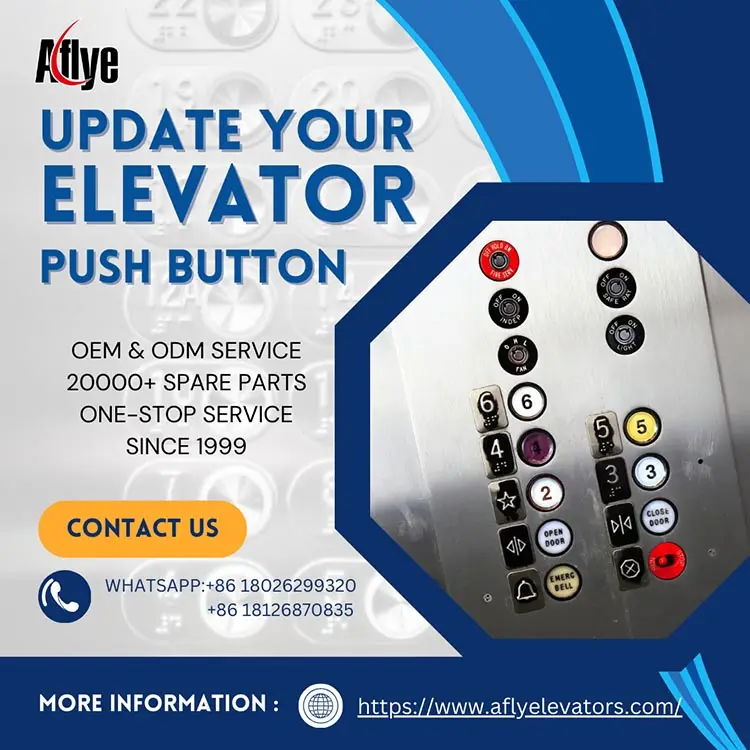
1. Why Do Elevator Button Characters Fade or Become Blurred?
1) Insufficient wear resistance of surface printing
Some older or low-end elevator buttons use standard silk-screen printing, where characters are printed directly on the surface. With repeated pressing, friction, and cleaning, the ink layer gradually wears away, leading to fading, broken strokes, or complete disappearance.
2) Frequent cleaning accelerates aging
In places such as hospitals and shopping centers, buttons are often wiped with alcohol, disinfectants, or cleaning agents. These chemicals accelerate the degradation of the character coating, causing premature aging.
3) Environmental factors cause material degradation
High temperatures, strong UV exposure, and humid air all affect the stability of surface materials. In tropical regions or areas such as the Middle East and South America, character fading is even more pronounced.
4) Button materials are not wear-resistant enough
Some plastic buttons or metal buttons with thin surface coatings are prone to a “polishing effect” under high-frequency use, gradually wearing the characters flat.
2. Blurred Characters Are More Than Just an Appearance Issue
At the early stage, many projects overlook button character issues, but over time they can lead to multiple problems:
Passengers find it difficult to quickly identify floors, especially elderly users and foreign passengers
User experience deteriorates significantly at night or on basement levels
Property managers receive complaints about “outdated equipment” or “poor maintenance”
The overall image of high-end projects is negatively affected
As a result, character clarity has become an important indicator of elevator spare part quality.
3. Comparison of Common Wear-Resistant Character Solutions (Principles)
Mainstream wear-resistant character solutions on the market generally include:
Laser-etched characters
Characters are engraved directly into metal or plastic surfaces, without relying on ink layers. Wear resistance is significantly better than silk-screen printing, making this solution suitable for medium- to high-traffic environments.
Transparent characters+backlight structure
Characters are formed through cut-out or embedded designs, allowing backlight to shine through from inside. Even if the surface wears over time, the character outline remains clear. This is the mainstream solution for high-end elevator buttons.
Embedded character insert design
Characters are independent inserts embedded into the button body. Since pressing only contacts the outer shell, the characters themselves experience almost no wear, making this ideal for ultra-high-traffic public spaces.
Hardened surface treatment
By using thicker stainless steel, anodizing, or special coatings, overall wear resistance is improved and character aging is significantly slowed.
4. When Should Buttons Be Replaced Instead of “Used as Is”?
It is recommended to replace the button module directly when any of the following occurs:
Characters can no longer be clearly identified
Floor numbers are still unclear even with backlight at night
Multiple buttons show fading at the same time
Passenger use is affected and complaints increase
From a long-term cost perspective, replacing buttons with high wear-resistant designs is far more economical than repeatedly maintaining old ones.
5. How to Choose Truly Durable Elevator Buttons
High-quality, wear-resistant elevator buttons usually feature:
Integrated character and button structure
Non-surface printing character technology
High-wear-resistant stainless steel or engineering plastics
Stable backlight and clear character display
Compatibility with various COP / LOP applications
As a professional elevator & escalator spare parts supplier, A-FLY provides a wide range of wear-resistant elevator buttons, COP/LOP button panels, and related components. These solutions are suitable for different regions and usage intensities, helping customers effectively solve fading and blurred character issues.
Conclusion
Fading elevator button characters are not just a matter of time—they are a matter of selection.
By choosing more wear-resistant character technologies and high-quality elevator components, you can not only improve user experience but also significantly extend button service life.
If your project is facing button character aging issues, choosing a reliable elevator & escalator spare parts supplier like A-FLY will provide a more worry-free and long-term solution.