
Causes of Abnormal Elevator Steel Wire Rope Wear and Related Spare Parts Inspection Recommendations
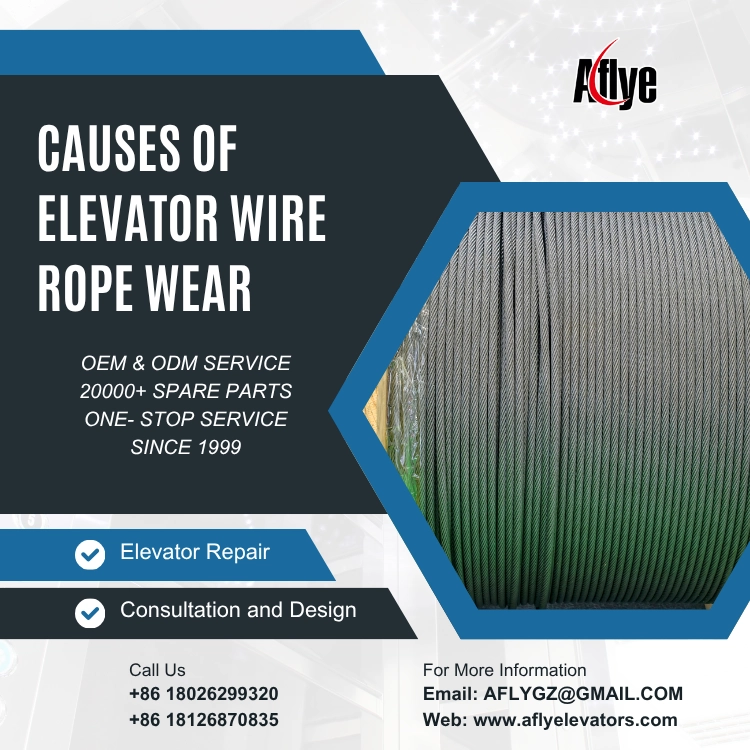
Elevator steel wire ropes are critical load-bearing components in the elevator traction system, directly affecting car operation stability and passenger safety. If the wire ropes show signs of broken wires, fraying, indentations, corrosion, diameter reduction, or localized wear, it is often an indication of underlying system issues.
For maintenance personnel, simply replacing the steel wire ropes is not enough. Related components such as the traction sheave, deflector sheave, compensation chain, and other elevator and escalator spare parts should also be inspected to prevent premature wear of the new ropes.
1. Worn Traction Sheave Grooves or Mismatched Groove Profiles
The traction sheave remains in constant contact with the steel wire ropes. Over time, the grooves may become worn, deformed, excessively deep, or mismatched with the rope diameter.
When this happens, the load distribution among the ropes becomes uneven. Some ropes may be subjected to excessive pressure, leading to:
Polished rope surfaces
Flattening of rope strands
Broken wires
Localized damage
Solution
Inspect:
Groove depth
Groove profile
Surface wear patterns
Rope-to-groove contact condition
If the traction sheave is severely worn, replace it with a properly matched model and verify the rope diameter, groove configuration, sheave diameter, and installation dimensions.
2. Uneven Wear or Bearing Problems in Deflector Sheaves
Deflector sheaves are used to change the running direction of the steel wire ropes.
If the sheave bearings become damaged, the grooves wear unevenly, or the installation angle becomes misaligned, additional friction may be applied to the ropes, resulting in:
Edge wear
Abnormal operating noise
Accelerated rope deterioration
Inspection Recommendations
Check whether the deflector sheave:
Rotates smoothly
Has bearing seizure or excessive resistance
Exhibits vibration or wobbling
Shows uneven groove wear
Produces abnormal noise
If significant wear or bearing issues are found, replace the deflector sheave promptly to protect the entire traction system.
3. Uneven Steel Wire Rope Tension
Unequal tension among multiple steel wire ropes is another common cause of abnormal wear.Ropes under excessive tension may experience:
Excessive stretching
Compression damage
Accelerated wear
Meanwhile, ropes with insufficient tension may:
Slip on the traction sheave
Affect leveling accuracy
Reduce ride comfort
Corrective Action
Maintenance personnel should regularly measure rope tension and adjust it according to the manufacturer's specifications to ensure balanced load distribution across all ropes.
4. Compensation Chain Problems Affecting System Stability
A compensation chain that is twisted, worn, improperly guided, or excessively oscillating can negatively affect elevator balance and operation.
This indirectly increases the load on the steel wire ropes and traction system. The impact is particularly noticeable in high-rise elevators, where compensation chain performance plays a significant role in maintaining smooth operation.
Key Inspection Points
Check for:
Abnormal wear
Excessive noise
Excessive swinging
Loose connections
Damaged guide devices
Replace the compensation chain, guide assemblies, or related components when necessary.
5. Procurement Recommendations and A-FLY Supply Capability
When purchasing elevator steel wire ropes and related components, it is important to confirm:
Rope diameter
Rope construction
Rope length
Load rating
Elevator brand compatibility
Operating environment
Likewise, components such as traction sheaves, deflector sheaves, and compensation chains must match the original system specifications rather than being selected based solely on appearance.
As a professional elevator and escalator spare parts supplier, A-FLY offers:
Elevator steel wire ropes
Deflector sheaves
Compensation chains
Traction machine spare parts
Various elevator and escalator components
A-FLY supports multi-model matching, bulk purchasing, OEM/ODM customization, and fast delivery services, helping maintenance companies, engineering contractors, and spare parts distributors improve procurement efficiency and reduce elevator downtime.
Conclusion
Abnormal wear of elevator steel wire ropes is rarely caused by a single factor. It is often the combined result of traction sheave condition, deflector sheave wear, compensation chain performance, rope tension, and installation quality.
Maintenance personnel should take a systematic approach by inspecting all related components and replacing worn or unreliable elevator and escalator spare parts in a timely manner. This is essential for ensuring the long-term safety, stability, and reliability of elevator operation.