
A Complete Analysis of Door Operator Component Failures
In an elevator system, the door operator is one of the most frequently used components and performs more operating cycles than almost any other part of the elevator. Compared with the traction or control systems, door operator components enter the wear phase much earlier, which is why they are replaced far more often in maintenance and modernization projects.
As a professional elevator and escalator spare parts supplier, A-FLY draws on extensive on-site experience to provide a comprehensive analysis of why door operator parts are replaced so frequently and the common failures of key components.
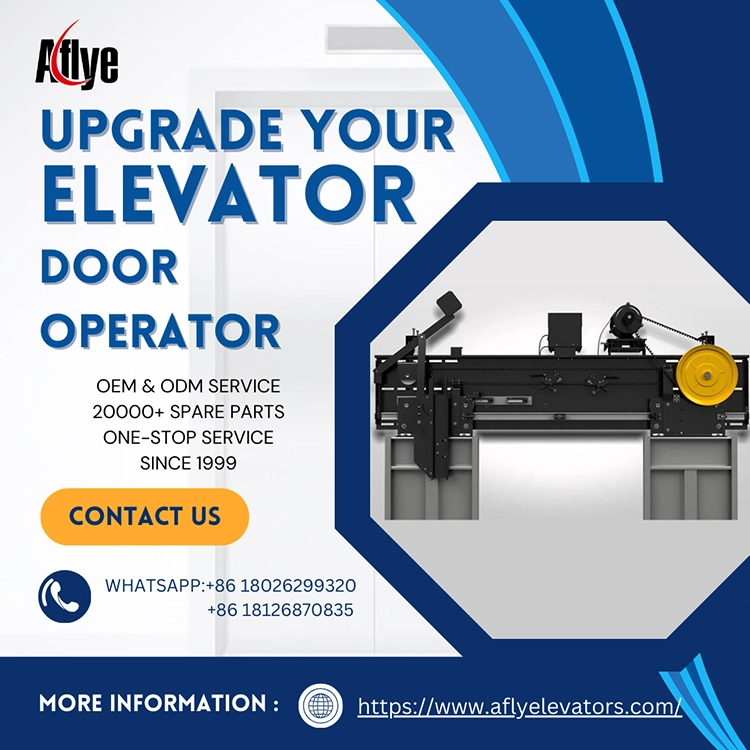
1. Why Is the Elevator Door Operator a “High-Wear System”?
1. Extremely High Operating Frequency
Every elevator trip involves at least one door opening and closing cycle. In high-traffic locations such as shopping malls, hospitals, and office buildings, door operators may perform thousands of cycles per day, remaining under continuous high-load operation.
2. Frequent Impact and Human Interference
Passenger behaviors such as forcing doors open, pushing doors, or blocking door movement place additional stress on the door operator, accelerating wear on door rollers, guide shoes, and transmission components.
3. Harsh Installation Environment
Door operators are installed near the hoistway entrance, where they are constantly exposed to dust, humidity, and temperature fluctuations, all of which speed up the aging of elevator components.
2. Common Failures of Key Door Operator Components
1. Door Rollers and Hanger Rollers
Door rollers are essential for smooth door movement. When rollers age or bearings fail, problems such as abnormal noise, sticking, or door vibration often occur during opening and closing.
2. Door Guide Shoes and Sliding Blocks
Worn guide shoes can cause the door panel to deviate from its normal track, leading to abnormal loads on the door operator and indirectly shortening the lifespan of other components.
3. Door Operator Belts and Transmission Parts
Aging, loosened, or cracked belts result in weak or inconsistent door movement and may eventually trigger door faults and elevator shutdowns.
4. Abnormal Interaction Between Door Locks and Door Vanes
Wear or misalignment of door lock assemblies can cause the system to detect “door not closed” even when the door is physically shut—one of the most common causes of repeated elevator stoppages.
5. Electrical Component Failures
Aging door operator control boards or sensors may lead to slow response, incorrect actions, or false fault signals.
3. Risks Caused by Frequent Door Operator Component Failures
If the condition of door operator components is neglected, the following issues may arise:
Frequent elevator shutdowns, reducing operational efficiency
Chain failures within the door system, increasing repair costs
Abnormal safety circuit operation, creating potential safety hazards
For these reasons, door operator components should always be treated as priority maintenance items.
4. Key Strategies to Reduce Replacement Frequency
1. Use High-Quality, Wear-Resistant Components
Premium door rollers and guide shoes significantly extend service life and reduce the need for repeated replacements.
2. Perform Regular System-Level Inspections
Avoid replacing individual failed parts without investigating root causes. Maintenance should focus on the overall operating condition and load distribution of the door system.
3. Properly Adjust Door Operator Parameters and Installation Accuracy
Correct door opening speed, closing force, and travel limits help reduce mechanical impact and long-term wear.
5. A-FLY — Your Professional Elevator Door Operator Parts Supplier
As an experienced elevator and escalator spare parts supplier, A-FLY provides a full range of door system solutions, including:
Elevator door rollers, elevator hanger rollers, and elevator guide shoes
Elevator door locks and door vanes
Door operator transmission and electrical components
Door operator spare parts for elevator modernization projects
A-FLY elevator components are known for high stability, strong compatibility, and long service life, and are widely used in residential buildings, commercial properties, and high-traffic environments.
Conclusion
The high replacement frequency of elevator door operator parts is not a product flaw—it is the result of their operating conditions and usage intensity. With proper component selection, systematic maintenance, and a reliable spare parts supplier, failure rates and maintenance costs can be significantly reduced.
Choose A-FLY to keep your elevator door systems running more smoothly, more reliably, and with greater peace of mind.