
Problems Caused by a Faulty Elevator Inverter Fan
In an elevator electrical system, the inverter is responsible for regulating motor speed, ensuring smooth starts and stops as well as energy-efficient operation. One of the key elevator components that keeps the inverter working reliably is the cooling fan. If this small part fails, it can trigger a chain of problems that directly affect overall elevator safety and operational stability.
As a professional elevator and escalator parts supplier, A-FLY has found in numerous maintenance and modernization projects that inverter fan failure is one of the most common yet often overlooked causes of elevator shutdowns.
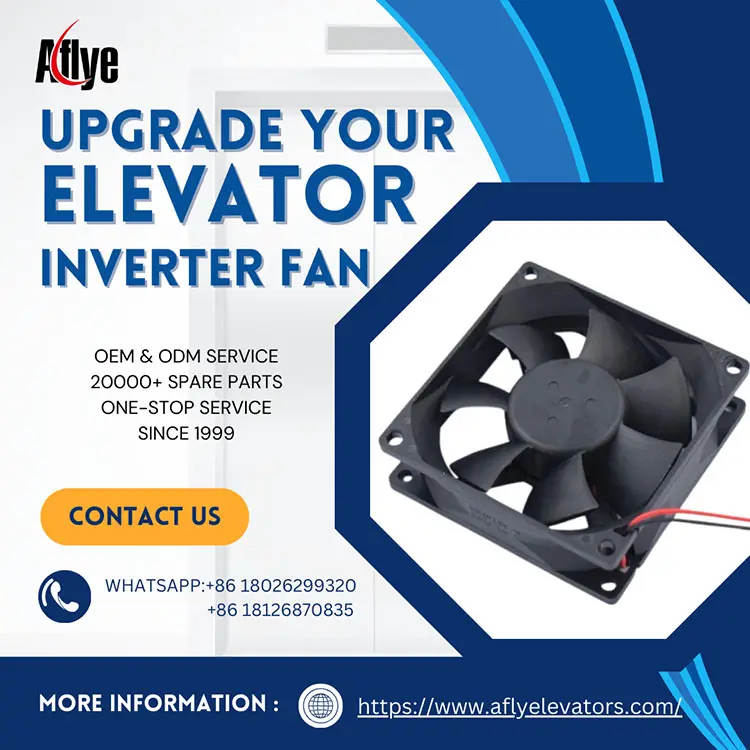
1. Direct Consequences of Inverter Fan Failure
1. Frequent inverter overheat protection trips
When the fan stops working, heat inside the inverter cannot be dissipated effectively. The temperature of IGBT modules rises quickly, triggering thermal protection. This results in frequent elevator shutdowns that require system resets to resume operation.
2. Shortened lifespan of key inverter components
Prolonged high temperatures accelerate aging of capacitors, power modules, and control boards. Minor cases may cause parameter drift, while severe cases can burn out components. Repair costs can be far higher than simply replacing a fan.
3. Unstable operation and increased start/stop shock
When operating at elevated temperatures, inverter output performance declines. This may lead to jerky starts, rough deceleration, or occasional system errors.
4. Severe cases may damage the inverter main board
Continuous overheating can cause internal circuit breakdown, eventually burning out the inverter’s main board. This can render the elevator completely inoperable and lead to long periods of downtime.
2. Indirect System-Level Risks
1. Increased risk of passenger entrapment
If thermal protection stops the elevator during operation, the car may halt between floors, increasing the likelihood of passenger entrapment.
2. Maintenance costs can multiply
Replacing a cooling fan is inexpensive compared to repairing inverter modules or replacing the entire inverter unit.
3. Operational impact on commercial buildings
In high-traffic locations such as shopping malls, office buildings, or hospitals, even one elevator out of service can cause congestion and operational losses.
3. How to Detect Fan Problems Early
During routine maintenance, pay close attention to warning signs such as abnormal fan noise, noticeably reduced airflow, increased inverter temperature alarms, or rising machine room temperatures. These are often early indicators of fan aging or bearing wear.
4. Key Points When Replacing an Inverter Fan
First, ensure voltage, current, and size specifications match the original.
Second, confirm the airflow direction is correct.
At the same time, clean dust from ventilation channels to prevent poor cooling performance caused by a “new fan in an old environment.” Choosing reliable elevator components is essential.
A-FLY Provides Reliable Elevator Cooling Component Solutions
As an experienced elevator and escalator parts supplier, A-FLY offers a wide range of inverter cooling fans and related elevator components featuring low noise, high temperature resistance, and long service life. These products are widely compatible with mainstream elevator brands, helping customers reduce failure rates and extend equipment lifespan.
A small fan can affect the safety of the entire elevator. Regular inspection and timely replacement are key maintenance measures to ensure stable elevator operation.