
What Risks Can Escalator Tension Device Failure Cause?
In the core transmission system of an escalator, the tension device plays a critical role. Its primary function is to provide stable and continuous tension for the main drive chain or step chain, ensuring smooth, safe, and reliable escalator operation.
When the tension device fails, the escalator may not stop immediately, but the risks will gradually escalate during operation.
As a professional elevator and escalator spare parts supplier, A-FLY has found through numerous maintenance and modernization projects that tension device failures are often overlooked yet highly hazardous sources of faults.
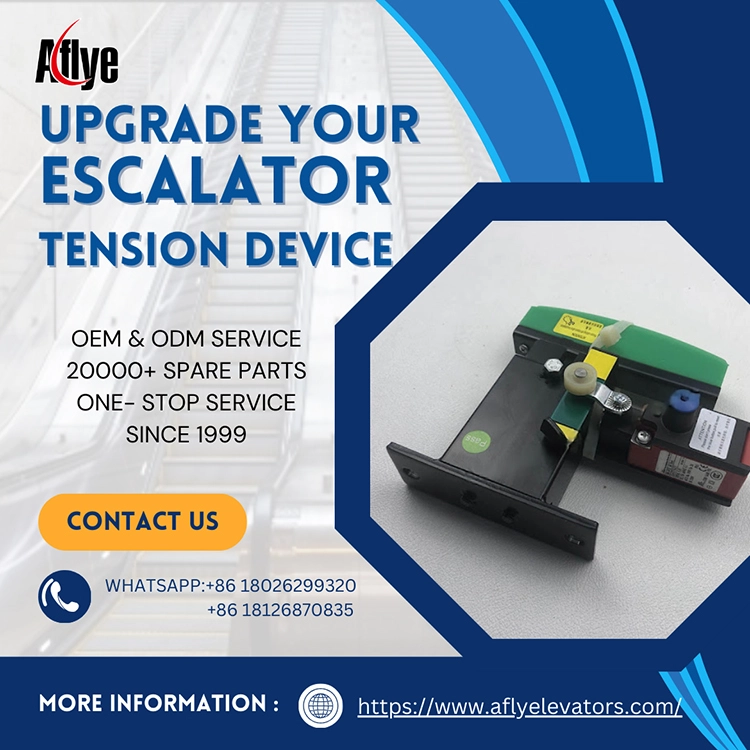
1. What Is an Escalator Tension Device?
An escalator tension device typically consists of tension pulleys, springs or counterweight structures, guide components, and mounting brackets.
Its function is to automatically compensate for chain elongation during operation, ensuring that the drive chain maintains proper tension and preventing slack or impact.
2. Common Signs of Tension Device Failure
In real-world operation, tension device failure often presents the following symptoms:
Noticeable periodic abnormal noise during escalator operation
Vibration or impact felt during start-up or braking
Drive chain jumping or running unevenly
Significantly accelerated chain wear
Frequent need for manual chain tension adjustment
These symptoms indicate that the transmission system is already operating in an unstable condition.
3. What Safety Hazards Can Tension Device Failure Cause?
1. Increased Risk of Chain Skipping or Derailment
When tension is insufficient, poor engagement between the chain and drive sprocket may lead to chain skipping or even derailment.
2. Accelerated Wear of the Entire Transmission System
Unstable tension increases wear on key components such as drive sprockets, main chains, and bearings.
3. Increased Operating Impact and Reduced Ride Comfort
Escalator operation becomes less smooth, causing passengers to feel unsafe when boarding or exiting.
4. Increased Load on the Braking and Safety Systems
Transmission instability affects braking performance and indirectly amplifies overall safety risks.
4. Why Are Tension Devices Often Overlooked?
Tension devices are usually located inside the escalator structure and are not as visible as steps or handrails. As a result, they are more likely to be missed during routine inspections.
However, they are typical high-impact, low-visibility safety components.
5. How to Reduce the Risk of Tension Device Failure
Check whether the tension travel remains within a reasonable range during regular maintenance
Inspect springs or counterweight structures for fatigue or jamming
Inspect the tension device condition when replacing the main drive chain
Use components with stable structures and high fatigue resistance
6. A-FLY — A Reliable Supplier of Escalator Tension Devices and Transmission Components
As an experienced elevator and escalator spare parts supplier, A-FLY provides:
Escalator tension devices and tension pulleys
Main drive chains and drive sprockets
Related transmission system components and upgrade solutions
A-FLY elevator and escalator components are widely used in shopping malls, metro systems, airports, and other high-duty environments, with OEM / ODM support and global supply capability.
Conclusion
Failure of an escalator tension device is not a “minor issue,” but a hidden risk amplifier within the system. Only by giving it proper attention can long-term, safe, and stable escalator operation be ensured.
Choose A-FLY to keep your escalator transmission system operating safely at all times.