
What Materials Are Elevator Buttons Made Of?
Elevator buttons are the most direct point of interaction between passengers and the elevator system. Every press sends a command through the control circuit — and while the button may look simple, its material plays a crucial role in determining its durability, safety, and user experience. Different types of elevators and environments require different button materials.
Here, the professional team from A-FLY Elevator & Escalator Parts Supplier introduces the most common types of elevator button materials and their features.
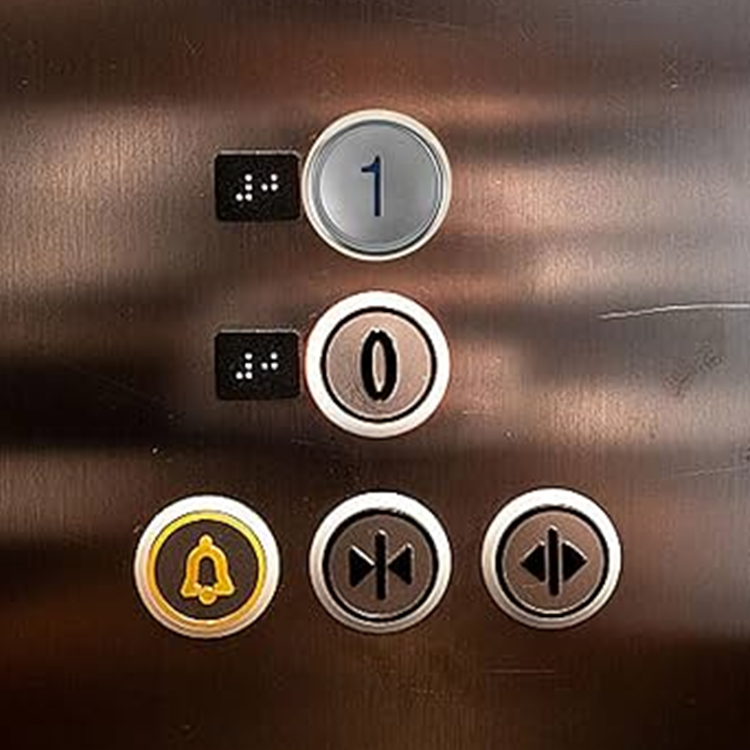
1. Stainless Steel Elevator Buttons
Stainless steel is one of the most common and widely used materials for elevator buttons.
It is known for its strength, corrosion resistance, and long-lasting shine, making it suitable for high-traffic environments.
Key Advantages:
Highly wear- and pressure-resistant — ideal for frequent use
Scratch- and impact-resistant, suitable for public buildings and office towers
Fire-resistant and easy to clean
Compatible with LED backlighting for a modern, sleek look
A-FLY Tip:
Stainless steel buttons are typically paired with metal panels and LED indicators for a strong, stable design, widely used in COP (Car Operating Panels) and LOP (Landing Operating Panels) across various elevator brands.
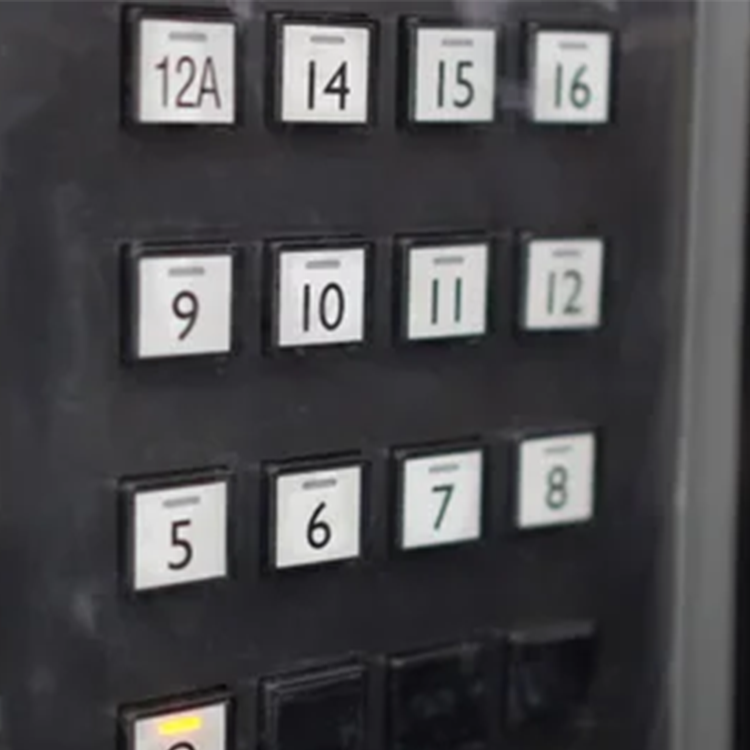
2. Plastic Elevator Buttons
Plastic buttons are lightweight, cost-effective, and commonly used in residential and economy-type elevators.
Typical materials include ABS, PC (polycarbonate), or acrylic.
Key Advantages:
Low cost and available in various colors
Soft touch and slip-resistant
Lightweight and easy to install
A-FLY Tip:
A-FLY offers multiple plastic button designs with customizable symbols, languages, and LED lighting, perfect for residential and mid-rise elevators or modernization projects.
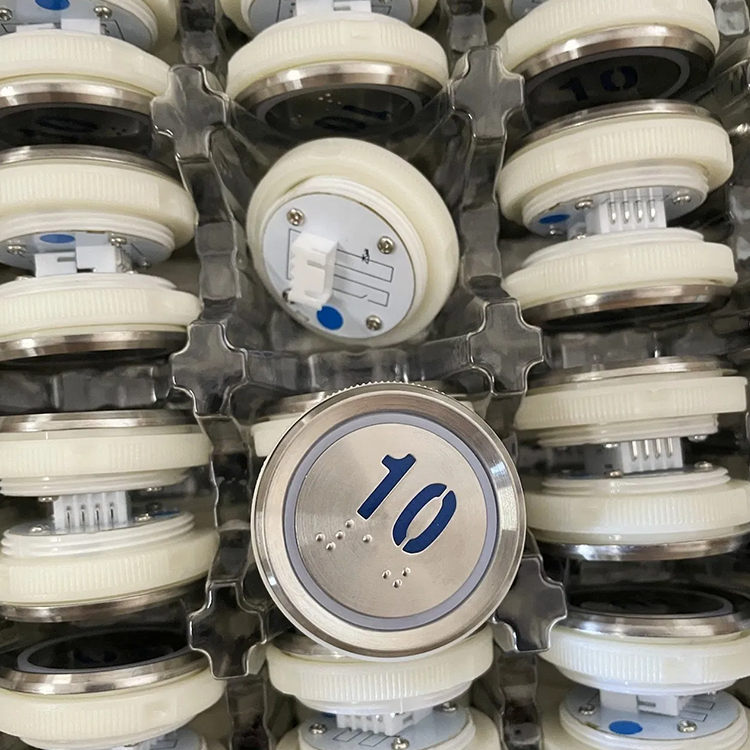
3. Aluminum Alloy Elevator Buttons
Aluminum alloy combines the solid texture of metal with lightweight advantages, making it ideal for panoramic and high-end commercial elevators.
Its anodized surface provides corrosion resistance and a refined appearance.
Key Advantages:
Lightweight yet strong
Smooth, uniform surface finish
Precision-machined and compatible with advanced control modules
A-FLY Tip:
Paired with A-FLY’s elevator control panels and indicator display modules, aluminum alloy buttons enhance the overall aesthetics and responsiveness of the system.
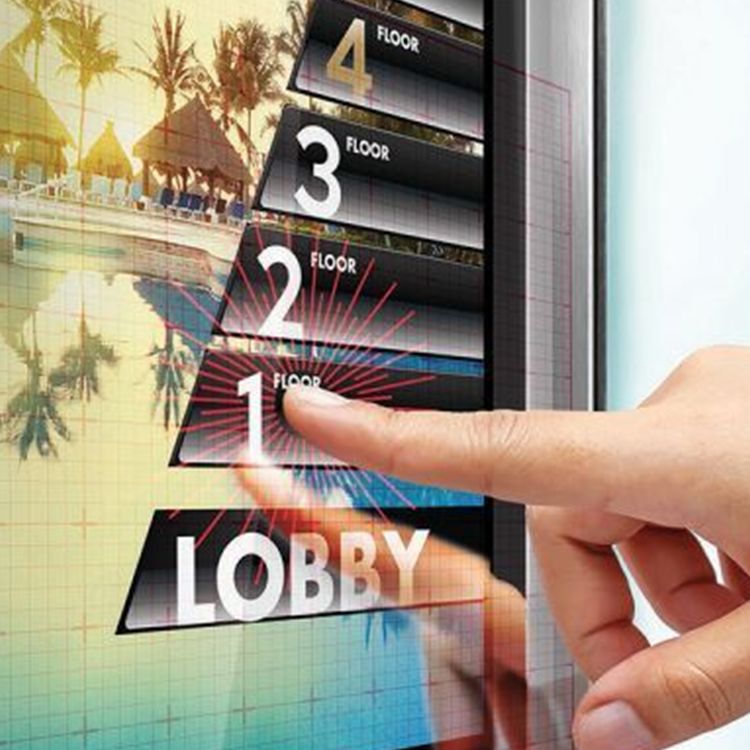
4. Glass / Acrylic Touch Buttons
With the rise of smart elevators, touch-sensitive buttons are replacing traditional mechanical designs.
Made from tempered glass or acrylic panels, they use capacitive sensing technology for a seamless, contactless experience.
Key Advantages:
No mechanical wear — longer lifespan
Waterproof and dust-resistant, easy to clean
Premium look — ideal for luxury or panoramic elevators
A-FLY Tip:
A-FLY provides touch-button systems compatible with multiple elevator brands, featuring high-sensitivity touch panels and LED ring lights for a futuristic interface.
5. Brass / Titanium-Plated Buttons
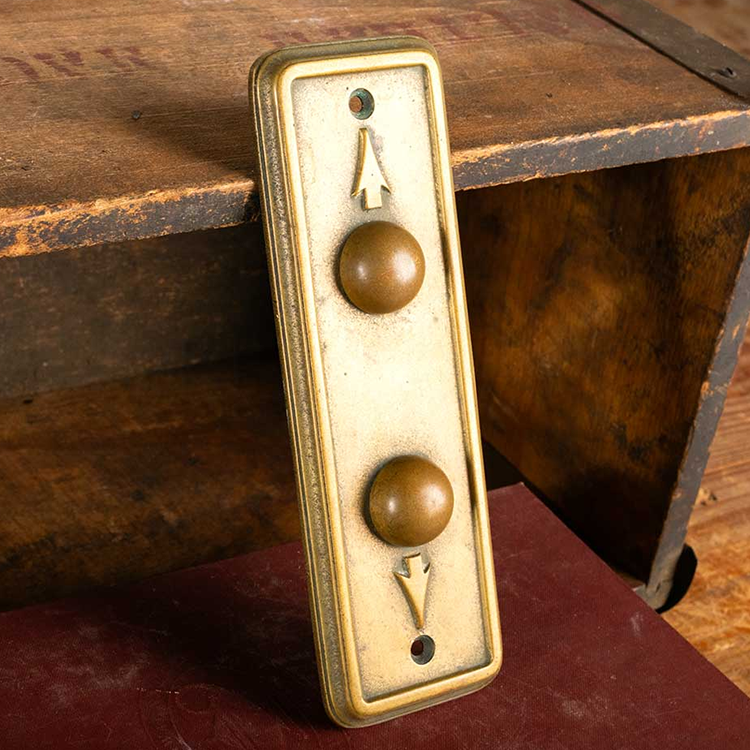
These premium materials are often used in luxury and hotel elevators for their elegant appearance and superior oxidation resistance.
Titanium-plated finishes maintain a brilliant color and gloss that won’t fade over time.
Key Advantages:
Luxurious and refined appearance
Strong corrosion and oxidation resistance
Ideal for customized and high-end projects
A-FLY Tip:
If your project focuses on design and prestige, A-FLY’s custom titanium-plated button series offers multiple interface options compatible with various elevator control systems.
6. Conclusion: Material Defines Quality, and Quality Ensures Safety
Though small in size, elevator buttons are essential to every elevator’s control system.
The choice of material affects not only durability but also the user’s tactile and visual experience.
Using high-quality buttons improves both safety and longevity.
A-FLY, a professional elevator and escalator parts supplier, provides a full range of elevator push buttons, COP/LOP panels, door control boards, and light indicators, compatible with major elevator brands and available with OEM/ODM customization.
Choose A-FLY — for precision, comfort, and safety with every press.