
Worn Elevator Guide Shoes: Signs & Selection Tips
In an elevator system, guide shoes may be small in size, but they are directly related to the running stability of the car and counterweight along the guide rails. They are one of the important elevator components that should never be overlooked. When guide shoes become worn or their performance declines, they not only affect ride comfort but may also trigger a series of chain faults.
As a professional elevator and escalator parts supplier, A-FLY has received feedback from customers involved in maintenance and modernization projects around the world. They have found that guide shoe wear is often one of the key causes of elevator vibration, abnormal noise, and unstable operation.
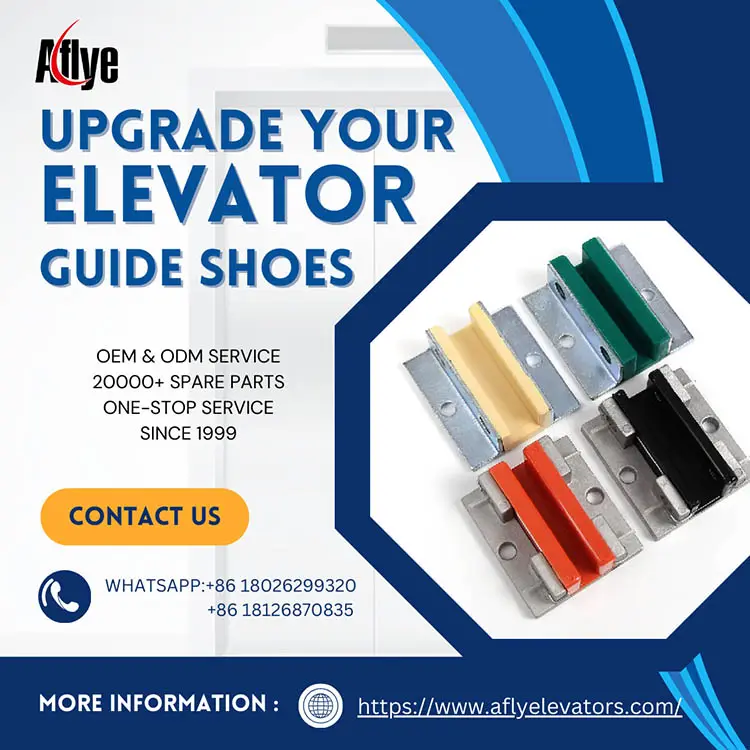
1. Typical Signs of Elevator Guide Shoe Wear
1. Noticeable vibration or shaking during operation
When guide shoe liners or rollers wear down, the gap between the car and the guide rails increases. The elevator may feel shaky during startup, braking, or high-speed travel—especially in mid- to high-rise elevators.
2. Increased abnormal noise levels
Worn guide shoes can cause uneven contact between metal parts or rollers and the guide rails, leading to friction sounds, knocking noises, or even periodic abnormal sounds. This seriously affects ride comfort and can easily result in passenger complaints.
3. Accelerated guide rail wear
Failing guide shoes cannot evenly distribute pressure, causing localized stress on the guide rails. This accelerates rail surface wear and increases future maintenance and replacement costs.
4. Reduced leveling accuracy and ride comfort
Poor guide shoe condition affects the stability of car movement, which may indirectly lead to inaccurate leveling and frequent re-leveling adjustments, impacting overall elevator performance.
5. Increased load on other elevator components
Long-term operation under unstable conditions increases the workload on the traction system, brakes, and door operator system, shortening the service life of related elevator parts.
2. Common Types of Elevator Guide Shoes and Selection Tips
1. Sliding guide shoes
Usually made of wear-resistant materials with a simple structure, these are suitable for low-speed or medium-low load elevators. When selecting, focus on the wear resistance of the liners and compatibility with lubrication.
2. Roller guide shoes
These use rollers to contact the guide rails, significantly reducing friction and noise. They are suitable for medium- and high-speed elevators. Key considerations include roller material, bearing quality, and vibration-damping performance.
3. Composite guide shoe assemblies
Combining the advantages of sliding and roller structures, these provide both stability and comfort. They are commonly used in modernization projects or elevators with higher ride quality requirements.
3. Guide Shoe Replacement and Selection Recommendations
When selecting guide shoe elevator components, factors such as elevator speed, load capacity, guide rail specifications, and operating environment should all be considered. For elevators with long service life or noticeable vibration issues, upgrading to high-performance guide shoes is often more effective than repeated adjustments.
A-FLY Professional Support
As an experienced elevator and escalator parts supplier, A-FLY provides a variety of guide shoes and related elevator components featuring high wear resistance and low noise. Our solutions help customers improve elevator smoothness, extend the service life of key components, and meet the needs of different regions and application scenarios.