
Escalator Handrail Fault Diagnosis and Spare Parts Selection Guide
In an escalator system, the escalator handrail is one of the most frequently used components and the part that comes into direct contact with passengers. It not only provides guidance and support but also plays a vital role in passenger safety and riding comfort. Once the handrail becomes worn, slips, or even breaks, it can seriously affect normal operation and may lead to safety incidents.
As a professional elevator and escalator spare parts supplier, A-FLY has summarized a practical approach to fault diagnosis and spare parts selection based on extensive global maintenance and modernization projects.
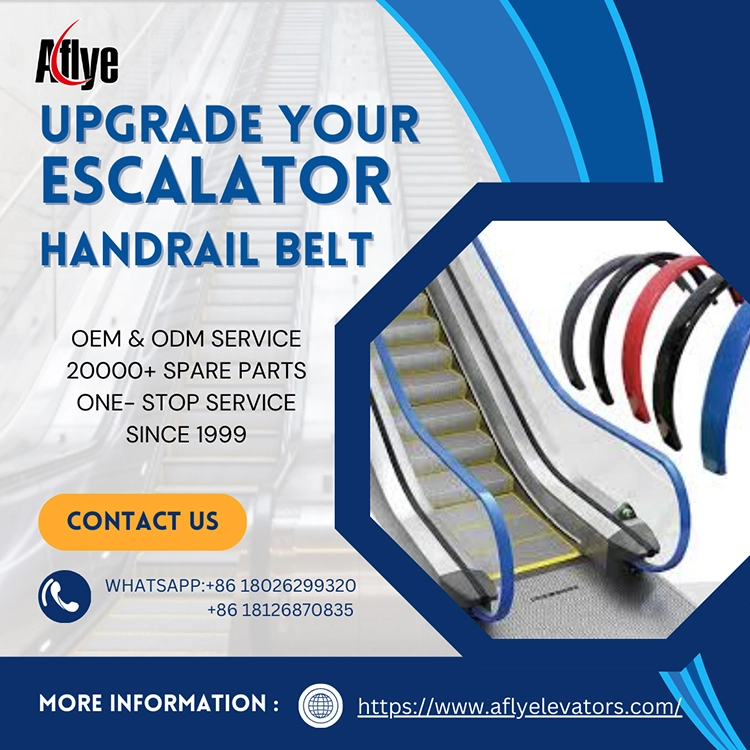
1. Common Signs of Escalator Handrail Wear and Damage
During daily operation, handrail problems usually show clear warning signs, including:
Surface cracks, whitening, or visible aging
Handrail speed not synchronized with step speed
Local slipping, vibration, or abnormal noise
Fraying edges or layer separation
In severe cases, handrail breakage or tracking deviation
These issues rarely occur suddenly; they are typically the result of long-term wear and gradual deterioration.
2. Main Causes of Handrail Wear and Breakage
1. Long-Term High-Frequency Use and Heavy Passenger Flow
In shopping malls, metro stations, airports, and other high-traffic environments, escalators operate almost continuously. The handrail is subjected to constant friction and tensile force, significantly accelerating aging.
2. Improper Handrail Tension
Excessive tension can cause fatigue and breakage of internal steel cords or fabric layers
Insufficient tension leads to slipping, which increases surface wear
3. Worn Drive or Pressure Rollers
Uneven wear on handrail drive wheels or pressure rollers causes abnormal stress distribution, resulting in premature localized damage.
4. Environmental Factors
High temperatures, humidity, UV exposure, or improper use of cleaning chemicals can accelerate rubber aging and shorten handrail service life.
5. Incompatible Handrail Material
Some replacement handrails are not specifically designed for the original escalator system, resulting in insufficient wear resistance or flexibility and early failure.
3. Practical Handrail Fault Diagnosis Approach
When abnormalities are detected, it is recommended to check the following:
Inspect the handrail surface for cracks or delamination
Compare handrail speed with step speed for synchronization
Check drive wheels and pressure rollers for wear or slippage
Verify whether the tensioning device is within the correct range
A systematic inspection helps avoid repeated repairs caused by replacing the handrail without addressing the root cause.
4. How to Select the Right Escalator Handrail
Choosing the correct handrail is essential to reducing failure rates:
Durable material: Prefer wear-resistant rubber or composite structures
Stable internal structure: Steel cord or fabric layers must provide sufficient tensile strength
Accurate dimensions: Width, thickness, and bending radius must match the original system
Smooth operation: Ensure proper compatibility with drive and pressure rollers
High-quality handrails not only last longer but also significantly improve passenger comfort and confidence.
5. A-FLY — Your Reliable Escalator Handrail and Spare Parts Supplier
As an experienced elevator and escalator spare parts supplier, A-FLY provides:
Escalator handrails, including customized specifications
Handrail drive wheels and pressure rollers
Escalator chains, escalator steps, and safety components
A-FLY escalator spare parts are widely used in residential, commercial, and transportation hub projects. We support OEM / ODM customization and global supply, helping customers reduce maintenance frequency and overall operating costs.
Conclusion
Although escalator handrails are wear-prone components, their service life can be significantly extended through proper fault diagnosis, effective maintenance, and correct part selection. Choosing the right components and a reliable supplier is the key to minimizing downtime and safety risks.
Choose A-FLY to ensure every handrail runs more smoothly, lasts longer, and provides greater peace of mind.