
Traction Machine Control Methods and Types
In an elevator system, the traction machine is the core power unit that drives the car up and down. The control method and type of the traction machine directly determine the elevator’s running smoothness, energy consumption, and long-term reliability.
With continuous technological advancements, traction machine control methods have evolved from traditional solutions to more intelligent and energy-efficient systems. As a professional elevator and escalator parts supplier, A-FLY provides a comprehensive overview of the main traction machine control methods and common types to help you make more informed selection and purchasing decisions.
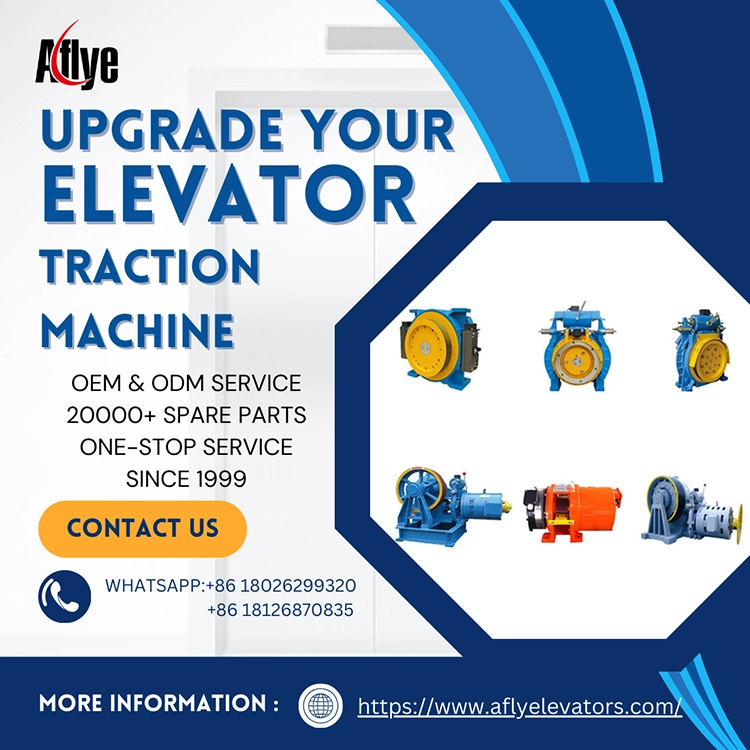
1. Common Control Methods of Traction Machines
1. Power Frequency Control
Early elevators commonly adopted power frequency control, where the traction machine runs directly at a fixed frequency. This method features a simple structure and relatively low cost, but it causes strong starting and braking impacts, higher energy consumption, and poor ride comfort. Today, it is mainly found in old elevators and is gradually being phased out.
2. Variable Voltage Variable Frequency (VVVF) Control
VVVF control is currently the mainstream control method for elevator traction machines. By precisely adjusting the motor voltage and frequency through an inverter, it enables smooth starting, stable operation, and accurate leveling. This control method significantly reduces energy consumption, minimizes mechanical wear, and improves ride comfort. It is widely used in residential elevators, commercial elevators, and high-speed elevator projects.
3. Permanent Magnet Synchronous Control
With technological progress, Permanent Magnet Synchronous Traction Machines (PMSM) combined with advanced control algorithms have become a representative solution for energy-efficient elevators. This control method offers high efficiency, compact size, low noise, and excellent performance. It is particularly suitable for mid- to high-end elevators and energy-saving modernization projects, and represents a key development direction in the elevator industry.
2. Main Types of Traction Machines
1. Geared Traction Machines
Geared traction machines transmit power through a gearbox. They feature mature technology and relatively simple maintenance, and are commonly used in low-speed or freight elevators. However, they generate higher noise levels and consume more energy, so their application scope is gradually decreasing.
2. Gearless Traction Machines
Gearless traction machines drive the traction sheave directly through the motor, achieving higher efficiency and quieter operation. Today, most mid- and high-speed passenger elevators adopt gearless traction machines, especially in buildings with high requirements for comfort and energy efficiency.
3. Permanent Magnet Synchronous Traction Machines
This is a high-end category of gearless traction machines. When combined with advanced control boards and inverters, PMSM traction machines deliver high-precision control and extremely low energy consumption. A-FLY supplies a wide range of permanent magnet synchronous traction machines and matching elevator control components to meet different project requirements.
3. Importance of Matching Control Methods with Elevator Components
In practical applications, a traction machine does not operate independently. It must work in coordination with the elevator main control board, inverter, encoder, brake system, and other key components. Improper selection of the control method may lead to issues such as:
Inaccurate leveling
Harsh starting and stopping
Motor overheating
Frequent system alarms
Therefore, when selecting or replacing a traction machine, it is essential to consider the control method, system compatibility, and long-term operational stability as a whole.
4. A-FLY – Your Reliable Supplier of Traction Machines and Control System Components
As a professional elevator and escalator parts supplier, A-FLY provides comprehensive solutions for global customers, including:
Elevator traction machines and permanent magnet synchronous traction machines
Elevator inverters and main control boards
Encoders, brakes, traction sheaves, and other core components
A-FLY products are widely used in residential buildings, commercial projects, elevator modernization, and upgrade applications. We support OEM/ODM customization and global delivery, helping customers achieve safe, energy-efficient, and high-performance elevator solutions.
Conclusion
The control method and type of a traction machine determine the overall performance and long-term value of an elevator system. Choosing the right control solution and working with a reliable elevator parts supplier are essential to ensuring stable, safe, and durable operation.
Choose A-FLY for more efficient elevator drives and more reliable performance.