
The Function of Escalator Tensioning Devices
In an escalator transmission system, the tensioning device is one of the key components that ensures the normal operation of the step chain.
Its main function is to maintain proper chain tension so that the escalator can operate smoothly and reliably during operation.
If the tensioning device is not functioning properly, it may cause chain looseness, vibration, or even transmission failure.
Therefore, understanding its function and performing proper maintenance are essential for ensuring stable escalator operation.
As a professional elevator & escalator parts supplier, A-FLY has found through maintenance practice that tensioning devices are often overlooked, yet they have a wide impact on overall system performance.
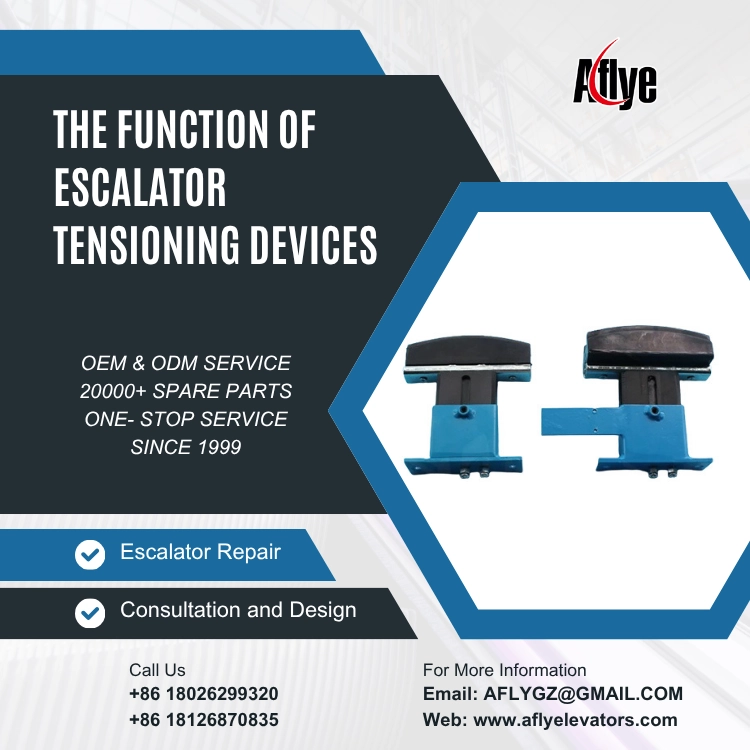
1. Maintaining Stable Chain Tension
The core function of an escalator tensioning device is to regulate the tension of the step chain and keep it within a proper range.
If the tension is too loose, the chain may experience:
Tooth skipping
Vibration
Unstable operation
If the tension is too tight, it can increase friction resistance and accelerate wear on sprockets and related escalator spare parts.
Therefore, the tensioning device is an important guarantee for balanced operation.
2. Improving Escalator Running Stability
With stable chain tension, the escalator can operate more smoothly during starting, running, and stopping, reducing jerking and vibration.
For high-traffic locations such as shopping malls and subway stations, this not only improves passenger comfort but also helps reduce equipment failure rates.
3. Extending the Service Life of Elevator & Escalator Spare Parts
When the tensioning device operates properly, it helps reduce abnormal wear on key elevator & escalator spare parts such as:
Chains
Sprockets
Bearings
Improper tension control may cause these components to bear excessive load for long periods, shortening their service life and increasing maintenance costs.
4. Preventing Abnormal Operation and Safety Risks
In extreme situations, loose chains may cause transmission failure or unstable operation, while excessive tension may lead to component damage.
The tensioning device effectively reduces these risks and helps ensure safe escalator operation under various working conditions.
Common Problems and Causes
Tensioning device problems are usually related to:
Spring fatigue
Stuck adjustment mechanisms
Installation deviation
Lack of long-term maintenance
In addition, environmental factors such as dust accumulation and insufficient lubrication may also affect adjustment performance.
If not addressed in time, these problems can gradually become more serious.
Maintenance Recommendations
During routine maintenance, technicians should regularly inspect the operating condition of the escalator tensioning device, including:
Whether chain tension is appropriate
Whether the adjustment mechanism moves smoothly
Whether related connection parts are secure
At the same time, the chain should be observed for stable operation, abnormal noise, or vibration.
For aged or failed elevator & escalator spare parts, timely replacement is recommended to ensure long-term stable system operation.
Conclusion
The function of an escalator tensioning device is not limited to maintaining chain tension—it is also closely related to the stability and safety of the entire transmission system.
Choosing high-quality escalator spare parts and performing regular maintenance are key to reducing failure rates.
As a professional elevator & escalator parts supplier, A-FLY provides a variety of tensioning devices and related elevator & escalator spare parts solutions to help customers achieve efficient and safe operation management.